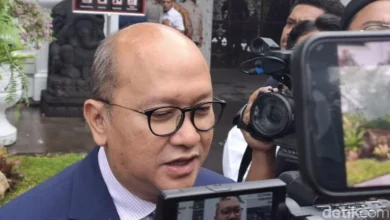

The Indonesian government has officially signaled a massive escalation in its national housing welfare strategy, characterized by a landmark meeting between the Minister of Housing and Residential Areas, Maruarar Sirait, and the Cabinet Secretary, Teddy Indra Wijaya. Held on Sunday, July 19, 2026, at the Cabinet Secretariat Building in Jakarta, the high-level discussion focused on the rapid acceleration of the Self-Help Housing Stimulus Assistance program, locally known as Bantuan Stimulan Perumahan Swadaya (BSPS). This program, colloquially referred to as the "bedah rumah" or house renovation initiative, has been identified as a cornerstone of President Prabowo Subianto’s domestic policy, aimed at eradicating extreme poverty and improving the living standards of millions of Indonesians.
The meeting underscores a pivotal shift in the administration’s approach to social infrastructure. According to official statements released via the Cabinet Secretariat’s communications channels, the government has set an ambitious target to renovate 400,000 uninhabitable houses (RTLH) across the archipelago by the year 2026. This figure represents a staggering increase compared to the 2025 target, which was set at 45,000 units. The nearly nine-fold increase in the program’s scope highlights the administration’s commitment to addressing the national housing backlog and ensuring that the right to decent shelter is realized for the most vulnerable segments of the population.
Strengthening Inter-Ministerial Synergy and Coordination
A primary theme of the dialogue between Minister Maruarar Sirait and Cabinet Secretary Teddy Indra Wijaya was the necessity of seamless coordination across various levels of government. In the past, large-scale social programs in Indonesia have often faced bottlenecks due to bureaucratic silos and overlapping jurisdictions between central ministries and regional authorities. The 2026 BSPS expansion seeks to eliminate these inefficiencies through a unified command structure and enhanced synergy.
The Cabinet Secretariat emphasized that the success of the 400,000-unit target depends heavily on the synchronization of data and resources. This involves not only the Ministry of Housing but also the Ministry of Social Affairs, the Ministry of Home Affairs, and local governments at the provincial and regency levels. By strengthening these institutional links, the government aims to ensure that the implementation of the BSPS program is faster, more accurately targeted, and highly effective. The ultimate goal is to ensure that every rupiah spent provides a tangible, life-changing benefit to the recipients, moving beyond mere statistics to real-world impact.
The Mechanics of the BSPS Program: A Community-Driven Approach
The BSPS program is distinct from traditional government housing projects because it operates on the principle of "swadaya" or self-help. Rather than simply handing over a finished house, the government provides a stimulus in the form of building materials and a small allowance for labor costs. The homeowners, often supported by their neighbors in the spirit of "Gotong Royong" (mutual cooperation), take an active role in the renovation process.
This model has been praised for its cost-effectiveness and its ability to foster a sense of ownership and community pride. For the 2026 fiscal year, the criteria for "uninhabitable houses" have been refined to prioritize structural safety, adequate floor space (at least 7.2 square meters per person), and access to basic sanitation and clean water. By focusing on these fundamental elements, the government is not just "fixing roofs" but is fundamentally improving the health and productivity of the citizenry.
Background and Context: The Prabowo Administration’s Housing Vision
The surge in the BSPS target to 400,000 units is a direct reflection of President Prabowo Subianto’s broader "Asta Cita" or eight-goal mission, which includes the ambitious plan to build or renovate three million houses annually—two million in rural areas and one million in urban centers. Minister Maruarar Sirait, a seasoned political figure known for his "pro-people" stance, was specifically tasked with leading the newly separated Ministry of Housing to provide a laser-like focus on this crisis.
Historically, housing in Indonesia was managed under the massive umbrella of the Ministry of Public Works and Housing (PUPR). However, the separation of the Housing Ministry under the current administration allowed for a dedicated budget and a specialized workforce to tackle the complexities of land acquisition, urban slum revitalization, and rural housing quality. The 2026 target is viewed by analysts as the first major "litmus test" for this institutional restructuring.
Chronology of the 2026 Housing Strategy Development
The road to the 400,000-unit target began in late 2024, shortly after the inauguration of the current cabinet. Initial assessments indicated that over 25 million Indonesian households were still living in substandard conditions. Throughout 2025, the Ministry of Housing conducted a nationwide audit of the BSPS program, identifying successful pilot projects and areas where the supply chain for building materials was lacking.
The meeting on July 19, 2026, serves as a mid-year strategy alignment. With the 2025 target of 45,000 units serving as a foundational phase, the jump to 400,000 units in 2026 requires a massive mobilization of the private sector and local contractors. Minister Maruarar has frequently called upon large developers and philanthropic organizations to contribute to the "housing for all" cause, advocating for a "non-APBN" (non-state budget) funding component to supplement government spending.
Supporting Data and Economic Implications
The economic implications of renovating 400,000 homes are profound. According to preliminary data from the Ministry of Housing, the BSPS program is expected to create over 1.2 million temporary jobs in the construction sector, particularly for local laborers in rural villages. This "cash-for-work" aspect of the program provides an essential economic cushion for low-income families during the renovation period.
Furthermore, the demand for building materials—such as cement, bricks, timber, and roofing—is projected to provide a significant boost to the domestic manufacturing industry. Economists suggest that the housing sector has a high multiplier effect; for every trillion rupiah invested in housing, there is a corresponding increase in GDP across 174 related sub-sectors, including transport, retail, and manufacturing.
| Year | BSPS Target (Units) | Growth Percentage |
|---|---|---|
| 2024 | 35,000 (Estimate) | – |
| 2025 | 45,000 | 28.5% |
| 2026 | 400,000 | 788.8% |
The table above illustrates the dramatic scale of the 2026 ambition. To achieve this, the government is reportedly preparing a digital monitoring system that allows the Cabinet Secretariat to track the progress of each house in real-time, ensuring transparency and preventing the misappropriation of funds.
Official Responses and Public Sentiment
The announcement has garnered significant attention from various stakeholders. Members of Commission V of the House of Representatives (DPR RI), which oversees infrastructure and housing, have expressed cautious optimism. While they support the increased budget, they have urged the Ministry of Housing to ensure that the "Tenaga Fasilitator Lapangan" (Field Facilitators) are well-trained and adequately compensated, as they are the ones who guide the homeowners through the technical aspects of construction.
On the social media front, the public response to the @sekretariat.kabinet post has been largely positive. Many citizens expressed hope that the program would finally reach remote areas in Eastern Indonesia, such as Papua and East Nusa Tenggara, where housing quality remains a critical issue. Cabinet Secretary Teddy Indra Wijaya, often referred to by the public as "Mayor Teddy," has become a symbol of the administration’s discipline and execution-oriented mindset, further boosting public confidence in the project’s feasibility.
Challenges and Risk Mitigation
Despite the optimistic outlook, the path to 400,000 renovated homes is fraught with challenges. The primary risk is the accuracy of the recipient data. In previous years, there have been reports of aid going to households that did not meet the "low-income" criteria. To mitigate this, the Ministry of Housing is collaborating with the Central Bureau of Statistics (BPS) and utilizing satellite imagery to verify the condition of homes before approving assistance.
Another challenge is the logistical nightmare of distributing building materials to Indonesia’s thousands of islands. Supply chain disruptions or localized inflation in the price of construction materials could deplete the stimulus amount provided to each family. Minister Maruarar has hinted at establishing "material banks" in strategic locations to stabilize prices and ensure a steady supply of high-quality goods.
Analysis of Broader Implications
The meeting between Maruarar Sirait and Teddy Indra Wijaya is more than just a bureaucratic update; it is a statement of political will. By prioritizing the BSPS program, the Prabowo administration is focusing on a "bottom-up" approach to national development. Decent housing is intrinsically linked to better health outcomes, as it reduces the prevalence of respiratory illnesses and waterborne diseases. It also provides children with a stable environment to study, directly impacting the nation’s long-term human capital.
In a broader geopolitical context, Indonesia’s success in large-scale housing renovation could serve as a model for other developing nations grappling with urban slums and rural poverty. If the 2026 target is met, it will solidify the reputation of the Ministry of Housing as a high-performing institution and bolster the administration’s domestic approval ratings ahead of the mid-term cycle.
As the government moves toward the 2026 fiscal year, the focus remains on "collaboration." The call for synergy between the central government, regional leaders, and the private sector is not just a slogan but a structural necessity. Through this unified effort, the vision of a "Golden Indonesia 2045" begins with the humble but essential foundation of a safe and dignified home for every citizen. The meeting at the Cabinet Secretariat serves as the starting gun for what is likely to be the most ambitious housing drive in Southeast Asian history.