Chaos in Tirana as Thousands Protest Corruption and Trump-Linked Luxury Resort Projects Demanding PM Edi Rama Resignation

The capital city of Albania, Tirana, descended into a scene of intense civil unrest on Thursday, July 23, 2026, as thousands of citizens took to the streets to voice their grievances against the administration of Prime Minister Edi Rama. What began as a scheduled demonstration in front of the national parliament rapidly escalated into violent confrontations between protesters and state security forces. The unrest, which has been simmering for several weeks, reached a boiling point over allegations of high-level corruption involving major property development projects, most notably a luxury resort initiative backed by Affinity Partners, a firm led by Jared Kushner, the son-in-law of former United States President Donald Trump.
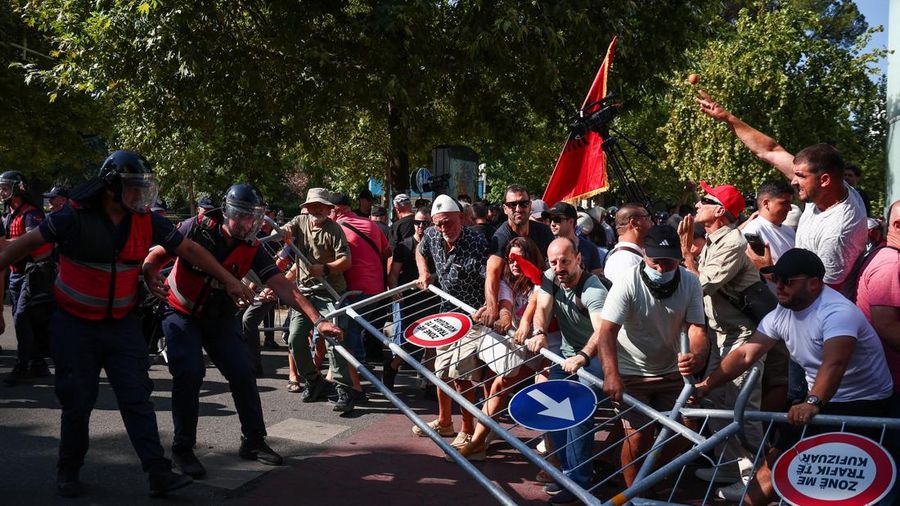
As the morning session of parliament was set to commence, the atmosphere in Tirana was already charged with tension. Protesters, many of whom had traveled from various regions of the country, converged on the government district, carrying banners and chanting slogans such as "Rama Ik" (Rama Go). State authorities had anticipated the surge, deploying hundreds of riot police and erecting heavy metal barricades to seal off the parliamentary complex. However, the physical barriers proved insufficient to contain the collective anger of the crowd, which represented a broad cross-section of Albanian society, including environmental activists, student groups, and opposition political supporters.
The Chronology of the Clashes
The timeline of the day’s events suggests a rapid breakdown in order. By 10:00 AM, the crowd had swelled to its peak size. Initial skirmishes broke out when a segment of the demonstrators attempted to dismantle the police barricades using ropes and manual force. In response, the Albanian State Police deployed tear gas canisters to push back the frontline of the protest. The situation intensified when protesters began hurling projectiles, ranging from stones to eggs, at the officers clad in riot gear.
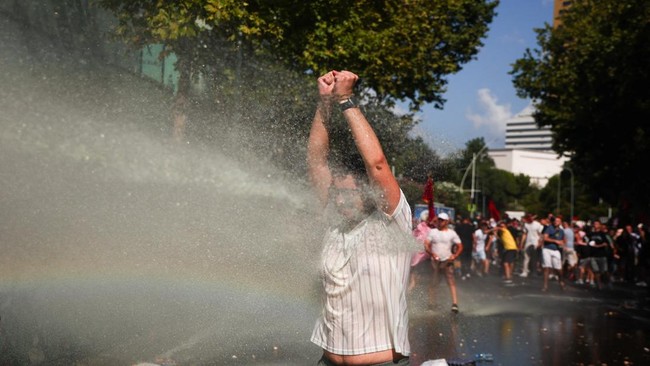
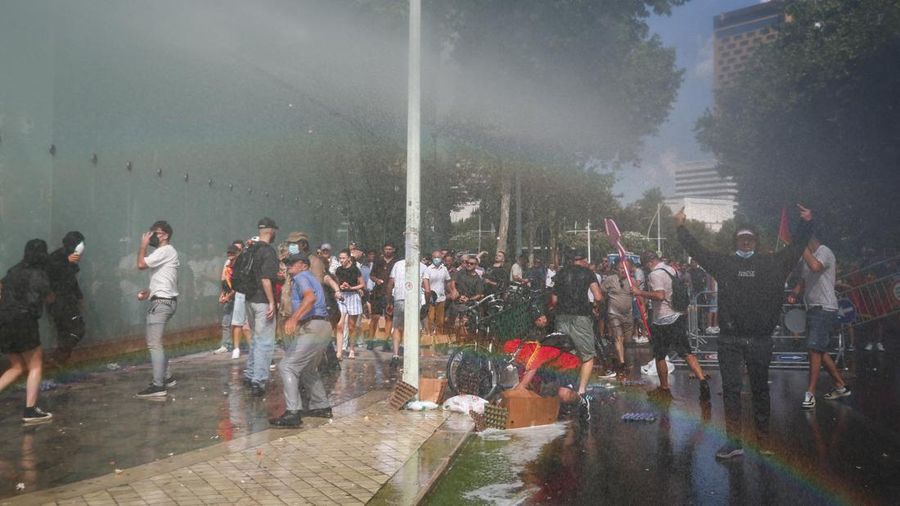
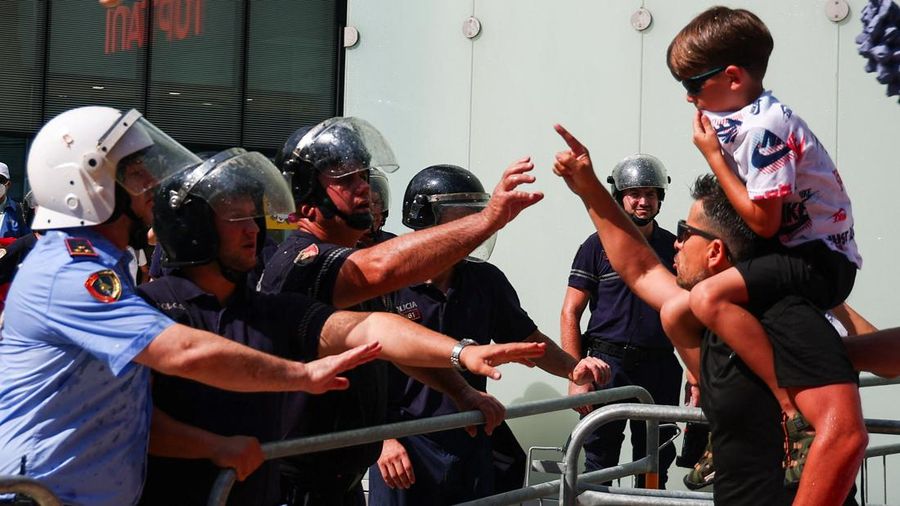
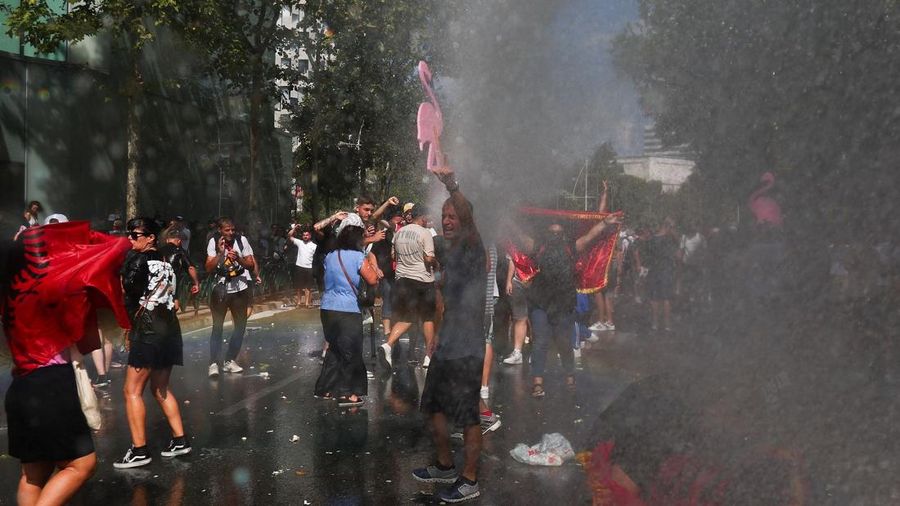
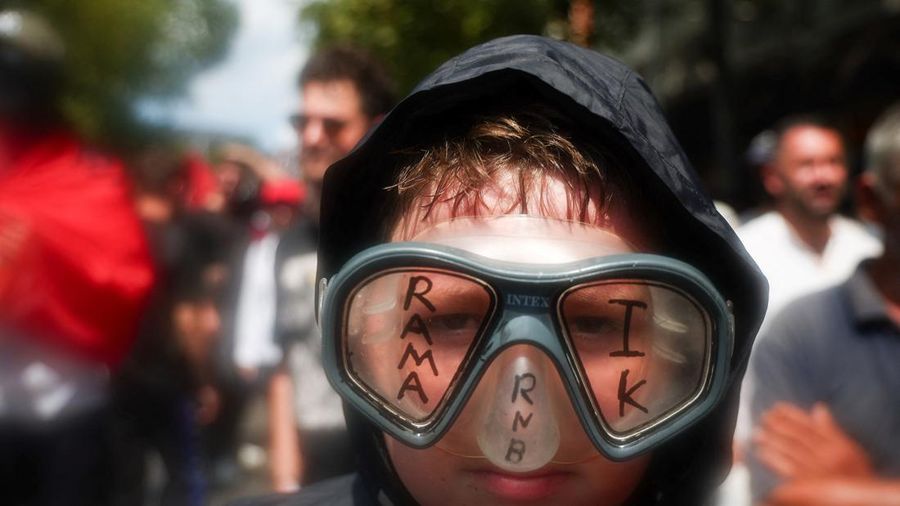
By midday, the police escalated their tactics, deploying high-pressure water cannons to disperse the masses. Visual reports from the scene captured dramatic moments of individuals struggling against the force of the water, including one poignant image of a father carrying a child on his shoulders while attempting to reason with officers. Despite the saturation of the area with water and chemical irritants, the protesters remained resilient, with some donning diving masks and respirators to withstand the police response. The clashes continued intermittently for several hours, leaving several individuals injured on both sides and leading to numerous detentions.
The Kushner Connection and Strategic Investment Laws
At the heart of the current wave of protests is a specific set of luxury development projects on Albania’s pristine Adriatic coast. Earlier this year, reports surfaced detailing the involvement of Jared Kushner’s investment firm, Affinity Partners, in plans to transform Sazan Island—a former military stronghold—and the Zvërnec peninsula into high-end tourist destinations. The proposed investment, estimated to be worth over $1 billion, has become a lightning rod for criticism regarding transparency and the preservation of national assets.
Critics argue that the Rama administration has manipulated the country’s "Strategic Investment" laws to facilitate these projects at the expense of the environment and public interest. The Zvërnec site, in particular, is located within a sensitive ecological zone that has historically been protected. However, recent legislative amendments have cleared the path for large-scale construction in these previously off-limits areas. Protesters allege that these legal shifts were specifically tailored to accommodate foreign investors with high-level political connections, bypassing standard competitive bidding processes and environmental impact assessments.
A Decade of Rule: The Political Context of PM Edi Rama
Prime Minister Edi Rama, who has led the country since 2013, is currently facing one of the most significant challenges to his authority. While his tenure has been marked by efforts to modernize Albania’s infrastructure and steer the nation toward European Union membership, it has also been plagued by persistent accusations of cronyism and the consolidation of power.
The opposition argues that the "Renaissance" project—Rama’s flagship urban renewal program—has primarily benefited a small circle of business elites close to the Socialist Party. Furthermore, the public’s frustration is compounded by a perceived decline in the quality of essential services. Despite the influx of tourism revenue and foreign investment, many Albanians continue to struggle with a failing healthcare system, rising living costs, and a lack of economic opportunities, leading to a significant "brain drain" as young professionals emigrate to Western Europe.
Environmental and Social Implications
The environmental stakes of the proposed developments are considerable. The Adriatic coastline of Albania is one of the last remaining stretches of Mediterranean shore that has not been consumed by mass tourism infrastructure. Environmental NGOs have warned that the construction of luxury villas and resorts in Zvërnec will destroy vital habitats for migratory birds and marine life.
Socially, the protests reflect a growing sentiment that the country’s natural beauty is being "sold off" to the highest bidder without benefiting the local populace. During the demonstrations, one protester wearing a diving mask scrawled with the Prime Minister’s name remarked that the government is more interested in catering to global billionaires than in providing clean water or stable electricity to its own villages. This disconnect between the government’s "glamorous" international projects and the gritty reality of daily life for many Albanians has created a fertile ground for civil disobedience.
Official Responses and Government Defense
In the wake of the violence, the Albanian government has maintained a firm stance. A spokesperson for the Prime Minister’s office released a statement condemning the "acts of vandalism" and accusing opposition leaders of inciting violence for political gain. The government maintains that the projects in question are essential for the modernization of Albania’s tourism sector, which accounts for a substantial portion of the national GDP.
"These investments represent a historic opportunity for Albania to position itself as a top-tier destination in the Mediterranean," the statement read. "We are committed to economic growth and job creation. The allegations of corruption are baseless and are being used by those who wish to see Albania remain in the past."
Law enforcement officials also defended their use of force, stating that the deployment of water cannons and tear gas was a necessary measure to prevent the storming of a state institution. They reported that several officers were treated for injuries caused by blunt objects thrown from the crowd.
International Reactions and the EU Path
The unrest in Tirana is being closely monitored by the international community, particularly the European Union. Albania is currently a candidate for EU membership, and its progress is contingent upon meeting strict criteria regarding the rule of law, anti-corruption measures, and judicial independence. The sight of chaotic street battles and allegations of "tailor-made" legislation for foreign investors could potentially complicate Albania’s accession timeline.
Diplomats from several EU member states have expressed concern over the escalation of violence and have called for a constructive dialogue between the government and civil society. The involvement of a firm linked to a prominent American political figure adds a layer of geopolitical complexity, as it raises questions about the influence of foreign private interests on the domestic policy of a sovereign nation seeking to align with European standards.
Analysis of Broader Implications
The events of July 23, 2026, signify a deep-seated crisis of trust in Albania. When a government’s economic strategy relies heavily on high-profile, non-transparent deals with foreign entities, it risks alienating the domestic population. The "Kushner Resort" has become a symbol of a larger systemic issue: the perceived auctioning of national sovereignty and environmental heritage.
If the Rama administration fails to address the underlying demands for transparency and institutional reform, the frequency and intensity of these protests are likely to increase. The current stalemate suggests that Albania is at a crossroads. On one path lies the potential for significant economic gain through luxury tourism, but at the risk of further domestic fragmentation and environmental degradation. On the other path lies the difficult task of internal reform, which would require the government to prioritize the rule of law over political expediency.
As night fell on Tirana, the smoke from tear gas cleared, but the political clouds remained heavy. The barricades around parliament have been reinforced, but the underlying grievances of the thousands who marched remain unaddressed. For the people of Albania, the battle over the Adriatic coast is not just about resorts and villas; it is a fight for the soul of their democracy and the future of their land. The coming weeks will be critical in determining whether the government will choose the path of de-escalation and reform or continue to meet dissent with the force of the state.