The AI Agent Revolution: Smartphones Evolve from Smart Devices to Intelligent Companions

The smartphone landscape is undergoing a profound transformation, moving beyond the era of generative AI and AI assistants to embrace a new paradigm: the AI Agent. This shift signifies a fundamental redefinition of how users interact with their mobile devices, with manufacturers fiercely competing to integrate these sophisticated AI capabilities. The critical question remains: are AI Agents merely a marketing buzzword, or do they represent a genuinely beneficial and indispensable feature for smartphone users?
A Fundamental Shift in AI’s Role on Mobile Devices
Aryo Meidianto, Head of Public Relations at PT Trinova Digital Indonesia, the official distributor for Honor, has observed a significant evolution in the perception and functionality of AI on smartphones over the past two years. "I’ve witnessed a fundamental shift," Meidianto stated in an interview with Selular on Friday, July 24, 2026. "Initially, AI on phones felt more like a ‘marketing gimmick’ – sophisticated features that were certainly cool but often felt like add-ons rather than core necessities."
However, Meidianto emphasized that the current trend presents a stark contrast to the preceding years. "AI Agents are no longer mere tools waiting for commands; they are now intelligent systems capable of understanding user intent, formulating action plans, and executing tasks autonomously," he explained. This evolution suggests a move towards proactive and independent AI functionality, a significant leap from the reactive nature of previous AI assistants.
The AI Agent as a Future Standard Feature
The question of whether AI Agents will become a ubiquitous feature, akin to the camera or GPS, is met with a strong affirmation from industry observers. Meidianto predicts that AI Agents are poised to become a standard feature within the next two to three years. "Previously, we bought smartphones based on physical specifications like RAM or camera megapixels," he elaborated. "However, in the future, users will choose phones based on how effectively the device simplifies their daily lives." This outlook indicates a future where the true value of a smartphone will be measured by its intelligent capabilities and its ability to integrate seamlessly into a user’s lifestyle.
The Competitive Landscape: Manufacturers Race to Integrate AI Agents
The pursuit of AI Agent technology is not confined to a single innovator. While Nubia recently unveiled its NaviX Ultra, marketed as the first smartphone with an AI Agent, several other smartphone vendors are also reportedly developing and integrating similar capabilities. This growing adoption highlights a broader industry commitment to this advanced AI paradigm.
A Chronology of AI Agent Development and Integration
The journey towards the AI Agent era has been marked by significant milestones and strategic product launches:
- IFA Berlin 2024 & Snapdragon Summit 2024: Honor showcased its concept of an on-device AI Agent, signaling its early commitment to this technology.
- October 30, 2024: Honor officially launched its MagicOS 9.0 in China, featuring the YOYO Agent, described as Honor’s first autonomous AI Agent, alongside the flagship Honor Magic7 Series. This marked a significant step in bringing AI Agents to consumers.
- MWC 2025: Honor further elaborated on its vision by introducing the concept of an AI Agentic Smartphone, outlining a future where devices are driven by intelligent agents.
- Mid-2026, Mobile World Congress Shanghai 2026: Honor unveiled Agentic OS, an architectural system designed for the next generation of AI, laying the groundwork for more sophisticated agentic capabilities.
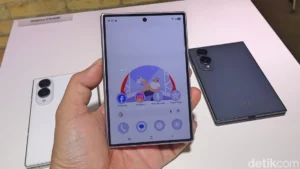
- July 2026: Honor officially announced the "Robot Phone," positioning it as the world’s first robotic phone powered by Agentic OS. This announcement signifies a bold step towards integrating AI Agents into a more embodied and interactive form factor.
Nubia’s NaviX Ultra: A Pioneer in the AI Agent Space
Nubia’s introduction of the NaviX Ultra at the World Artificial Intelligence Conference (WAIC) 2026 in Shanghai, China, has positioned the company as an early entrant in the AI Agent smartphone market. The NaviX Ultra represents a tangible embodiment of the AI Agent concept, aiming to redefine user interaction by enabling the device to understand and execute complex tasks with greater autonomy. The anticipation surrounding its release in Indonesia underscores the growing consumer interest in these advanced AI features.
StepX Neo: Claiming the Title of Mass-Produced AI Agentic Smartphone
Adding to the competitive fervor, StepFun, a Chinese AI startup founded in 2023 by former Microsoft employees, has introduced the StepX Neo. The company boldly claims this device to be the world’s first mass-produced AI agentic smartphone. The StepX Neo’s core proposition is its ability to revolutionize user interaction by enabling the completion of complex, multi-step tasks across various applications and services through a single natural language command. This contrasts sharply with traditional AI assistants on platforms like Android and iPhone, which typically handle one request at a time. The StepX Neo’s fundamental differentiator lies in its ability to orchestrate and execute intricate workflows, potentially streamlining user experiences and enhancing productivity significantly.
The Broader Implications of AI Agents on Smartphones
The emergence of AI Agents has far-reaching implications for the smartphone industry and consumer behavior:
- Enhanced User Productivity: AI Agents can automate repetitive tasks, manage schedules, summarize information, and even assist in creative endeavors, freeing up users’ time and cognitive load. For instance, an AI Agent could be instructed to "plan my weekend trip to Bali, including flights, hotel bookings, and a detailed itinerary based on my preferences," and then autonomously execute these steps by interacting with various travel apps and services.
- Personalized Experiences: As AI Agents learn user habits and preferences, they can offer increasingly personalized recommendations and assistance, making the smartphone a truly intuitive and adaptive companion. This could range from proactively suggesting optimal routes based on real-time traffic and your typical commute patterns to curating news feeds and entertainment options that align perfectly with your interests.
- Democratization of Complex Tasks: By abstracting away the complexity of individual apps and interfaces, AI Agents can empower users to accomplish tasks that might have previously required technical expertise or extensive app navigation. This could be particularly impactful for individuals with disabilities or those less technologically inclined.
- Shift in Hardware Requirements: As AI processing becomes more sophisticated and often occurs on-device for enhanced privacy and speed, future smartphone hardware may see a greater emphasis on AI-specific processing units (NPUs) and efficient power management for sustained AI operations.
- Ethical and Privacy Considerations: The increased autonomy of AI Agents raises important ethical and privacy questions. Ensuring transparency in how these agents operate, how user data is collected and utilized, and maintaining user control over AI actions will be paramount. Robust security measures will be crucial to prevent misuse or unauthorized access to sensitive information processed by these intelligent agents.
- The Future of Software Ecosystems: The rise of AI Agents could fundamentally alter how software ecosystems develop. Instead of users directly interacting with individual apps, they might increasingly interact with AI Agents that then orchestrate app functionalities. This could lead to new forms of app development focused on API integration and agent compatibility.
Industry Outlook and Consumer Adoption
The rapid pace of development and the substantial investments being made by major players like Honor, Nubia, and emerging startups like StepFun suggest that AI Agents are not a fleeting trend but a significant evolutionary step for smartphones. The industry’s consensus is that these intelligent agents will move from niche features to mainstream necessities, fundamentally altering the user experience and the value proposition of mobile devices. As these technologies mature and become more accessible, consumers can expect their smartphones to transform from powerful tools into indispensable, proactive, and intelligent companions, capable of understanding their needs and simplifying their lives in unprecedented ways. The next few years will undoubtedly be pivotal in shaping the future of mobile computing, driven by the relentless pursuit of more intelligent and agentic devices.