Infinix Expands AIoT Ecosystem in Indonesia with Launch of Smart TVs, Portable Fans, Power Banks, and TWS Earbuds

Infinix, a prominent player in the consumer electronics market, has significantly broadened its Artificial Intelligence of Things (AIoT) portfolio in Indonesia with the recent introduction of a diverse range of new products. This strategic expansion goes beyond their established presence in smartphones and smart TVs, now encompassing a variety of personal and portable tech accessories, including power banks, True Wireless Stereo (TWS) earbuds, and even portable fans. The move signals Infinix’s ambition to offer a more integrated and comprehensive smart living experience to Indonesian consumers, capitalizing on the growing demand for connected devices and convenience.
A Sweeping AIoT Offensive
The recent launch event, details of which remain somewhat under wraps but are understood to have taken place in Indonesia, saw Infinix unveil a multi-pronged assault on the AIoT market. While the introduction of new smart TV models has been a focal point, the company has concurrently bolstered its accessory offerings, demonstrating a holistic approach to building its connected ecosystem. This diversification strategy is not uncommon in the tech industry, as brands seek to increase touchpoints with consumers and establish brand loyalty across multiple product categories.
The Indonesian market, with its large and increasingly tech-savvy population, presents a fertile ground for such an expansion. Consumers are increasingly seeking devices that offer seamless connectivity, enhanced convenience, and value for money. Infinix’s aggressive pricing strategy in the past has resonated well with this demographic, and this latest push into AIoT accessories appears designed to reinforce that position.
Portable Cooling Solutions: Battling the Heat with Innovation
At the forefront of the new accessory launches are the innovative portable fans: the XPOCKET FAN and the XPOCKET FAN Pro. These devices are a direct response to the prevalent hot and humid climate in Indonesia, offering a much-needed respite for individuals on the go. The timing of this launch is particularly astute, aligning with periods of intense heat that often grip the archipelago.
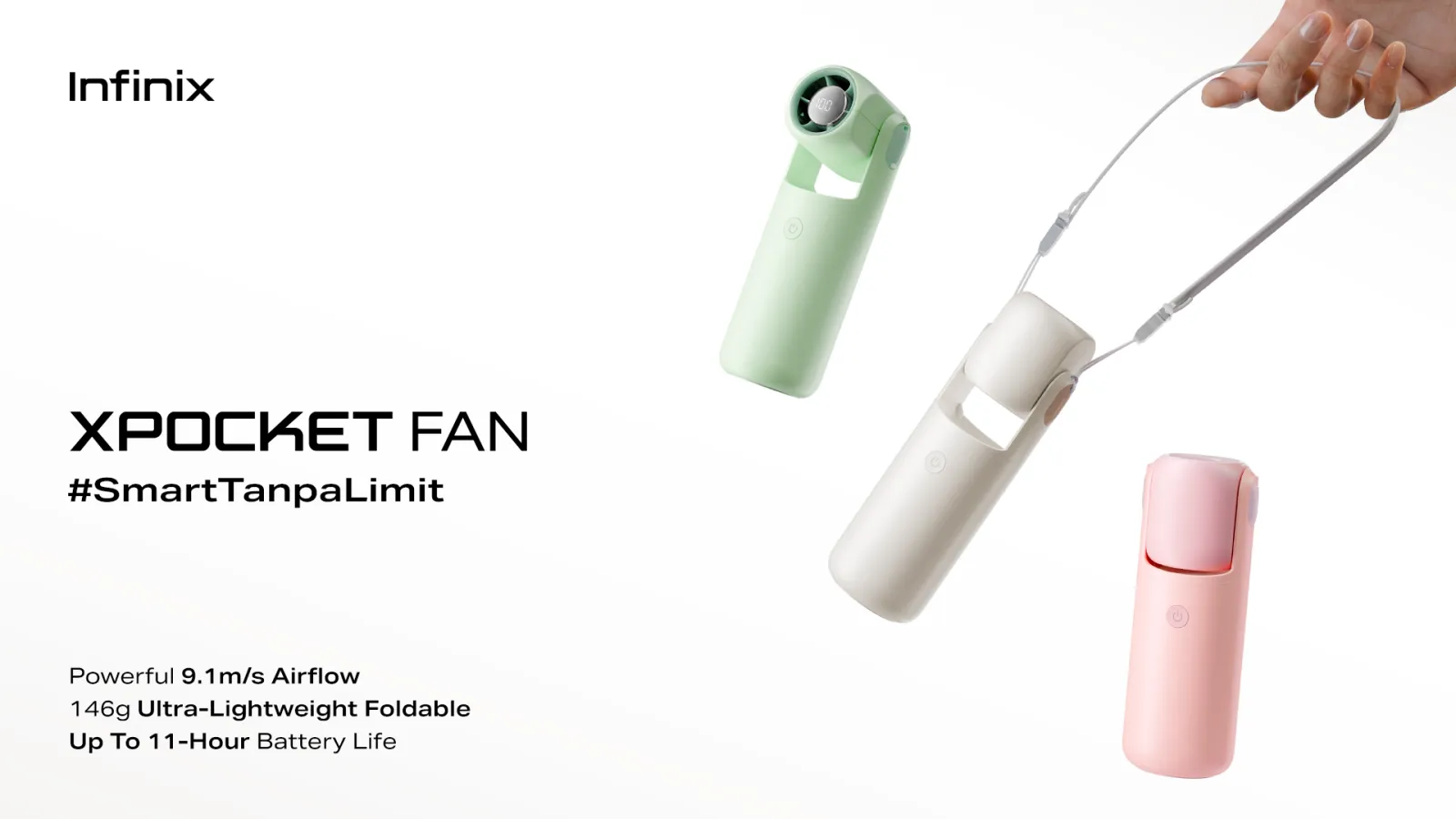
The standard XPOCKET FAN is designed for portability and efficiency, boasting a lightweight design of just 146 grams. Despite its compact form factor, it delivers an impressive airflow of up to 9.1 meters per second, ensuring effective cooling. Its battery life is also a key selling point, offering up to 11 hours of continuous operation on a single charge, making it a reliable companion for extended outdoor activities or travel.
Stepping up the cooling technology, the XPOCKET FAN Pro introduces an advanced 16°C Ice-Cooling feature. This proprietary technology likely employs a method to further chill the air being expelled, providing a more intense and refreshing cooling sensation. Complementing this enhanced cooling capability is an extended battery life of up to 14 hours, further cementing its position as a premium portable cooling solution.
While specific pricing and availability for these portable fans have not yet been disclosed by Infinix, their introduction is expected to create a new sub-category within the portable electronics market in Indonesia, potentially driving competition and innovation among other brands. The emphasis on both performance and battery longevity suggests a focus on practical user needs, a hallmark of successful consumer electronics.
Powering Up: The GTPOWER POD 10K
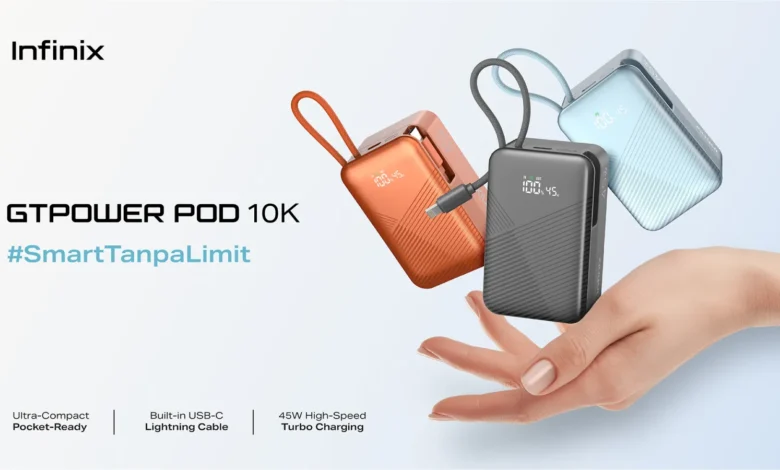
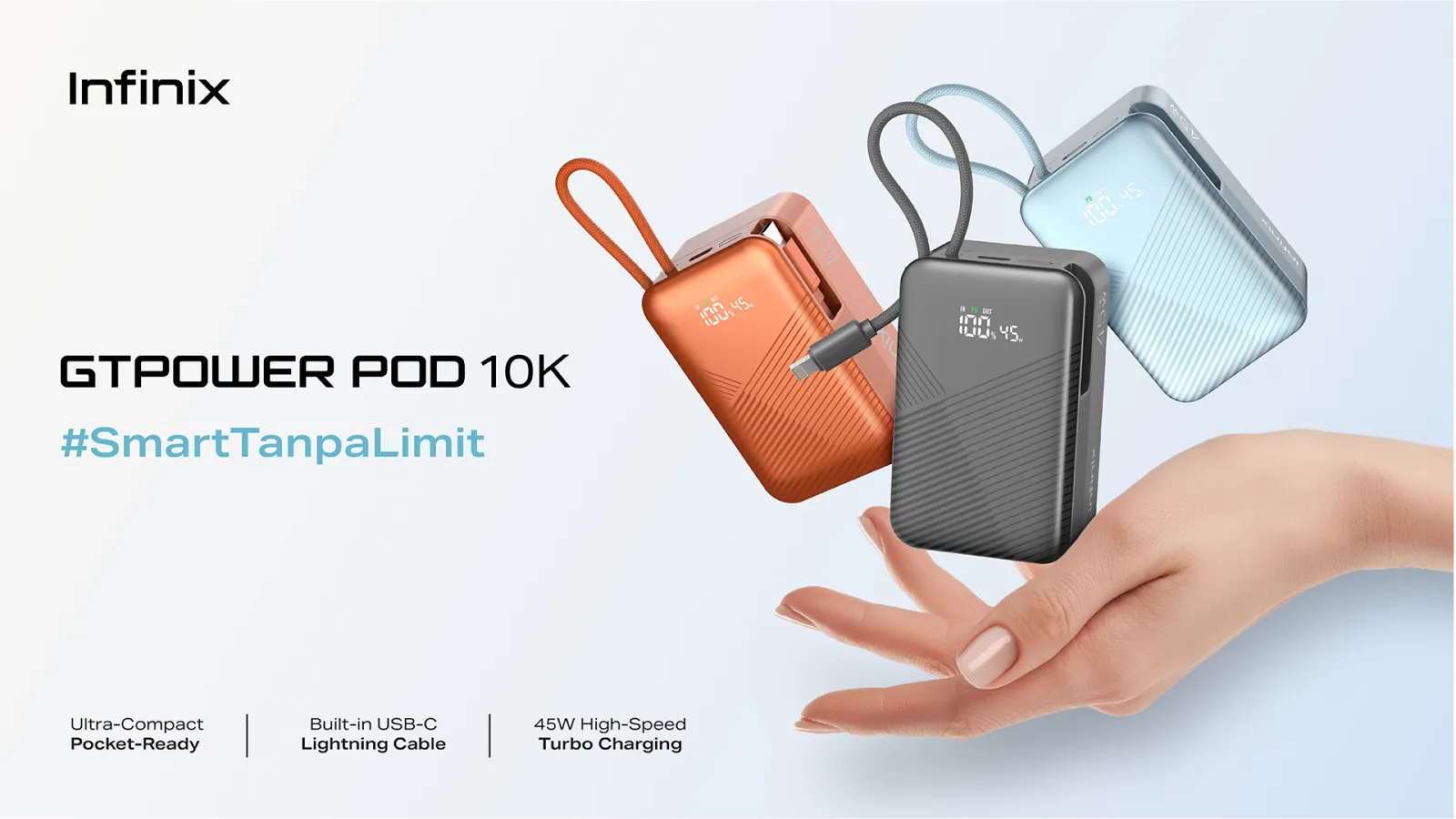
Infinix is also strengthening its power solutions with the introduction of the GTPOWER POD 10K power bank. In an era where device battery life is a constant concern, a reliable and high-capacity power bank is an essential accessory. The GTPOWER POD 10K addresses this need with a substantial 10,000mAh capacity, capable of fully recharging multiple smartphones and other portable devices.
Beyond its capacity, the GTPOWER POD 10K is designed for convenience and speed. It features built-in USB-C and Lightning cables, eliminating the need to carry separate charging cords for different devices. This integrated cable design is a significant user-friendly feature, reducing clutter and ensuring that users always have the right connector on hand. Furthermore, the power bank supports 45W fast charging, allowing for rapid replenishment of device batteries, a crucial factor for users who need to power up quickly.

The GTPOWER POD 10K has been priced at Rp449,000 and is now available for purchase in Indonesia. This pricing positions it competitively within the mid-range power bank market, offering a compelling blend of features and performance for its cost.
Immersive Audio: The XBUDS H5 TWS Earbuds
Completing the new AIoT lineup are the XBUDS H5 True Wireless Stereo (TWS) earbuds. The TWS market has seen explosive growth in recent years, driven by the desire for untethered audio experiences and improved sound quality. Infinix’s XBUDS H5 aims to capture a share of this market with a focus on advanced audio features and extended battery life.
These earbuds are equipped with Bluetooth 6.0, promising stable and efficient wireless connectivity. A standout feature is the inclusion of Spatial 3D Audio, a technology designed to create a more immersive and realistic soundstage, enhancing the listening experience for music, movies, and games. For clearer communication, the XBUDS H5 incorporates ENC (Environmental Noise Reduction) technology, which effectively minimizes background noise during calls, ensuring that the user’s voice is transmitted clearly even in noisy environments.
The battery performance of the XBUDS H5 is also noteworthy. Infinix claims a total usage time of up to 30 hours when factoring in the charging case, which is more than sufficient for a full day’s use for most individuals. The affordability of these earbuds is another key aspect of their market positioning. Priced at Rp169,000, they represent a highly accessible entry point into the TWS market, particularly attractive to budget-conscious consumers looking for feature-rich audio solutions.
Strategic Context and Market Implications
Infinix’s aggressive AIoT expansion in Indonesia can be viewed through several strategic lenses. Firstly, it aligns with the global trend towards a more interconnected digital lifestyle, where consumers expect their devices to work harmoniously together. By offering a growing range of accessories that complement their smartphone and smart TV offerings, Infinix aims to create a stickier ecosystem, encouraging consumers to remain within the Infinix brand for their various technological needs.
Secondly, the company is clearly targeting a broad spectrum of the Indonesian market. The affordable pricing of the XBUDS H5 and the competitive positioning of the GTPOWER POD 10K cater to the mass market, while the advanced features of the XPOCKET FAN Pro suggest an aspiration to move upmarket within specific accessory categories. The dual-tier approach with the portable fans (XPOCKET FAN and XPOCKET FAN Pro) further demonstrates this segmentation strategy.
The introduction of portable fans as a core AIoT product is a particularly interesting development. While power banks and TWS earbuds are common, dedicated cooling devices as part of a broader AIoT strategy are less so. This suggests Infinix’s keen observation of local market needs and its willingness to innovate beyond conventional accessory categories. This move could potentially spur other brands to consider similar climate-specific AIoT solutions for different regions.
Furthermore, the company’s consistent strategy of offering competitive specifications at accessible price points has historically been a key driver of its success. This approach, when applied to the AIoT segment, is likely to resonate well with Indonesian consumers who are often price-sensitive but also demand functional and modern technology.
Future Outlook and Consumer Impact
The success of Infinix’s expanded AIoT portfolio will depend on several factors, including sustained product quality, effective marketing campaigns, and robust after-sales support. The company’s ability to deliver on the promised performance and durability of these new devices will be crucial in building consumer trust and loyalty.
For Indonesian consumers, this expansion offers greater choice and potentially more affordable access to a wider range of smart and convenient technology. The integrated nature of the products, from portable cooling to power and audio, promises a more streamlined and enjoyable digital experience. As the AIoT market continues to mature, Infinix’s strategic moves suggest a commitment to not just participating but actively shaping the landscape in key emerging markets like Indonesia. The company’s continued focus on innovation, coupled with its understanding of local consumer demands, positions it as a significant contender in the evolving world of connected living. The long-term implications of this broad AIoT push could see Infinix become a more dominant force in the Indonesian consumer electronics market, moving beyond its smartphone origins to become a comprehensive technology provider.