
Super Air Jet Expands Connectivity with Six New Direct Routes from Bandung Husein Sastranegara Airport

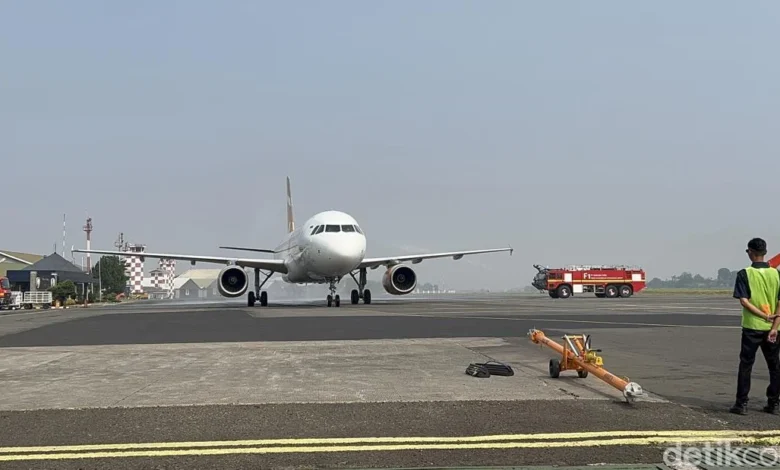
The aviation landscape in West Java is undergoing a significant transformation as Super Air Jet, the rapidly growing carrier under the Lion Group umbrella, officially launched a series of direct flights connecting Bandung’s Husein Sastranegara International Airport (BDO) to six major cities across the Indonesian archipelago. This strategic expansion marks a pivotal moment for the historic airport, which has been seeking to solidify its role as a key aviation hub following a period of fluctuating flight operations and the diversion of jet traffic to the more distant Kertajati International Airport in Majalengka.
The rollout of these routes, which began in mid-September 2026, represents a targeted effort to capture the high demand for domestic travel among Bandung’s urban population and business sector. By reintroducing jet services to Husein Sastranegara, stakeholders hope to capitalize on the airport’s proximity to the city center, a factor that has long made it a preferred choice for travelers seeking efficiency and reduced transit times.
The Chronology of Network Expansion
Super Air Jet’s entry into the Bandung market is not an isolated event but rather a phased operational strategy designed to ensure service stability. The airline officially inaugurated its operations at Husein Sastranegara on Friday, September 18, 2026, with the launch of three high-demand routes: Medan (Kualanamu International Airport), Bali (I Gusti Ngurah Rai International Airport), and Pekanbaru (Sultan Syarif Kasim II International Airport).
Following the successful initial launch, the network expanded further the very next day. On Saturday, September 19, 2026, the airline commenced services to Makassar (Sultan Hasanuddin International Airport) and Pontianak (Supadio International Airport). The final piece of this initial phase, the direct connection to Balikpapan (Sultan Aji Muhammad Sulaiman Sepinggan International Airport), was activated on Tuesday, September 22, 2026. This staggered approach allowed the airline to calibrate ground handling, security, and check-in procedures at the terminal, ensuring that the return of increased jet activity did not overwhelm existing infrastructure.
Strategic Importance of Husein Sastranegara
The resurgence of Husein Sastranegara as a hub for jet aircraft has been greeted with enthusiasm by local government officials. Bandung Mayor Muhammad Farhan noted that the presence of these new routes is a direct response to the market’s call for improved accessibility. For the city of Bandung, which serves as a major hub for creative industries, education, and tourism, maintaining a functional, centrally located airport is vital for economic growth.
Mayor Farhan emphasized that the Medan and Denpasar routes are particularly critical. The Bandung-Medan route provides a vital link between two of Indonesia’s most populous and economically active cities, while the Bandung-Denpasar connection caters to the massive flow of leisure and business travelers moving between West Java and the island of Bali. According to local government assessments, these routes function as the backbone of domestic connectivity for Bandung residents, reducing the reliance on long-distance overland travel or circuitous routes via other regional hubs.
Market Demand and Load Factors
One of the most compelling indicators of the necessity of these routes is the reported load factor. Captain Daniel Putut Kuncoro Adi, President Director of Lion Group, revealed that the initial response from the traveling public has been overwhelming. During the inaugural week of operations, flights on the Medan-Bandung and Bandung-Denpasar sectors recorded a load factor of approximately 90%.
A 90% load factor is considered exceptionally high in the aviation industry, particularly for new routes. It signals a strong pent-up demand and suggests that the pricing and scheduling strategies employed by Super Air Jet are well-aligned with consumer expectations. This high utilization rate also serves as a validation of the decision to restore jet-capable commercial services to Husein Sastranegara, proving that the convenience of the city-center location remains a primary driver for passenger preference.
Integration with Existing Aviation Infrastructure
The entry of Super Air Jet complements the ongoing efforts of other major carriers, including state-owned airlines Garuda Indonesia and Citilink, which have also sought to maintain or expand their presence at Husein Sastranegara. This multi-carrier environment creates a healthier competitive landscape, providing passengers with more choices regarding timing, pricing, and service tiers.
The Lion Group, as the parent organization of Super Air Jet, has committed to providing the necessary fleet capacity to sustain these routes. Captain Daniel highlighted that the airline has the operational depth to support these flights without compromising service standards elsewhere. He also touched upon the technical capacity of the airport, noting that with current infrastructure, Husein Sastranegara could potentially handle up to 25 flights per day.
However, he underscored that the true potential of the airport would be unlocked if it were to regain or expand its status as an international gateway operating on a 24-hour basis. Such a transition would require significant coordination between the Ministry of Transportation, local authorities, and airport operators, but the current volume of domestic traffic suggests that the demand is sufficient to justify long-term infrastructure investment.
Economic Implications and Future Outlook
The broader impact of these flights extends beyond mere convenience. For the local economy, the restoration of these connections is expected to bolster tourism in Bandung and the surrounding West Java regions. Reliable air access to major cities like Makassar and Balikpapan—the latter being a key gateway to Indonesia’s future capital, Nusantara—positions Bandung as a strategically relevant node in the national logistics and travel network.
Furthermore, the "resounding noise" of jet engines returning to Husein Sastranegara serves as a symbolic marker of recovery for the regional aviation sector. After years of policy shifts that saw most jet traffic relocated to Kertajati to manage urban congestion and airspace limitations, the return of commercial jet operations at Husein represents a pragmatic balance between city-center accessibility and operational sustainability.
Analysts suggest that if the current 90% load factor remains consistent, other airlines may look to increase frequencies or add additional destinations from Bandung. This could lead to a virtuous cycle of increased tourism revenue, improved business connectivity, and the potential for a phased expansion of airport facilities. However, stakeholders remain cautious, noting that operational success will depend on strict adherence to noise abatement procedures and the efficient management of air traffic in the Bandung basin, which is geographically constrained by mountainous terrain.
As Super Air Jet solidifies its presence, the eyes of the Indonesian aviation industry will remain fixed on Husein Sastranegara. The success of this expansion serves as a case study in how secondary hubs can remain competitive in a landscape increasingly dominated by larger, purpose-built international airports. By focusing on high-demand city pairs and leveraging the convenience of a downtown airport, Super Air Jet has effectively tapped into a segment of the market that values time-efficiency above all else.
Looking ahead, the collaboration between the local government and private aviation players will be essential in navigating the challenges of airport capacity and operational longevity. For now, the citizens of Bandung benefit from a revitalized travel network, marking a definitive step forward in the city’s connectivity to the rest of Indonesia.
Related posts: