
Signify Innovation Day 2026: Pioneering the Future of Smart Cities and Sustainable Infrastructure


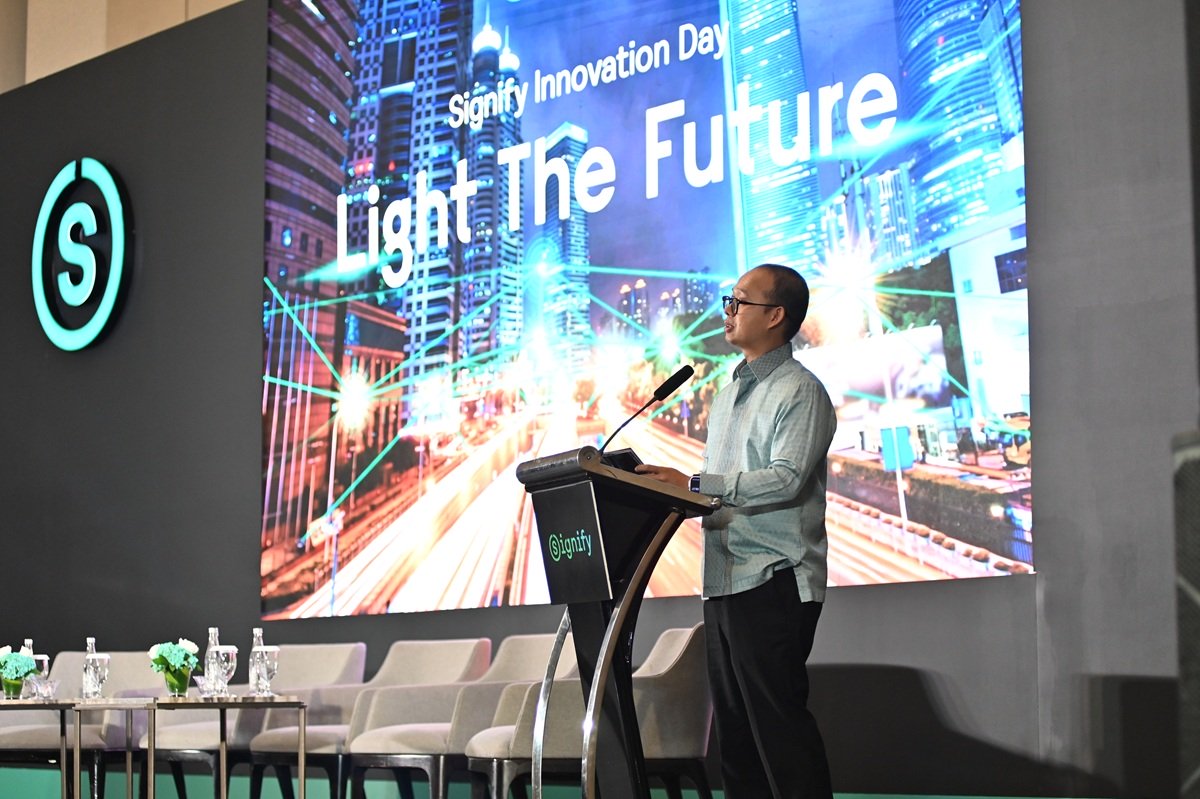
On September 2, 2026, Jakarta became the focal point for a transformative dialogue on urban development as Signify hosted its "Innovation Day – Light the Future" forum. The event served as a high-level convergence of government officials, urban planners, real estate developers, and technology experts, all aimed at dissecting how advanced lighting ecosystems can serve as the backbone for the next generation of smart, liveable, and carbon-neutral cities. As a global leader in lighting, Signify (Euronext: LIGHT) positioned the event not merely as a product showcase, but as a strategic platform to bridge the gap between current urban challenges and the requirements of a 2060 net-zero economy.
The forum was divided into two primary strategic pillars: the modernization of urban landscapes through circularity and the optimization of commercial assets through future-ready, intelligent building technologies. By integrating data-driven lighting solutions, the event highlighted a shift from viewing lighting as a basic utility to recognizing it as a critical infrastructure component capable of enhancing public safety, reducing energy overheads, and driving economic activity.
The Strategic Imperative of Smart Cities and Circularity
The opening session, "Future of Smart & Liveable Cities: Driving Sustainability Through Innovation and Circularity," addressed the mounting pressure on metropolitan areas to accommodate growing populations while simultaneously shrinking their environmental footprint. With urbanization rates in Southeast Asia reaching record highs, the panel—which included representatives from the Indonesian Ministry of Home Affairs, Bappenas, and the Jakarta Public Works Agency—emphasized that infrastructure must be "smart" by default.
A central theme of this discussion was the concept of circularity. In the context of urban infrastructure, circularity moves beyond simple recycling; it involves the design and deployment of lighting assets that are modular, repairable, and energy-efficient throughout their entire lifecycle. By transitioning legacy street lighting to smart LED systems, municipalities can significantly lower their energy expenditure.
Data presented during the forum suggested that smart street lighting, when integrated with sensors, can reduce electricity consumption by up to 70% compared to traditional high-pressure sodium lamps. Furthermore, these systems provide a network of connectivity that can host additional smart city features, such as air quality monitoring, traffic management, and emergency response sensors. The Jakarta government’s ongoing efforts in this space were cited as a critical case study for other burgeoning metropolitan areas, demonstrating that large-scale infrastructure projects are most effective when supported by Public-Private Partnership (PPP) models.
Future-Ready Buildings: The Nexus of ESG and Profitability
The afternoon session shifted the lens from the macro-urban environment to the micro-environment of commercial and residential real estate. "Achieving Sustainability Goals and Business Growth Through Future-Ready Buildings" explored the intersection of Environmental, Social, and Governance (ESG) mandates and the operational reality of building management.
Panelists, including experts from Colliers International Indonesia and the Green Building Council Indonesia, noted that "future-ready" is no longer a luxury but a prerequisite for asset valuation. As global investors place higher premiums on green-certified properties, building owners are finding that intelligent lighting systems—which automatically adjust intensity based on occupancy, daylight harvesting, and thermal conditions—are essential tools for achieving LEED or EDGE certifications.
The core argument presented was that lighting serves as the "digital ceiling" of a building. By embedding sensors within the lighting infrastructure, building managers gain granular data on how spaces are utilized. This data allows for the optimization of climate control, cleaning schedules, and spatial layout, ultimately reducing operational costs while improving the comfort and productivity of occupants.
Insights from Industry Leadership
Lucas Ardhana, Director and Commercial Leader of Professional Business at Signify Indonesia, underscored that the role of light has undergone a fundamental evolution. "We are moving away from an era where light was simply a source of visibility," Ardhana stated. "Today, lighting systems are the neural network of a smart environment. They facilitate security, improve mobility, support economic activity, and, most importantly, act as a primary lever for decarbonization."
Reinforcing this perspective, Jitender Khurana, CEO of Professional Business for Signify in Southeast Asia and the Far East, highlighted the urgency of the transition. He noted that as businesses and governments face mounting pressure to report on Scope 1 and Scope 2 emissions, the transition to connected LED technology provides the most immediate, measurable return on investment. "By connecting human behavior with space and technology, we provide our partners with a level of control that was historically impossible, ensuring that energy is only consumed where and when it is needed," Khurana explained.
Technical Demonstrations and Practical Applications
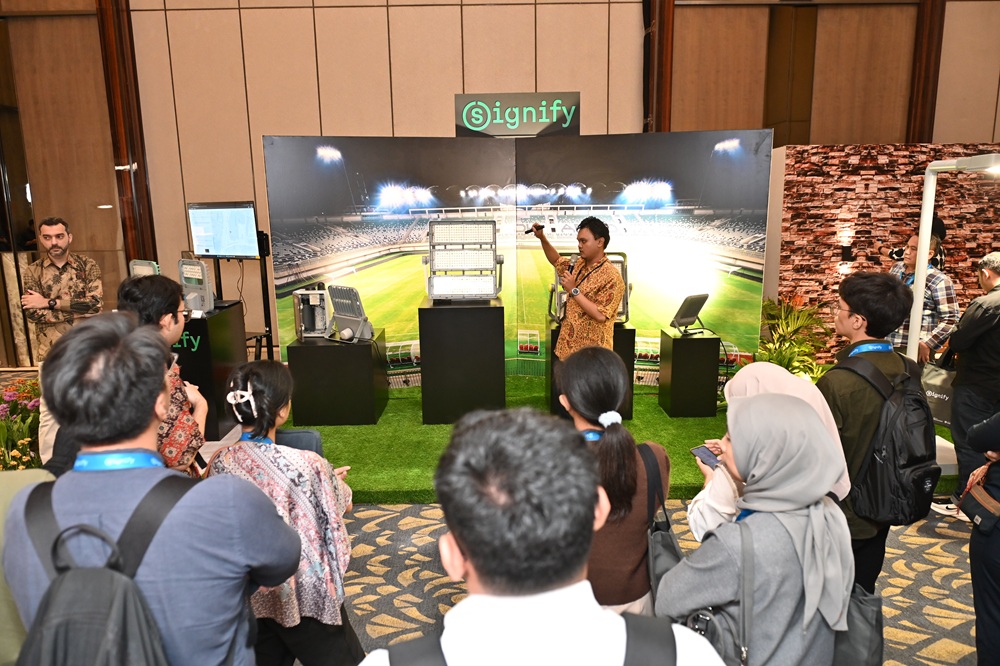
The event featured a comprehensive exhibition of Signify’s latest technological suite, demonstrating applications that spanned from data centers and industrial warehouses to luxury hospitality and public stadiums. The live demonstrations illustrated the versatility of connected lighting, showing how the same underlying technology can be calibrated for the distinct requirements of a factory floor—where safety and visibility are paramount—versus a retail environment, where lighting is used to enhance the customer experience and drive sales.
One of the most compelling demonstrations was the integration of lighting with building management software, showing how a single dashboard could control everything from facade aesthetics to emergency egress illumination. This level of interoperability is critical for modern developers who are looking to reduce the complexity of their building management systems by consolidating multiple functions onto a single digital platform.
Broader Implications and Future Outlook
The timing of Signify Innovation Day is significant. As Indonesia continues to align its national development agenda with the target of achieving Net Zero Emissions (NZE) by 2060, the role of energy-efficient infrastructure cannot be overstated. Lighting accounts for a significant portion of global electricity consumption, and by digitizing this sector, Indonesia has the potential to shave millions of tons of carbon emissions from its annual output.
However, the path forward requires more than just hardware. The discussions at the forum highlighted the necessity of policy frameworks that incentivize the adoption of smart technology. The exploration of the KPBU (Kerja Sama Pemerintah dengan Badan Usaha) model suggests a growing recognition that the scale of investment required for city-wide smart lighting upgrades necessitates a collaborative approach between the public and private sectors.
From an economic standpoint, the "Future-Ready" paradigm promises to transform building assets from static cost centers into dynamic, value-generating environments. For commercial property owners, the ability to lower energy costs while improving the indoor environment directly correlates with higher occupancy rates and better tenant retention. For government officials, the ability to manage urban infrastructure remotely and intelligently represents a major leap in governance efficiency.
Conclusion: A Foundation for Resilient Urbanization
The Signify Innovation Day – Light the Future forum successfully framed the conversation around lighting not as a peripheral concern, but as an essential element of modern, resilient, and sustainable development. By providing a platform for stakeholders to discuss the technical, financial, and policy-related hurdles to implementation, the event underscored that the technology to create smart, liveable cities already exists.
The challenge, as identified by the experts in attendance, is the synchronization of these technologies with broader urban development plans. As cities continue to expand and the requirements for energy efficiency become more stringent, the integration of intelligent lighting will undoubtedly serve as a foundational element of the urban landscape. By embracing circularity, data-driven management, and energy-efficient lighting, Indonesia is setting a clear trajectory for a more sustainable, and brilliantly illuminated, future.
The event concluded with a consensus among participants that the focus must now shift from pilot projects to large-scale deployment. With the support of government frameworks and the proven efficacy of private sector innovations, the goal of creating cities that are not only habitable but truly "smart" and "future-ready" is well within reach, marking a significant milestone in the country’s industrial and urban evolution.