Samsung Unveils Health Assistant: A Groundbreaking AI-Powered Personal Health Companion

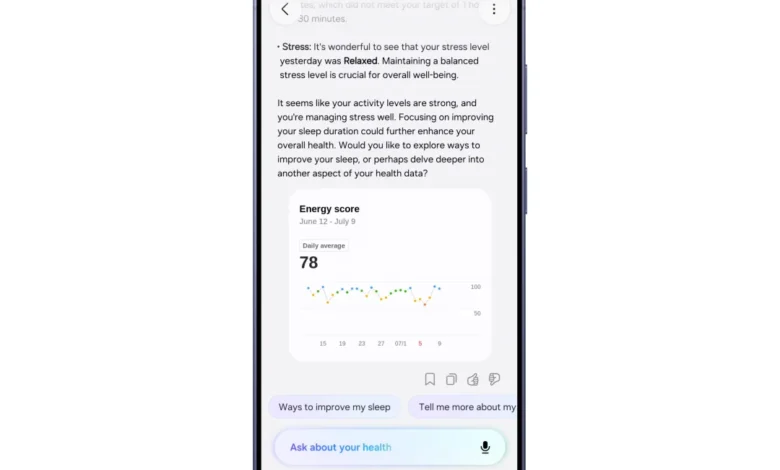
Samsung has officially announced the development of its latest innovation, the Health Assistant, a sophisticated personal health companion powered by artificial intelligence. This groundbreaking feature is slated to be integrated into the widely used Samsung Health application, promising to revolutionize how users manage and understand their well-being. The introduction of Health Assistant marks a significant leap forward in Samsung’s commitment to leveraging advanced technology for personal health management, building upon its existing ecosystem of health and fitness tracking devices and software.
The Health Assistant is designed to provide users with personalized guidance and actionable insights to help them achieve their health and fitness goals. Its core functionality revolves around the comprehensive analysis of data across five key pillars of well-being: sleep, activity, nutrition, mindfulness, and vital signs. By synthesizing information from these diverse areas, the AI will generate detailed health summaries that are not only informative but also actionable. Crucially, the system aims to elucidate the intricate relationships between these different health variables, demonstrating how improvements or deficiencies in one area can impact others. This holistic approach moves beyond simple data aggregation, offering users a deeper understanding of their overall health landscape.
The development of Health Assistant is not an isolated event but rather a culmination of Samsung’s sustained investment in digital health and artificial intelligence. The Samsung Health platform, first launched in 2015, has evolved from a basic step tracker to a comprehensive health management hub, integrating data from a wide array of Samsung wearables, smartphones, and even third-party devices. Over the years, Samsung has consistently introduced new features, such as advanced sleep tracking, stress management tools, and guided workout programs, demonstrating a clear trajectory towards more intelligent and personalized health solutions. The introduction of an AI-powered assistant represents the next logical evolution in this journey, aiming to transform raw data into meaningful guidance.
A Multifaceted Approach to Health Monitoring
At the heart of the Health Assistant’s capabilities lies its ability to process and interpret a vast amount of user-generated health data. The five pillars it monitors – sleep, activity, nutrition, mindfulness, and vitals – represent the foundational elements of a healthy lifestyle.
- Sleep: This pillar likely encompasses data such as sleep duration, sleep stages (light, deep, REM), sleep quality, and consistency. Poor sleep is linked to a myriad of health issues, including impaired cognitive function, weakened immunity, and increased risk of chronic diseases.
- Activity: This would include metrics like steps taken, distance covered, calories burned, active minutes, and the intensity of workouts. Regular physical activity is crucial for cardiovascular health, weight management, and mental well-being.
- Nutrition: While direct food logging might be a future enhancement, the AI could infer nutritional patterns based on activity levels, weight changes, and potentially user-inputted dietary information. Understanding dietary habits is essential for energy levels, disease prevention, and overall health.
- Mindfulness: This pillar could involve data from stress-tracking features on wearables, guided meditation sessions completed within Samsung Health, or even user-reported mood tracking. Mindfulness practices are increasingly recognized for their benefits in reducing stress, improving emotional regulation, and enhancing mental clarity.
- Vitals: This would encompass a range of physiological measurements, such as heart rate, heart rate variability (HRV), blood oxygen levels (SpO2), and potentially blood pressure readings if supported by compatible devices. These vital signs provide crucial indicators of the body’s physiological state and can signal potential health concerns.
By integrating and analyzing data from these five pillars, the Health Assistant aims to move beyond mere reporting of numbers. It seeks to provide users with a cohesive narrative of their health, highlighting trends, identifying potential areas of concern, and offering evidence-based recommendations. This level of insight is particularly valuable in a world where individuals are increasingly bombarded with health information but may lack the tools or expertise to make sense of it all.
Leveraging AI for Deeper Insights and Proactive Care
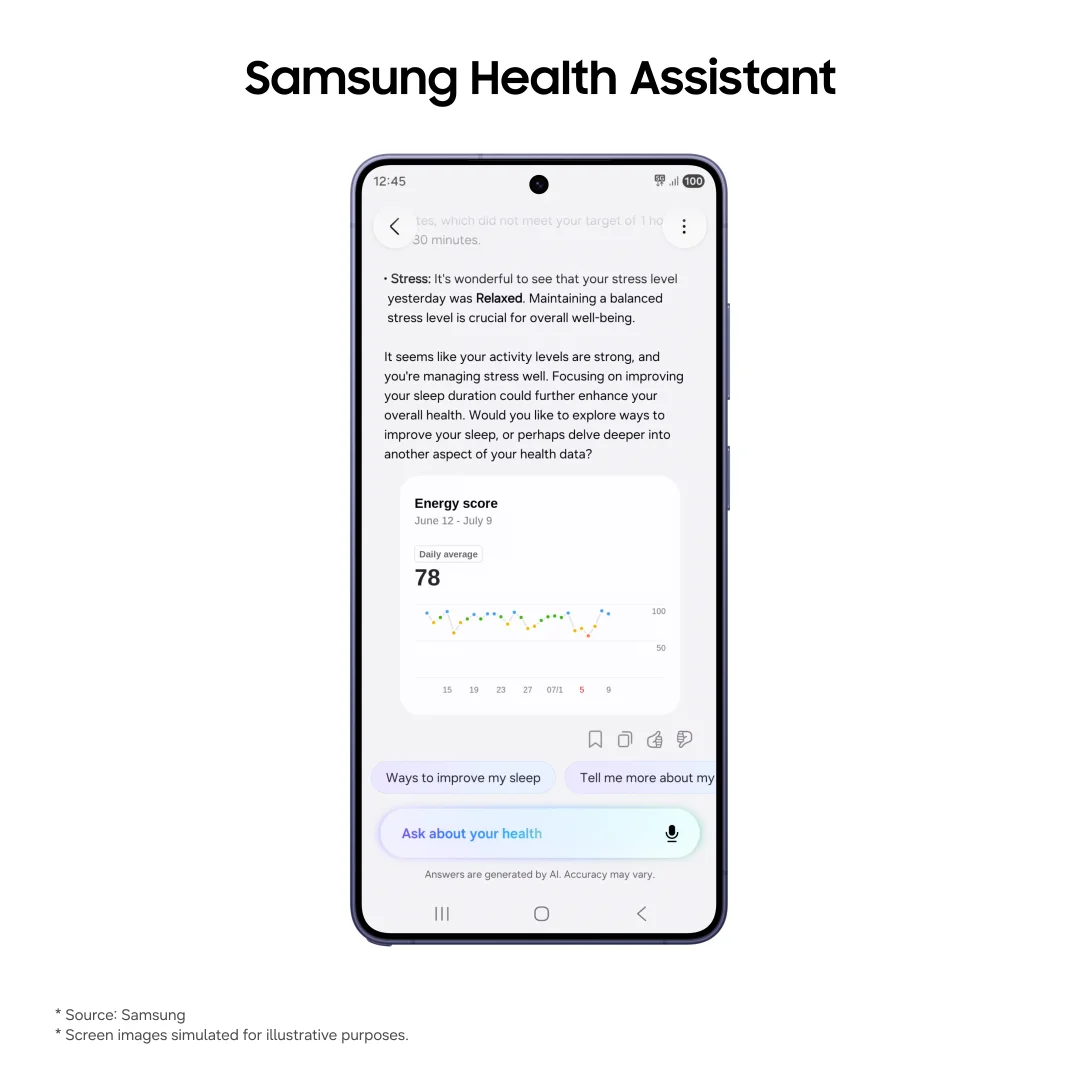
The Health Assistant’s intelligence is powered by advanced AI algorithms that can identify patterns that might otherwise go unnoticed by the user. This proactive approach is a significant departure from traditional health tracking, which often relies on the user to interpret the data themselves. The AI can detect subtle shifts in sleep patterns, unusual activity levels, or fluctuations in vital signs that, when viewed in context, could indicate an underlying issue or an opportunity for improvement.
Furthermore, the recommendations provided by the Health Assistant are not generated in a vacuum. Samsung emphasizes that these suggestions are validated by a team of medical professionals and certified health instructors. This commitment to evidence-based guidance lends credibility to the AI’s advice and ensures that users are receiving information that is both accurate and safe. This collaborative approach between AI and human expertise is a crucial aspect of building trust and ensuring the efficacy of digital health solutions.
Future-Forward Development: Personalized Coaching and Contextual Awareness
Looking ahead, Samsung has outlined ambitious plans for the Health Assistant, envisioning it as a comprehensive health coach. This future iteration will focus on behavioral change, guiding users towards sustainable healthy habits through a series of personalized coaching modules. The integration of a "Personal Data Engine" is a key component of this future vision. This engine will allow the Health Assistant to understand the user’s context – their schedule, preferences, and even their calendar events – to provide highly personalized and contextually relevant responses and recommendations.
For instance, the AI might learn that a user has a busy work schedule and is prone to skipping meals. It could then suggest convenient, healthy meal options that fit within their time constraints or recommend a short mindfulness exercise during a break. Similarly, if the AI detects a pattern of reduced activity on weekends, it might suggest engaging outdoor activities that align with the user’s known preferences and local weather conditions. This level of personalization moves the Health Assistant beyond a generic health app and positions it as a truly intelligent companion that understands and adapts to the user’s unique life circumstances.
The exploration of behavioral change is particularly significant. Many health interventions fail not because the advice is flawed, but because individuals struggle to implement and maintain new habits. By leveraging AI to provide targeted coaching and support, Samsung aims to address this critical gap, empowering users to make lasting positive changes to their health. This could involve setting realistic goals, providing motivational nudges, and celebrating milestones, all tailored to the individual’s progress and challenges.
Current Status and Global Rollout
As of its announcement, the Health Assistant is still in its beta phase. This means that the feature is undergoing further testing and refinement before its full public release. Currently, access is limited to users in select countries. This phased rollout strategy is common for new technology releases, allowing companies to gather feedback, identify and address bugs, and ensure a smooth user experience upon wider availability. The exact timeline for the global release, including its availability in Indonesia and other key markets, has not yet been specified by Samsung. However, the company’s track record suggests a methodical approach to expanding its services worldwide.

The anticipation surrounding the official release is palpable, particularly among the vast user base of Samsung devices. The prospect of having an AI-powered health expert readily accessible through their smartphone or smartwatch holds significant appeal. The question of user interest, as posed by the original report, is a crucial one. With the increasing awareness of the importance of proactive health management and the growing reliance on technology for daily tasks, a feature like Health Assistant is well-positioned to capture significant user adoption.
Broader Implications for the Digital Health Landscape
The introduction of Samsung’s Health Assistant has several implications for the broader digital health industry. Firstly, it signifies a growing trend towards the integration of sophisticated AI into consumer-facing health applications. As AI technology matures, we can expect more personalized, predictive, and prescriptive health solutions to emerge from various tech giants and health startups.
Secondly, it underscores the importance of a holistic approach to health. By focusing on multiple interconnected pillars of well-being, Samsung is encouraging users to think about their health as a complex system rather than a collection of isolated metrics. This aligns with the growing recognition within the medical community of the interconnectedness of physical and mental health.
Thirdly, the emphasis on evidence-based recommendations validated by medical professionals is a crucial step in building trust and ensuring the responsible deployment of AI in healthcare. As these technologies become more pervasive, ethical considerations, data privacy, and the accuracy of AI-generated advice will remain paramount. Samsung’s stated commitment to professional validation suggests a recognition of these challenges.
Finally, the development of features like the Personal Data Engine points towards a future where digital health tools are deeply integrated into our daily lives, acting as seamless extensions of our personal routines and preferences. This level of contextual awareness could lead to more effective interventions and a greater likelihood of sustained healthy behaviors.
While specific supporting data on the AI models or the exact algorithms used in Health Assistant has not been publicly disclosed by Samsung, the company’s investment in research and development in artificial intelligence and health technology is well-documented. Samsung has consistently been at the forefront of wearable technology, with its Galaxy Watch series often lauded for its comprehensive health tracking capabilities. The integration of AI is a natural progression, building upon the vast amounts of anonymized health data collected from millions of users globally, which can be used to train and refine AI models.
The potential impact of Health Assistant extends beyond individual users. If successful, it could contribute to a broader public health shift towards preventative care. By empowering individuals to take more control of their health and make informed decisions, such tools could potentially reduce the burden on healthcare systems by preventing or delaying the onset of chronic diseases. This proactive approach, driven by intelligent technology, represents a significant paradigm shift in how we think about and manage our health in the 21st century. As the beta phase progresses and the feature becomes more widely available, its true impact will become clearer, but the initial announcement signals a promising future for AI-driven personal health management.