
Governor H Muhidin Receives The Sraya Recognition for Women Empowerment and Inclusive Growth at the APB Sraya Nusantara 2026

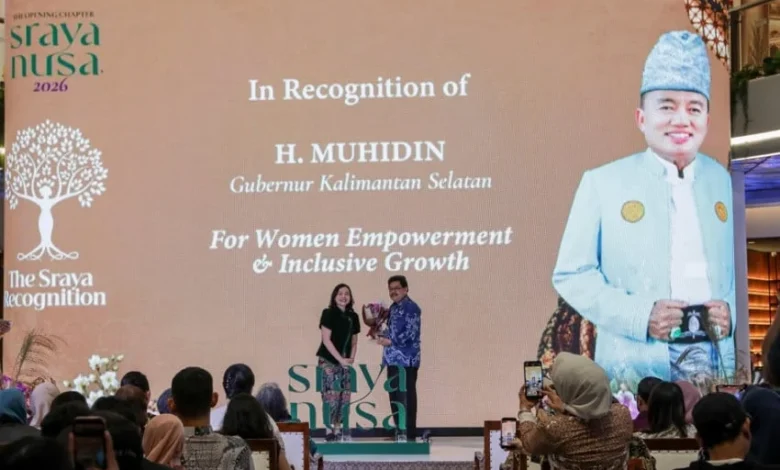
The provincial government of South Kalimantan, led by Governor H Muhidin, has achieved national recognition for its strategic commitment to gender equality and inclusive regional development. On Friday, September 11, 2026, Governor Muhidin was honored with the prestigious The Sraya Recognition for Women Empowerment & Inclusive Growth during the Apresiasi Perempuan Berpengaruh (APB) Sraya Nusantara 2026 ceremony held in Jakarta. This award serves as a significant milestone, highlighting the effectiveness of integrating gender-responsive policies into the broader framework of provincial governance in Indonesia.
The APB Sraya Nusantara is an annual event that celebrates individuals and institutions that have demonstrated exceptional leadership in advancing the status of women and fostering inclusive economic growth. By bestowing this award upon a male head of regional government, the committee underscored the importance of gender-inclusive leadership as a catalyst for sustainable development. Governor Muhidin’s administration was recognized specifically for its multifaceted approach, which addresses the systemic challenges faced by women, children, and vulnerable communities through economic, educational, and legislative interventions.
The Pillars of Inclusive Governance in South Kalimantan
The policy direction spearheaded by Governor Muhidin is built upon several foundational pillars designed to create an equitable environment. Central to these efforts is the economic empowerment of women through the strengthening of Micro, Small, and Medium Enterprises (MSMEs). Recognizing that women constitute a large portion of the informal and creative economy sectors in Kalimantan, the provincial government has prioritized access to credit, business training, and market expansion.
Furthermore, the administration has placed a strong emphasis on social infrastructure. The integration of maternal health services, child protection programs, and expanded educational access reflects a holistic understanding of how public policy influences quality of life. By focusing on these areas, the provincial government aims to bridge the gap between rural and urban development, ensuring that the benefits of progress are not concentrated solely in major population centers but are felt across the diverse geography of South Kalimantan.
Chronology of Progress and Key Policy Initiatives
The journey toward this national recognition has been marked by a series of deliberate policy steps over the past several years. While the award was received in September 2026, the groundwork for these initiatives was laid much earlier.
In early 2025, the South Kalimantan administration began a comprehensive review of its provincial budget, reallocating funds to prioritize gender-responsive programs. This shift was motivated by data indicating that while economic growth in the region was steady, the benefits were not being distributed equitably, particularly concerning female-headed households.
By early 2026, the focus expanded toward digital literacy and the protection of women and children in the digital sphere. A critical juncture occurred on July 27, 2026, when the provincial government, in collaboration with the Regional Police (Polda Kalsel), the Ministry of Religious Affairs, and 21 higher education institutions, signed a landmark memorandum of understanding. This agreement established a unified forum dedicated to the prevention and handling of violence, including cybercrimes, targeting women and children within academic environments and Islamic boarding schools (pesantren).
This move was a response to the rising trend of digital harassment and exploitation, which required a more coordinated, inter-institutional response. The creation of specialized task forces under this initiative represents a proactive approach to modern governance, acknowledging that the digital divide and digital risks are significant barriers to inclusion.
Official Responses and Strategic Vision
Representing the Governor at the awards ceremony, the Head of the Communication and Informatics Office of South Kalimantan, Muhamad Muslim, emphasized that the recognition is not merely a symbolic victory but a validation of the provincial administration’s core philosophy.
"Many of Governor H Muhidin’s priority programs are focused on women, particularly in the fields of education, health, and MSMEs," Muslim stated during the event. "This award is proof of our commitment to development that empowers women in accordance with our regional motto, ‘Working Together to Embrace All.’"
Governor Muhidin himself has frequently articulated that his administration views gender equality not as an isolated issue, but as a critical component of economic stability. "We want to provide education to the younger generation regarding the dangers of violence and the misuse of digital technology," the Governor noted in a post-event briefing. His vision involves a future where technology is a tool for empowerment rather than a medium for harm, necessitating rigorous enforcement of protection laws alongside massive public education campaigns.
Economic and Educational Connectivity
The administration’s focus on infrastructure development has also played a crucial role in gender inclusivity. The development of the Pulau Laut Bridge, for instance, is a strategic investment that transcends simple logistics. By improving connectivity to remote island regions, the project directly impacts the ability of female entrepreneurs to access larger markets, thereby reducing the "geography tax" that often suppresses the economic potential of women in peripheral areas.
In the realm of education, the implementation of the Paket A, B, and C programs (the Indonesian equivalent of alternative basic, junior, and senior secondary education) has been instrumental. These programs offer a lifeline to women in remote areas who may have missed out on traditional schooling. By validating these pathways and ensuring they are accessible, the provincial government is fostering a more skilled and empowered female workforce, which is essential for the long-term competitiveness of South Kalimantan.
Analysis: Implications for Regional Development
The recognition of South Kalimantan on the national stage carries several implications for the future of Indonesian regional governance. Firstly, it highlights the shift toward "data-driven inclusion." Provinces that successfully integrate gender-disaggregated data into their planning processes are increasingly finding that this leads to more efficient resource allocation.
Secondly, the emphasis on a multi-stakeholder approach—involving police, religious authorities, and academic institutions—suggests a move away from siloed governance. By bringing together diverse sectors to combat violence against women, the South Kalimantan government has created a template for other regions to follow. This model recognizes that the state cannot solve complex social issues alone; it requires the active participation of civil society and educational institutions to foster cultural change.
However, challenges remain. The sustainability of these initiatives depends on long-term funding and the ability of successive administrations to maintain these priorities. As the digital landscape continues to evolve, the capacity of the provincial government to keep pace with new forms of cyber-violence will be tested. The forum established in July 2026 will serve as the primary indicator of the administration’s ability to adapt to these ongoing challenges.
Conclusion: A Model for National Consideration
The Sraya Recognition for Women Empowerment & Inclusive Growth serves as a testament to the fact that progress is possible when leadership aligns its political will with the practical needs of its citizens. Through a combination of infrastructure investment, educational reform, and the establishment of robust protective legal frameworks, South Kalimantan has positioned itself as a leader in inclusive development.
As the province continues to implement these policies, the outcomes will be closely watched by observers of regional governance across Indonesia. The success of these programs in the coming years will likely hinge on the continued integration of the digital and physical protection of women, alongside the ongoing economic support for MSMEs. For now, the administration of Governor H Muhidin has set a high bar, demonstrating that effective regional leadership is defined by its ability to leave no one behind, regardless of gender or geography.
This achievement reflects the broader national goal of the 2026 development agenda, which calls for a more resilient, inclusive, and empowered society. By focusing on the foundational elements of health, education, and economic opportunity, South Kalimantan is not only contributing to its own growth but is also providing a blueprint for the rest of the nation to emulate as it strives toward a more equitable future.