Daftar 25 Jenderal Bintang 3 Polri usai Mutasi Terbaru, Nomor 15 Reserse Eks Kasatgas Antimafia Bola

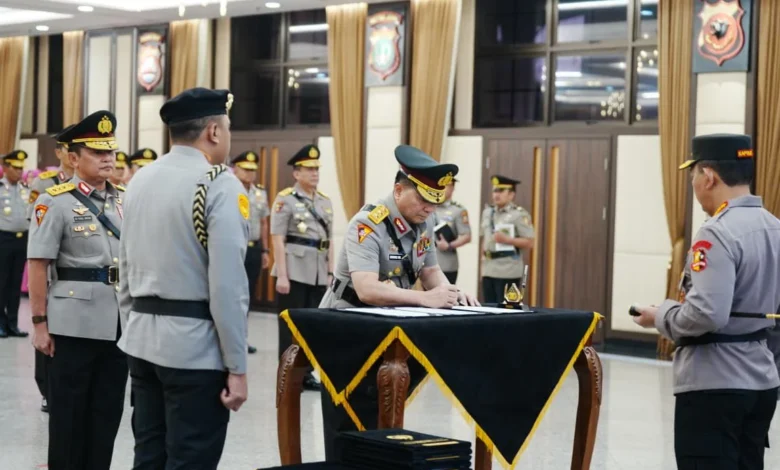
The Indonesian National Police (Polri) has undergone a significant leadership reshuffle, marking a strategic pivot in the organization’s structure as it prepares for the challenges of the latter half of the decade. Following the issuance of three official telegrams—ST/1877/VIII/KEP./2026, ST/1878/VIII/KEP./2026, and ST/1879/VIII/KEP./2026—signed by Deputy Chief of Police Commissioner General (Komjen) Dedi Prasetyo, a total of 424 high-ranking and mid-level officers have been reassigned. Among the most notable outcomes of this sweeping reorganization is the promotion of former North Sulawesi Regional Police Chief, Roycke Harry Langie, to the rank of Commissioner General, assuming the prestigious role of the Chief of Police’s Main Assistant for Operations (Astamaops).
This transition comes at a critical juncture for the force, as it manages the retirement of high-profile leaders, including the former Astamaops, Komjen Pol Fadil Imran, who concludes his distinguished career in the Bhayangkara Corps. The influx of new leadership into the three-star rank (Komjen) is seen by analysts as a calculated move to ensure continuity in institutional strategy while fostering meritocratic advancement within the force.
The Strategic Importance of the 2026 Reshuffle
In the hierarchy of the Indonesian National Police, the rank of Commissioner General represents the pinnacle of operational and administrative leadership, just below the Chief of Police (Kapolri). The current roster of 25 three-star generals is divided into two primary categories: those serving directly within the internal structure of the Polri headquarters and those serving in external government agencies, such as the National Narcotics Agency (BNN), the Ministry of Law and Human Rights, and the State Intelligence Agency (BIN).
The appointment of Roycke Harry Langie as Astamaops is particularly significant. As the head of operations, Langie will be responsible for overseeing the force’s strategic response to national security threats, disaster management, and large-scale public order operations. His promotion reflects the organization’s trend of elevating regional chiefs who have demonstrated exceptional crisis management capabilities at the provincial level to national-level policymaking roles.
Chronology of the Transition
The administrative process leading to the current configuration of the police leadership began in early September 2026, as the force evaluated the upcoming retirement schedules of several key figures. The decision-making process, finalized by Kapolri Jenderal Pol Listyo Sigit Prabowo, followed rigorous internal evaluations by the Council of Positions and Ranks (Wanjakti).
- August 2026: Initial assessments of potential candidates for vacant positions began, focusing on institutional needs and leadership succession planning.
- September 14, 2026: The issuance of three separate telegrams officially confirmed the reassignment of 424 officers across the archipelago.
- September 15, 2026: Formal announcements were made by the Public Relations Division of the Polri, confirming the shift in the three-star general roster and emphasizing the professional nature of the movement.
Internal vs. External Assignments
A critical aspect of the current 25-general structure is the balance between internal operational control and inter-agency collaboration. Approximately 10 of these officers remain embedded within the Polri organizational structure. This includes figures like the Inspector General of the Police (Irwasum), Komjen Pol Wahyu Widada. As a recipient of the Adhi Makayasa award (the highest honor for a Police Academy graduate) in 1991, Widada’s role is pivotal in maintaining transparency, internal auditing, and the overall integrity of the institution.
Conversely, the remaining 15 three-star generals are currently seconded to other government ministries or agencies. This inter-agency distribution serves two purposes: it provides these institutions with high-level security expertise and facilitates seamless cooperation between the police and other pillars of the Indonesian government.
Profile Focus: The Shift in Reserse Leadership
Among the most prominent names in this new lineup is Komjen Pol Hendro Pandowo, who currently serves as the Inspector General for the Ministry of Law and Human Rights. Hendro’s career trajectory has been defined by his investigative acumen. He gained national prominence for his tenure as the head of the "Satgas Antimafia Bola" (Anti-Football Mafia Task Force).
During his time leading this task force, Hendro oversaw high-stakes investigations into match-fixing scandals, bribery within the football league, and systemic corruption that had long plagued the sport in Indonesia. His success in dismantling these clandestine networks earned him a reputation as a no-nonsense investigator, and his rise to the rank of Komjen is viewed as an acknowledgment of his commitment to investigative reform. His current role at the Ministry of Law and Human Rights involves high-level oversight of prison systems and legal administration, areas that require the exact level of scrutiny he applied during his anti-corruption efforts.

Official Response and Institutional Rationale
Addressing the public regarding the massive turnover, the Head of the Public Relations Division of the Polri, Inspector General Johnny Eddizon Isir, emphasized that these movements are purely organizational.
"The mutation of positions is a standard part of the organization’s dynamics and personnel career development," stated Irjen Isir. "The placement of officers in their new roles is based strictly on the organization’s needs, the specific competencies of the individuals, and the evolving challenges of the operational environment. We are preparing the force for the future, ensuring that the right leaders are in the right positions to tackle both traditional and emerging security threats."
Analysts suggest that this rationale aligns with the Polri’s broader "Presisi" (Predictive, Responsibility, Transparency, and Fairness) program, which aims to professionalize the force and improve public trust through merit-based appointments rather than seniority-based ones alone.
Implications for the Future
The current composition of the three-star generals suggests a shift toward a more intelligence-driven and tech-savvy approach to policing. With the inclusion of officers who have spent significant time in specialized task forces and inter-agency roles, the Polri appears to be positioning itself to handle modern threats, such as cyber-enabled crime and complex financial fraud, more effectively.
Furthermore, the retirement of seasoned veterans like Fadil Imran necessitates a transition period for the remaining command staff. The continuity provided by figures like Dedi Prasetyo (Wakapolri) and Wahyu Widada (Irwasum) provides a stable foundation for the newer appointees to integrate into their respective roles.
The ripple effect of this 424-person mutation extends down to the regional and district levels. As top-tier leaders change, the subsequent reshuffling of middle management and regional commanders is expected to continue throughout the remainder of the year. This ensures that the leadership philosophy of the Kapolri is filtered down through every layer of the organization.
Broader Impact on National Stability
The stability of the national security apparatus remains a high priority for the Indonesian government, particularly as the nation navigates a complex economic and social landscape. The role of the 25 three-star generals is to ensure that the police are not merely a reactive force but a proactive one that can anticipate social unrest, criminal evolution, and administrative challenges before they escalate into crises.
By rotating personnel between internal police duties and external government assignments, the Polri is effectively fostering a broader perspective among its senior leaders. Those serving in ministries gain a deeper understanding of civil administration, while those within the police structure focus on core law enforcement duties. This cross-pollination of experience is expected to yield a more holistic and integrated approach to public safety.
Conclusion
The list of 25 three-star generals in the Indonesian National Police is more than a simple roster; it represents the current strategic vision of the institution. As the force moves forward under the leadership of figures like Roycke Harry Langie and the oversight of established veterans like Wahyu Widada and Hendro Pandowo, the public can expect a continued focus on investigative rigor, institutional accountability, and a proactive stance against corruption.
The successful transition of these leadership roles will be tested in the coming months as the new appointees take full control of their departments. For the Indonesian public, the primary expectation remains the same: a more transparent, professional, and effective police force that remains responsive to the needs of the community while upholding the rule of law. As the Polri continues its cycle of renewal, the emphasis on meritocracy and strategic placement will likely remain the key drivers of its organizational success in the years to come.