Cooler Master Launches GPU Shield Adapter to Protect High-Power 12V-2×6 Connectors From Meltdown Risks

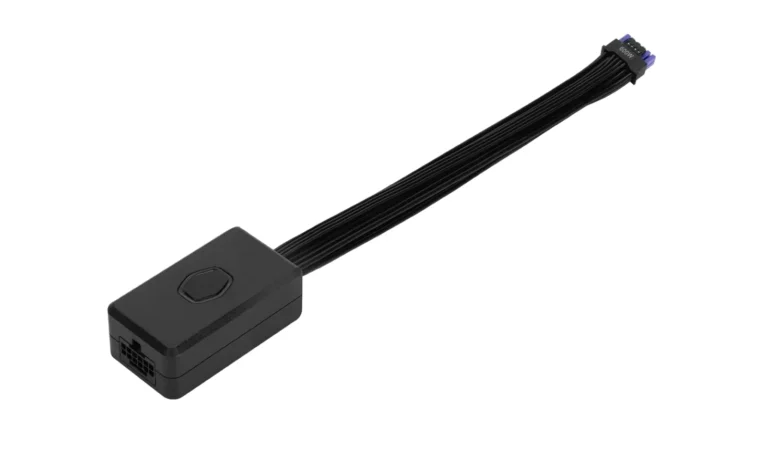
The hardware enthusiast community has long wrestled with the reliability and safety concerns surrounding high-density power delivery connectors on modern graphics cards. Addressing these persistent industry-wide worries, hardware manufacturer Cooler Master has officially launched its standalone GPU Shield adapter. Following its initial preview at the Consumer Electronics Show (CES), this specialized device is engineered to provide a robust safety net for the 12V-2×6 and 12VHPWR power connectors, components that have infamously been prone to overheating and melting under extreme loads.
While the GPU Shield technology was originally integrated as a proprietary built-in safety feature within select high-end power supply units (PSUs) from Cooler Master, this new standalone iteration broadens consumer accessibility. PC builders utilizing power supplies from competing brands—particularly older models lacking native thermal and electrical safeguards—can now retrofit this protective layer into their systems. Priced at $49.99 in the United States and select Asian markets, the adapter aims to mitigate catastrophic hardware failures for owners of high-draw modern GPUs.
Anatomy of Protection: How the Cooler Master GPU Shield Works
At its core, the Cooler Master GPU Shield is designed to act as an intelligent, in-line safeguard positioned directly between the power supply cable and the graphics card’s 12V-2×6 or 12VHPWR receptacle. Modern graphics processing units, particularly flagship models from recent generations, demand unprecedented levels of electrical current, often pushing upwards of 450 to 600 watts through a remarkably compact physical interface. This high-density power transmission makes the connection exceptionally sensitive to even minute physical misalignments or increased electrical resistance.
The GPU Shield addresses these vulnerabilities through a combination of continuous real-time monitoring and active mitigation systems. The adapter constantly tracks the flow of electrical current passing through the pins. Should it detect anomalous electrical behavior, resistance spikes, or abnormal temperature fluctuations—the primary precursors to connector degradation and thermal runaway—the unit triggers a multi-layered response.

First, an integrated audio alarm immediately alerts the user to potential danger. Simultaneously, the onboard logic system can automatically initiate power throttling, reducing the electrical load delivered to the GPU. This rapid intervention is designed to avert catastrophic failure, shielding both the expensive graphics card and the power delivery infrastructure from permanent damage. Furthermore, the device incorporates a multi-color LED indicator ring, offering users a clear visual status update regarding the health and stability of the connection at a glance.
Solving the Human Error Factor in Cable Management
A significant portion of historical connector melting incidents has been attributed to incomplete insertion. Because the 12VHPWR and 12V-2×6 standards require a precise, flush connection to ensure proper electrical contact across all microscopic pins, even a millimeter of separation can cause localized current bottlenecks. These bottlenecks generate intense heat, eventually melting the plastic housing and ruining the hardware.
To combat user error during installation, Cooler Master has engineered the GPU Shield with tactile and visual aids. The physical connectors feature distinct color-coded indicators designed to show whether the cable is fully and securely seated into the port. Additionally, the adapter is built with a flexible cable segment measuring approximately 200 millimeters in length. This generous span ensures that builders maintain sufficient flexibility to route the cabling cleanly, even within compact or heavily populated mid-tower and full-tower PC enclosures, without putting undue mechanical stress or bending pressure directly onto the fragile connector joint.
Chronology of a Crisis: The Evolution from 12VHPWR to 12V-2×6
The introduction of the Cooler Master GPU Shield adapter is the latest chapter in a multi-year saga that began with the launch of the PCI Express 5.0 graphics architecture ecosystem. In late 2022, the debut of high-end consumer GPUs brought with it the 12VHPWR (16-pin) connector, designed to replace traditional multi-cable PCI-e power connections with a single, streamlined conduit capable of delivering up to 600 watts.

Shortly after widespread market adoption, tech communities and hardware laboratories began documenting alarming incidents of power connectors melting, sparking, and failing catastrophically. Investigations by independent reviewers and manufacturing engineers revealed that while user error (improper insertion) played a substantial role, the tight tolerances and physical design of the original 12VHPWR standard left very little margin for safety.
Recognizing the severity of the issue, the PCI-SIG (Peripheral Component Interconnect Special Interest Group) actively developed and ratified the updated 12V-2×6 connector standard, alongside the complementary High Power Connection (HPC) specifications. The 12V-2×6 revision introduced physically shorter sense pins and recessed power terminals to ensure that power cannot be fully delivered unless the plug is completely seated. Despite these structural improvements in newer hardware generations, millions of systems still operate with legacy components, and the sheer thermal density of high-wattage computing continues to pose a risk. This background context underscores why aftermarket solutions like Cooler Master’s GPU Shield retain strong market relevance for risk-conscious enthusiasts.
Market Availability, Pricing, and Ecosystem Implications
As of its current rollout phase, the Cooler Master GPU Shield adapter has debuted in mainland China and the United States, carrying an MSRP of $49.99 (approximately Rp800,000 when converted). However, prospective buyers should note subtle shifts in warranty terms accompanying the retail product. Industry reports indicate that the standalone adapter’s warranty period is structured around a one-year term in certain regions, differentiating it from the comprehensive multi-year coverage typically associated with Cooler Master’s high-end power supply units.
The launch of a dedicated safety adapter by a major tier-one manufacturer highlights a growing trend within the PC hardware industry: treating power delivery safety not merely as a responsibility of the PSU vendor, but as an independent modular concern. As power draws for enthusiast-tier hardware continue to hover at elevated thresholds, third-party monitoring and protection devices may transition from niche accessories to mainstream necessities.
For everyday builders and hardcore gamers investing heavily in modern graphics hardware, the $49.99 investment serves as an affordable insurance policy against catastrophic hardware failure. By providing real-time electrical monitoring, active thermal protection, and foolproof seating indicators, the Cooler Master GPU Shield offers a practical bridge toward safer, more reliable high-performance computing.