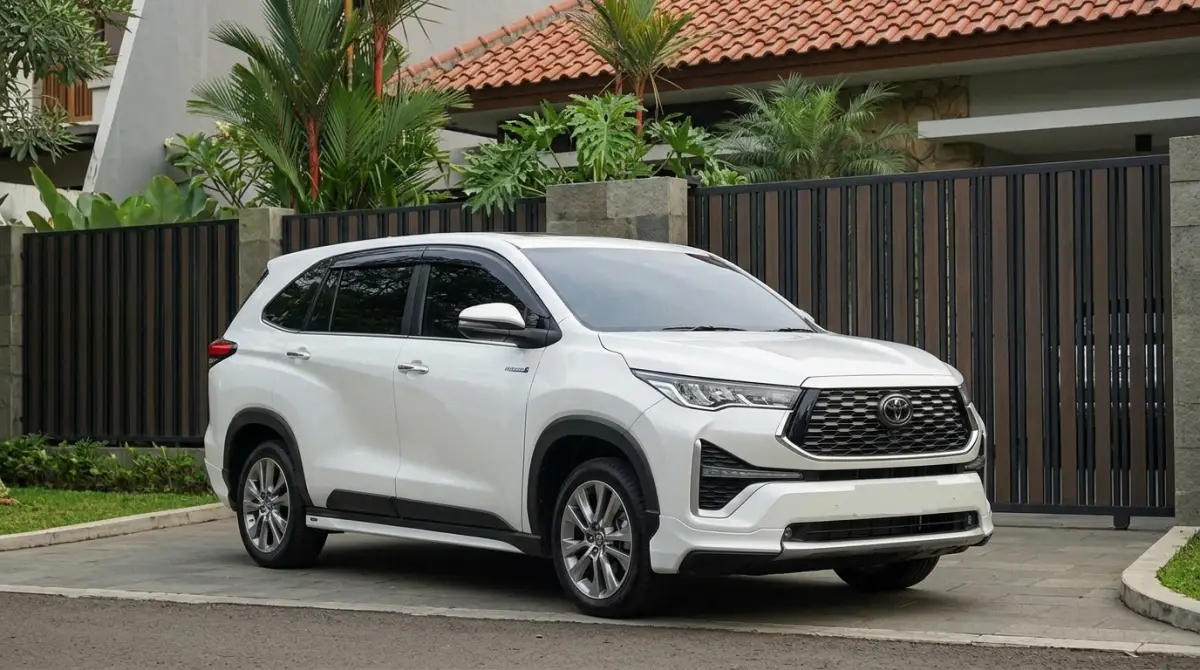
The secondary automotive market in Indonesia is currently experiencing a notable shift in demand, particularly within the medium Multi-Purpose Vehicle (MPV) segment. As new vehicle prices continue to rise due to inflation and increased production costs, prospective buyers are increasingly gravitating toward "young-aged" used vehicles, with the Toyota Kijang Innova Zenix leading the charge. For families seeking a balance between modern utility, fuel efficiency, and brand reliability, the 2024-2025 Innova Zenix models have emerged as a primary target for those looking to bypass the initial depreciation hit of brand-new units while still enjoying contemporary features.
The Evolution of the Toyota Kijang Legacy
The Toyota Kijang has been the backbone of the Indonesian automotive industry for decades. However, the introduction of the Zenix platform in late 2022 marked a departure from the traditional ladder-frame chassis that defined the brand for nearly 40 years. Transitioning to the Toyota New Global Architecture (TNGA-C), the Innova Zenix transformed into a front-wheel-drive (FWD) monocoque vehicle. This architectural shift provided a lower floor, better interior packaging, and significantly improved handling dynamics.
By the 2024-2025 production cycle, the Zenix has solidified its position as the benchmark for family transport. The current secondary market availability for these specific model years suggests a churn in ownership, often driven by users upgrading to higher luxury trims or individuals who purchased the vehicle as a temporary solution before moving to different segments. With prices starting in the mid-Rp300 million range depending on the variant and condition, the Zenix is currently positioning itself as a high-value proposition compared to the original retail price, which often exceeds Rp450 million to Rp600 million for higher trims.
Technical Specifications: Gasoline vs. Hybrid Powertrains
The engineering philosophy behind the Zenix is divided into two distinct technological paths, both catering to different user priorities.
The standard gasoline variant is powered by the M20A-FKS 2.0-liter Dynamic Force engine. This four-cylinder, 1,987cc unit utilizes Dual VVT-i technology to produce a respectable 172 horsepower at 6,000 rpm and a peak torque of 205 Nm between 4,500 and 4,900 rpm. For the average family, this powertrain offers linear acceleration and a simplicity that is often favored by owners who prefer traditional internal combustion engines for ease of maintenance in remote areas.
In contrast, the Hybrid Electric Vehicle (HEV) variant utilizes the M20A-FXS engine, a specialized iteration tuned for efficiency. The internal combustion component produces 150 horsepower and 187 Nm of torque, but it is augmented by an electric motor providing 111 horsepower and 206 Nm of torque. When combined, the system delivers a total output of 183 horsepower. Beyond the raw numbers, the hybrid system provides an immediate torque response, which is particularly beneficial in the stop-and-go traffic common in major urban centers like Jakarta, Surabaya, or Medan.
Interior Dynamics and Safety Features
The cabin of the 2024-2025 Innova Zenix represents a significant leap forward in ergonomic design. The move to the TNGA platform allowed Toyota engineers to extend the wheelbase to 2,850 mm, providing ample legroom across all three rows. Unlike its predecessors, the Zenix features a flat-floor design, which increases rear-seat comfort and ease of movement within the cabin—a critical factor for families with young children or elderly passengers.
Technologically, the vehicle is equipped with a suite of features designed for modern connectivity and safety. Higher trims include a panoramic sunroof, a 10-inch rear-seat entertainment system, and the Toyota Safety Sense (TSS) suite. TSS integrates Pre-Collision Systems (PCS), Dynamic Radar Cruise Control (DRCC), Lane Departure Alert (LDA), and Automatic High Beam (AHB). For a used car buyer, the presence of these active safety features adds significant value, as they offer a level of protection that remains at the cutting edge of the automotive industry even two years after the initial launch.
Market Trends and Economic Implications
The secondary market for Innova Zenix models is characterized by high liquidity. Automotive analysts observe that the "young used" market segment is currently the most active in Indonesia. For the 2024-2025 models, the rapid turnover is largely attributed to the vehicle’s residual value, which remains one of the strongest in the MPV class.
From an economic perspective, the availability of these vehicles at lower entry points serves as an equalizer for families who might otherwise be priced out of the new car market. However, industry experts caution that prospective buyers must conduct thorough due diligence. Given the complexity of the hybrid system, which includes a lithium-ion battery pack, the provenance of the car’s maintenance history is paramount. Authorized dealer records serve as the gold standard for verifying the health of the electrical components, which carry long-term warranties that are transferable to second owners—a key advantage of buying a vehicle that is only one or two years old.
Strategic Tips for Prospective Buyers
When approaching the purchase of a used 2024-2025 Innova Zenix, buyers are encouraged to follow a structured inspection process to ensure the vehicle’s longevity:
- Battery Health Certification: For hybrid models, buyers should request a battery health report from an official Toyota service center. The state-of-health (SoH) percentage is a direct indicator of the potential future costs associated with the hybrid powertrain.
- Chassis and Suspension Audit: Despite the move to a monocoque platform, the suspension components are subjected to heavy loads in the MPV segment. Checking for any abnormal noise during a test drive over uneven surfaces is essential to ensure that the vehicle has not been subjected to excessive wear.
- Digital System Verification: With the Zenix’s heavy reliance on electronic control units (ECUs), it is critical to ensure that all infotainment and safety software has been updated to the latest version by an authorized dealer.
- Ownership History: Given the vehicle’s popularity as a fleet car for executive transport, verifying the vehicle’s usage history is vital. A vehicle that has been used for private family transport typically carries less cumulative stress on the drivetrain than one utilized for high-frequency corporate shuttle services.
The Broader Impact on the Automotive Landscape
The success of the Innova Zenix in the secondary market highlights a broader trend in Indonesia’s transition toward electrification. By democratizing hybrid technology, Toyota has effectively conditioned the mass market to accept electrified vehicles as a viable, reliable alternative to traditional engines.
As more 2024-2025 units enter the used market, the price ceiling for these models is expected to stabilize, creating a predictable depreciation curve that benefits both current owners and future buyers. This stability reinforces the "Kijang" brand equity, ensuring that the model remains a cornerstone of the Indonesian family automotive experience.
In summary, the 2024-2025 Innova Zenix offers a sophisticated blend of power, safety, and modern utility. While the initial investment in a used unit may be higher than for older, non-hybrid MPVs, the long-term benefits—ranging from superior fuel efficiency to the latest safety technologies—position it as a prudent investment for the discerning family. As the market continues to evolve, the Zenix remains not just a vehicle, but a reflection of the changing requirements of the modern Indonesian household: efficiency without compromise, and technology with reliability.