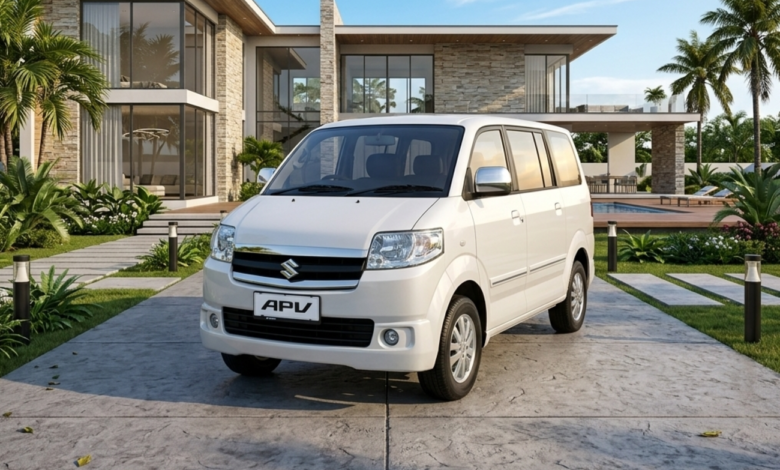
The Suzuki APV has long occupied a unique niche in the Indonesian automotive market, serving as a utilitarian bridge between functional family transport and reliable commercial logistics. As the 2025 model year enters the secondary market in the Greater Jakarta area (Jabodetabek), potential buyers are evaluating the vehicle not just for its legacy, but for its continued relevance in a modern, competitive MPV landscape. Known for its boxy design, expansive interior capacity, and robust engine architecture, the APV remains a staple for those prioritizing utility over aesthetic trends.
The Evolution of a Versatile Platform
The Suzuki APV—an acronym for "All Purpose Vehicle"—was first introduced in the early 2000s as a strategic project aimed at the Southeast Asian market. Its design philosophy was centered on maximizing the interior footprint while maintaining a compact exterior for maneuvering through dense urban traffic. Over the past two decades, the vehicle has undergone several minor facelifts and mechanical refinements, yet its core identity has remained largely unchanged: a rear-wheel-drive, ladder-frame chassis vehicle powered by a naturally aspirated 1.5-liter engine.
By 2025, the APV has solidified its reputation as a "workhorse." While modern competitors have moved toward unibody constructions, front-wheel-drive systems, and advanced electronic safety suites, the APV maintains a mechanical simplicity that appeals to both small business owners and large families. The 2025 iteration retains the G15A 1,493 cc engine, a powerplant celebrated for its longevity and ease of maintenance, which is a critical factor for buyers in the secondary market.
Technical Specifications and Performance Metrics
The mechanical backbone of the Suzuki APV 2025 is the 1.5L G15A engine. This four-cylinder, 16-valve multi-point injection engine produces approximately 92 to 94 horsepower and 126 Nm of torque. While these figures may appear modest compared to modern turbocharged engines, they are specifically calibrated for torque delivery at lower RPMs, which is essential when the vehicle is fully loaded with passengers or cargo.
In terms of fuel efficiency, the APV is often the subject of debate. Because the vehicle utilizes an older engine architecture, it is generally considered less efficient than modern fuel-injected competitors. However, the real-world performance is consistent with its design intent. Industry analysis indicates that the fuel consumption averages are as follows:
- Urban/Congested Conditions: 8–10 km/liter.
- Mixed/Combined Driving: 11–13 km/liter.
- Highway/Constant Velocity: 12–15 km/liter.
These figures are highly dependent on the vehicle’s maintenance history, tire pressure, and payload weight. For commercial operators, the trade-off between fuel consumption and the APV’s legendary durability often favors the latter.
The Secondary Market Landscape in Jabodetabek
The Jabodetabek region—Jakarta, Bogor, Depok, Tangerang, and Bekasi—represents the largest market for used vehicles in Indonesia. As of early 2025, the resale value of the Suzuki APV has remained relatively stable, owing to high demand from micro-entrepreneurs and large families.
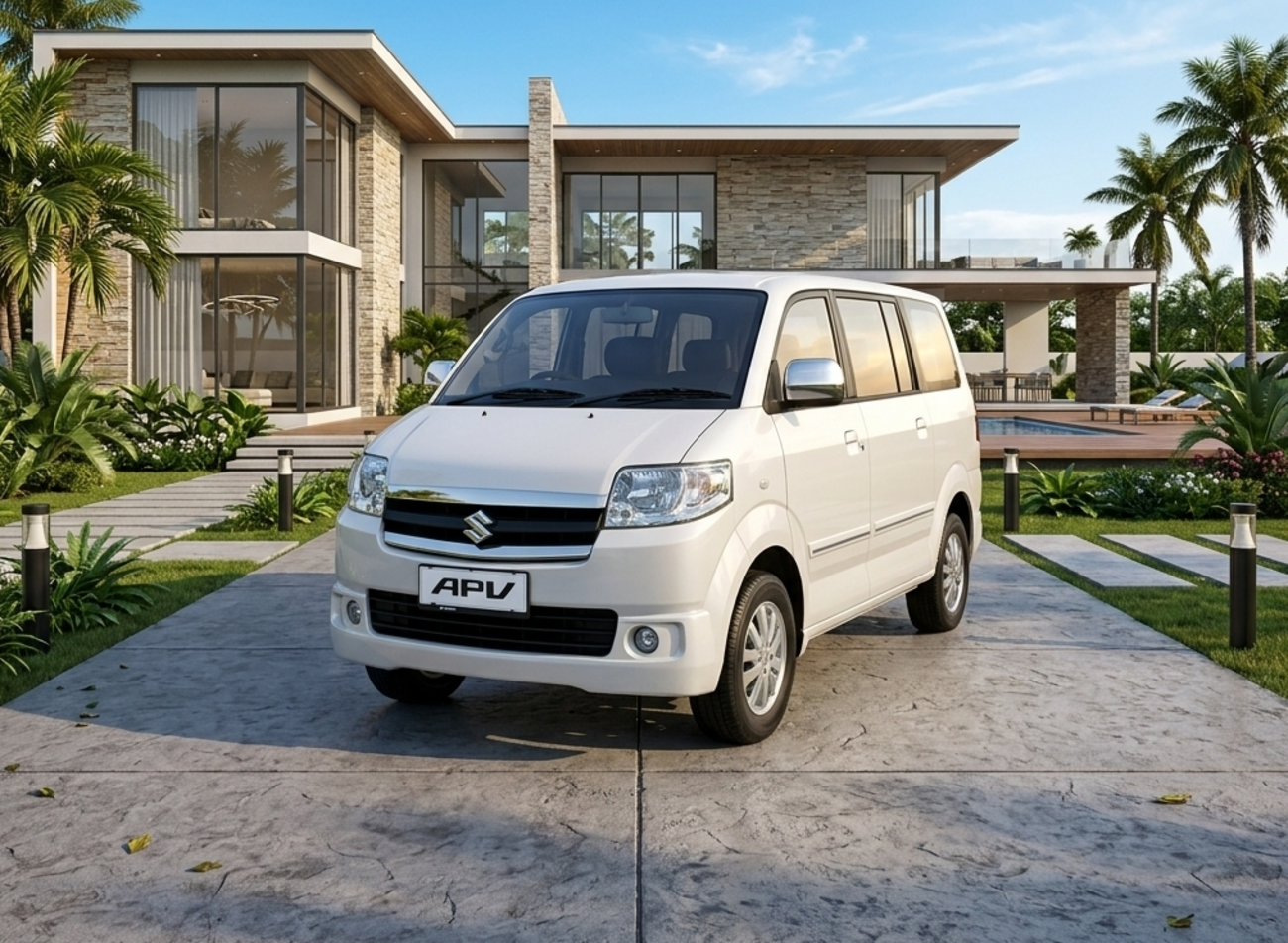
Prospective buyers in the secondary market typically categorize their search by the vehicle’s intended use. The "Arena" trim remains the most sought-after for personal family use due to its more refined interior and exterior styling, while the "Blind Van" and "GE/GL" trims are primarily acquired for commercial delivery purposes.
Market data suggests that well-maintained 2025 units, which have recently entered the pre-owned inventory, are currently positioned at price points that reflect a moderate depreciation rate. Because the APV has a slow technological turnover, buyers are less concerned about "obsolescence" than they might be with other brands, keeping the floor price for used models relatively high compared to other aging MPVs.
Maintenance and Ownership Costs: A Long-Term Perspective
One of the primary drivers of the APV’s sustained popularity is the accessibility of parts and the simplicity of its mechanical systems. Unlike modern vehicles that require specialized diagnostic equipment for every sensor failure, the APV can be serviced by a wide range of independent mechanics.
From a professional analysis standpoint, the cost of ownership remains low. The suspension system, which utilizes a leaf-spring setup in the rear for many variants, is designed to withstand heavy loads, reducing the frequency of repairs even when the vehicle is used for intensive commercial transport. However, prospective buyers are advised to inspect the transmission and cooling systems, as these are the most common wear points after several years of operation.
Broader Economic Implications
The enduring presence of the Suzuki APV in the market highlights a specific demographic reality in Indonesia: a significant portion of the population prioritizes functional capacity over luxury features. The APV acts as a vital tool for economic activity, facilitating the movement of goods and people in a way that is cost-effective for the average SME (Small and Medium Enterprise).
Analysts note that as manufacturers shift their focus toward electric vehicles (EVs) and sophisticated hybrid systems, the market for "simple" internal combustion engine (ICE) vehicles with low maintenance costs is shrinking. The APV occupies a space that is becoming increasingly rare. This scarcity may actually serve to prop up the resale value of the 2025 model in the coming years, as fleet buyers continue to seek out vehicles they can trust to stay on the road without significant downtime.
Expert Recommendations for Buyers
For those currently in the market for a used Suzuki APV 2025 in Jabodetabek, the following steps are recommended:
- Vehicle History Verification: Always request the service book. Since many APVs are used for commercial purposes, checking if the vehicle was previously a part of a rental or delivery fleet is crucial for understanding its actual wear and tear.
- Structural Inspection: Given the vehicle’s usage profile, inspect the frame for signs of excessive rust or past collision damage, particularly around the rear leaf spring mounts.
- Test Drive Protocol: Focus on the transmission’s responsiveness. Ensure that gear shifts are smooth and that there is no excessive vibration when accelerating under load.
- Comparison of Trims: Decide whether the vehicle is for luxury transport (Arena/Luxury trims) or utility (Blind Van/GE). Paying a premium for an Arena trim is only justifiable if the vehicle is intended for passenger comfort, as the mechanical components across the trims are largely identical.
Conclusion
The Suzuki APV 2025 continues to serve as an indispensable asset for a wide range of Indonesian motorists. While it may not possess the advanced safety features or the fuel economy of the latest generation of compact MPVs, its value proposition lies in its reliability, cargo capacity, and the ubiquity of its support network. For buyers in the Jabodetabek area, the secondary market offers a variety of options that cater to different budgetary constraints, provided that the buyer performs due diligence regarding the vehicle’s specific service history and usage profile. As the automotive market continues to evolve, the APV stands as a testament to the enduring appeal of utilitarian engineering.