
President Prabowo Subianto Orders Total Transformation of Garuda Indonesia to Reclaim World-Class Status

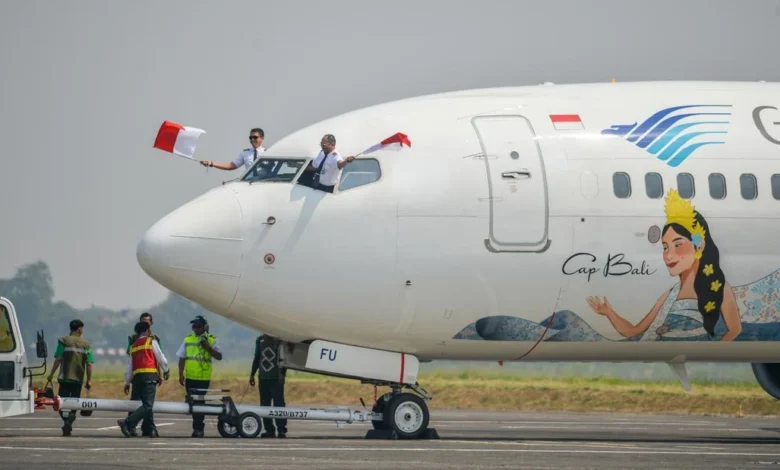
The future of Indonesia’s national flag carrier, Garuda Indonesia, has reached a critical juncture as President Prabowo Subianto issued a firm mandate for a total corporate transformation. During a high-level meeting at the Presidential Palace in Jakarta on Wednesday, November 25, 2026, the President directed the company’s leadership to pivot away from past operational inefficiencies and strive to re-establish the airline as a premier, sustainable, and profitable world-class entity. This directive marks a significant milestone for the carrier, which has been navigating a complex recovery phase in the post-pandemic aviation landscape.
Thomas Sugiarto Oentoro, who assumed the role of President Director of Garuda Indonesia following the Extraordinary General Meeting of Shareholders (RUPSLB) on October 8, 2026, confirmed the President’s expectations. Speaking to reporters on November 26, 2026, Oentoro emphasized that the government is no longer content with incremental improvements. The administration’s vision is for Garuda to shed its legacy challenges and emerge as a lean, competitive global player capable of navigating the volatile international aviation market.
A Legacy of Challenges and the Path to Reform
The aviation industry in Indonesia is historically significant, and Garuda Indonesia remains its cornerstone. However, the airline has faced a tumultuous decade characterized by massive debt restructuring, pandemic-induced grounding of fleets, and shifting consumer expectations. The transition in leadership—with Oentoro replacing Glenny H. Kairupan, who moved to the position of President Commissioner—signals a strategic shift toward aggressive operational restructuring.
President Prabowo’s insistence on regular progress reports underscores the government’s hands-on approach. The transformation is not merely about financial solvency; it is about restoring the brand’s reputation. For the Indonesian government, Garuda is not just an airline; it is a primary tool for national branding, connectivity, and economic diplomacy. As global travel demand fluctuates, the mandate for the airline to be "profitable" suggests a move toward stricter fiscal discipline, potentially involving route optimization, fleet rationalization, and a fundamental overhaul of customer service protocols.
Analyzing the Customer Service Gap
Despite the lofty goals set by the presidential mandate, the reality on the ground presents a formidable hurdle. According to the Garuda Indonesia Sustainability Report 2025, the airline faced a significant volume of customer dissatisfaction that highlights deep-seated operational frictions. In 2025 alone, the company logged 164,668 formal complaints.
A granular breakdown of these grievances reveals where the operational "bottlenecks" exist:
- Flight Schedule Disruptions: Accounting for the vast majority, 106,140 reports were filed regarding changes to flight schedules, indicating chronic issues with reliability and punctuality.
- Check-in Processes: With 30,077 complaints regarding off-airport check-in experiences, it is evident that digital integration and ground handling efficiency are failing to meet the standards of modern, tech-savvy travelers.
- Operational Handling: Process and timing issues accounted for 13,978 complaints, while general delay management generated 7,643 complaints.
- Baggage Management: 6,830 complaints were registered regarding baggage handling, a critical metric for premium carriers.
While these 164,668 complaints are categorized as "on progress," the sheer volume suggests that the airline is struggling to maintain service consistency. It is important to note that these figures exist within a larger context; the company recorded over 2.05 million interactions through its "customer voice management" system in 2025. This figure includes praise, inquiries, and suggestions, suggesting that while the airline has a loyal customer base, the gap between expectations and delivery remains a primary barrier to achieving a "world-class" ranking.
Strategic Consolidation: The Pelita Air Equation
One of the most anticipated aspects of Garuda’s transformation is the proposed integration with Pelita Air. This consolidation, which has been discussed in industry circles for several months, is part of a broader government plan to rationalize the state-owned aviation sector. The objective is to leverage economies of scale, reduce redundant administrative costs, and create a more robust entity that can compete with regional low-cost carriers and global network airlines.
Oentoro noted that discussions regarding the merger are ongoing, involving both the management of Pelita Air and the state-owned investment firm Danantara. While no specific timeline for the final integration has been made public, the merger is viewed by analysts as a strategic necessity. By pooling resources, the state-owned airlines could theoretically optimize their fleet utilization and harmonize their loyalty programs, potentially improving the overall profitability of the group. However, the operational complexity of integrating two distinct corporate cultures and technical systems remains a significant risk factor.
The Macroeconomic Implications of a Revitalized Garuda
The Indonesian government’s focus on Garuda is deeply linked to the country’s tourism and trade ambitions. As Southeast Asia’s largest economy, Indonesia requires an aviation infrastructure that can support massive inflows of business travelers and tourists. An inefficient national carrier acts as a drag on the country’s tourism competitiveness.
By demanding a "total transformation," the government is essentially signaling that Garuda must modernize its digital infrastructure. Modern airlines are increasingly data-driven, using artificial intelligence to manage scheduling, predict maintenance needs, and personalize passenger experiences. The high volume of complaints regarding schedule changes suggests that Garuda’s current systems may be lagging behind global industry standards.
Furthermore, the focus on "sustainability" in the President’s directive carries a dual meaning: financial sustainability and environmental responsibility. International aviation is under increasing pressure to reduce its carbon footprint. A "world-class" airline in 2026 must be able to demonstrate a clear path toward sustainable aviation fuels (SAF) and efficient fuel consumption—an area where older, less efficient aircraft fleets typically fall short.
Looking Ahead: The Challenges of Implementation
The transition period under Thomas Sugiarto Oentoro will be defined by his ability to balance immediate operational fire-fighting with long-term strategic planning. Replacing a management team or setting a target is the easy part; the execution of these goals requires a complete cultural shift within the organization.
The reliance on customer feedback, as documented in the 2025 sustainability report, is a positive step toward transparency. However, the transition from "on progress" to "resolved" in the complaints database will be the true test of the new leadership. If the airline cannot solve the fundamental issues of punctuality and baggage handling, the goal of being a "world-class" carrier will remain aspirational rather than actual.
For the Indonesian public and the international investment community, the next twelve months will be crucial. The progress reports requested by President Prabowo will likely serve as the primary metrics for judging the success of this reform. If Oentoro can leverage the potential merger with Pelita Air to streamline operations while simultaneously tackling the high volume of customer complaints, Garuda may yet regain its former glory.
Ultimately, the transformation of Garuda Indonesia is a microcosm of Indonesia’s own journey toward economic maturity. The airline’s ability to evolve will be a litmus test for the government’s broader administrative reform agenda. As the aviation industry recovers from the systemic shocks of the past, only the most agile and customer-focused airlines will thrive. For Garuda, the message from the Palace is clear: the era of business-as-usual is over, and the era of total accountability has begun.
Related posts: