
Astra Credit Companies Strengthens Islamic Economic Footprint Through Fifth Dedicated Syariah Office Opening in Tasikmalaya

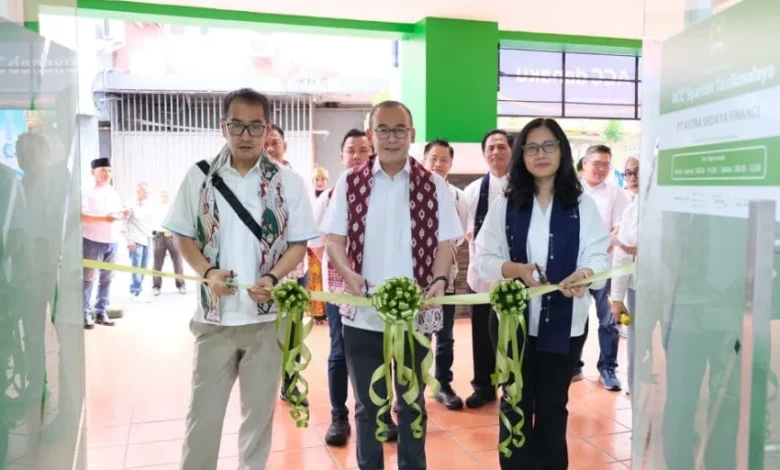
Astra Credit Companies (ACC), a prominent player in the Indonesian multi-finance industry, has officially expanded its network with the inauguration of its fifth dedicated ACC Syariah office in Tasikmalaya, West Java. The event, held on Tuesday, November 24, 2026, marks a strategic milestone in the company’s ongoing initiative to integrate Islamic financial principles into the broader Indonesian automotive and consumer finance market. Located at Ruko Asia Plaza, Jl. HZ. Mustofa, the new branch serves as a hub for Sharia-compliant financial solutions, catering to the growing demand for ethical banking and lending products in the region.
The inauguration ceremony was attended by a high-level delegation of ACC executives, including Chief Operating Officer Devy Santoso Jayadi, EVP Retail AR Management Dean, and EVP Retail Operation Jeanny Fransisca Simbolon. The presence of key leadership underscores the significance of the Tasikmalaya market in ACC’s long-term business strategy.
Strategic Rationale: Why Tasikmalaya?
Tasikmalaya, frequently referred to as the "City of Santri" (Students of Islamic Boarding Schools), presents a unique demographic and economic landscape. With a population deeply rooted in Islamic values and a vibrant entrepreneurial spirit, the city has long been identified as a prime location for the expansion of Sharia-based financial services.
For ACC, the decision to establish a standalone Syariah office in this region is not merely a geographic expansion; it is a response to evolving consumer preferences. Data indicates that Indonesian consumers are increasingly prioritizing financial products that align with their ethical and religious convictions. By establishing a physical presence, ACC aims to provide a localized, accessible, and compliant alternative to conventional financing, thereby bridging the gap between national financial institutions and local retail needs.
Evolution of ACC Syariah: A Chronology of Expansion
The establishment of the Tasikmalaya office follows a calculated rollout strategy that has seen ACC incrementally scale its Unit Usaha Syariah (UUS) capabilities. Since the inception of its dedicated Sharia division, the company has focused on building a robust infrastructure capable of handling the complexities of Islamic finance, including the fundamental prohibition of Riba (interest) and the emphasis on risk-sharing agreements.
The timeline of ACC’s Syariah expansion reflects a steady commitment to the national agenda of increasing financial inclusion. Over the past several years, the company has transitioned from offering Sharia-compliant "add-ons" to full-scale, dedicated service centers. This shift is reflective of the national trend, where the Indonesian government, through the Financial Services Authority (OJK), has been actively pushing for the development of the Sharia economy to bolster the nation’s resilience against global financial volatility.
Comprehensive Service Offerings
At the newly opened Tasikmalaya facility, ACC Syariah offers a comprehensive suite of financial instruments designed to meet diverse consumer requirements. According to Wisnu Wardhana, Head of the Unit Usaha Syariah at ACC, the office is fully equipped to provide:
- Automotive Financing: Covering both new and pre-owned vehicle purchases, utilizing the Murabahah (cost-plus-profit) contract, which is the cornerstone of Islamic vehicle financing.
- Cash Loan Facilities: Tailored to provide liquidity for consumers while adhering to Sharia standards.
- Hajj Financing: A specialized product designed to assist individuals in fulfilling their religious obligations, which has seen increased interest in regions with high religious observance.
- Precious Metal Financing: A relatively new addition to the portfolio, allowing clients to invest in gold—a traditional and stable asset class within the Islamic financial ecosystem.
Market Dynamics and Consumer Trends
The expansion comes at a time when the Indonesian market is witnessing a shift in investment behaviors. A recent interactive survey conducted by ACC revealed that approximately 80% of respondents preferred investing in gold over allocating funds for leisure or non-essential spending. This sentiment highlights a shift toward wealth preservation and conservative investment strategies among the middle class.
By aligning its product offerings with these consumer trends—specifically through its Gold Financing—ACC is effectively positioning itself as more than just an automotive lender; it is becoming a partner in the financial lifecycle of its clients. This diversification is crucial, as the automotive sector remains sensitive to interest rate fluctuations, whereas Sharia-compliant financing, which is based on fixed margins rather than variable interest rates, offers a level of predictability that many consumers find appealing in an uncertain economic climate.
Official Statements and Organizational Vision
Chief Operating Officer Devy Santoso Jayadi emphasized that the Tasikmalaya branch is a key component of the company’s broader mission to provide "healthy and responsible" financial services. "Our goal is to reach communities that are currently underserved by conventional institutions. We believe that by decentralizing our services and bringing them closer to the heart of the community, we can foster a more sustainable economic environment," Jayadi stated during the ribbon-cutting ceremony.
The expansion also supports the government’s target for financial literacy and inclusion. By operating in accordance with OJK regulations, ACC Syariah ensures that its clients are protected under a transparent regulatory framework, which is essential for building public trust in Islamic finance.
Economic Implications for West Java
The opening of the ACC Syariah office in Tasikmalaya is expected to have a multiplier effect on the local economy. Beyond the direct employment of local staff, the facility facilitates easier access to credit for small and medium-sized enterprises (SMEs) and individual consumers who require vehicle financing for business operations.
In the context of the West Java regional economy, which relies heavily on manufacturing, trade, and the service sector, the availability of Sharia-based capital provides a necessary stimulus. Furthermore, the emphasis on Sharia compliance ensures that the capital provided is channeled into productive economic activities, adhering to the principle that wealth should be generated through real economic engagement rather than speculative financial activity.
Challenges and Future Outlook
While the growth of Islamic finance in Indonesia has been impressive, it is not without challenges. Competitiveness remains a primary hurdle, as Islamic financial institutions must compete with conventional banks that often have longer-established networks and greater economies of scale. Additionally, the need for continuous education remains high, as many consumers still require clarification regarding the technical differences between conventional interest and Sharia margins.
Looking ahead, ACC is expected to continue its strategy of "hyper-local" growth. The success of the Tasikmalaya office will likely serve as a blueprint for future expansions into other Tier-2 and Tier-3 cities in Indonesia. By prioritizing digital transformation alongside physical presence, the company intends to create an omnichannel experience where consumers can initiate applications online and finalize contracts at branches like the one in Tasikmalaya.
Conclusion
The inauguration of the fifth ACC Syariah office in Tasikmalaya is a testament to the maturation of the Indonesian Islamic finance sector. By recognizing the cultural and economic nuances of the "City of Santri," ACC has effectively demonstrated how global financial concepts—when adapted to local contexts—can drive economic development. As the company continues to refine its service offerings and expand its geographic reach, it remains a central pillar in the ongoing national effort to make Indonesia a global hub for the Islamic economy. The move is not only a business success for Astra Credit Companies but also a significant step forward for the financial inclusion of the Indonesian people, providing them with the tools necessary to achieve their economic goals in a manner consistent with their values.