Gen Z Leads Mass Protests Across 25 European Nations Over Economic Instability and Geopolitical Grievances

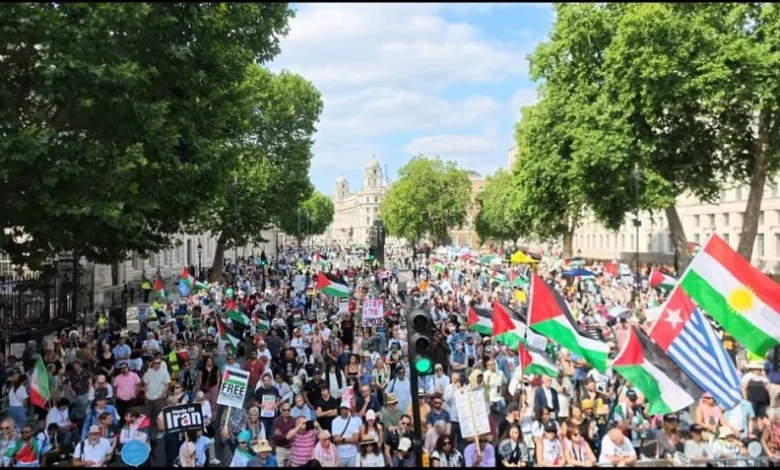
Tens of thousands of students, young workers, and labor union members flooded the streets of major European cities on Friday, marking a synchronized day of international action that spanned more than 25 countries. This widespread mobilization, primarily spearheaded by Generation Z, represents a significant escalation in youth-led activism across the continent. From London to Rome, and Paris to Madrid, protesters voiced deep-seated grievances ranging from the debilitating cost-of-living crisis to systemic underfunding in higher education and profound concerns regarding foreign policy, specifically the ongoing conflict in the Gaza Strip.
The scale of the demonstrations underscores a growing disconnect between European youth and their political establishments. In Italy, the movement gained significant traction as the country’s largest labor union, the General Confederation of Labour (CGIL), joined forces with student activists. This alliance led to protests in over 100 locations, including the historic Piazza del Duomo in Milan, and triggered a nationwide strike that disrupted public transportation, impacting rail services across the country throughout the weekend.
A Chronology of Growing Discontent
The roots of these protests can be traced back to the broader economic instability that has gripped Europe since the post-pandemic recovery and the energy crisis sparked by the war in Ukraine. Throughout the autumn of 2024, sporadic protests had been occurring in isolated pockets, but Friday’s event served as a coordinated culmination of months of mounting frustration.
Early in the week, student unions in the United Kingdom and France began signaling their intent to mobilize, citing the failure of university administrations to address rising tuition costs and declining student welfare services. By Wednesday, social media campaigns had successfully synchronized the messaging across borders, transforming localized concerns into a unified pan-European movement. As of Friday morning, the focus shifted from purely domestic academic issues to broader systemic critiques, including the perceived inadequacy of governmental responses to climate change and the rapid, unregulated deployment of artificial intelligence.
Supporting Data: The Socio-Economic Drivers
The motivations driving this generation are rooted in verifiable economic indicators. According to Eurostat data released in late 2024, the youth unemployment rate in the European Union remains significantly higher than the general population, with specific regions in Southern Europe seeing youth unemployment figures exceeding 25%.
Furthermore, the "cost-of-living" crisis has disproportionately affected those under 30. Inflationary pressures on housing, food, and energy have eroded the purchasing power of entry-level workers. Academic reports suggest that student debt burdens in countries like the UK have reached historic highs, while government subsidies for tertiary education have failed to keep pace with the rising costs of living in major urban hubs.
Regarding the geopolitical grievances cited by the protesters, the discourse centered on the perceived complicity of European governments in the humanitarian crisis in Gaza. Many demonstrators carried banners demanding an immediate ceasefire and the cessation of arms exports to parties involved in the conflict, reflecting a growing ideological divide between the younger demographic and the established foreign policy stances of several European governments.
Official Responses and the Labor Union Factor
The involvement of major labor unions like Italy’s CGIL has significantly altered the political weight of these protests. By integrating student demands with the structural grievances of workers—such as wage stagnation and pension security—the protests have moved beyond the scope of "student activism" into a broader critique of national governance.
Governmental responses have been varied. In France, ministry officials issued statements acknowledging the right to peaceful assembly while emphasizing the necessity of maintaining order during the strikes. In the UK, representatives from the Department for Education maintained that existing financial support packages were sufficient, despite student unions arguing that these measures were rendered obsolete by current inflation levels.
Political analysts suggest that the authorities are facing a delicate balancing act. Attempting to suppress these demonstrations risks further alienating a demographic that already expresses high levels of political cynicism. Conversely, addressing the core demands—such as substantial investments in public services or shifts in foreign policy—would require significant budgetary realignments that many European governments currently deem fiscally untenable.
The Emerging Threats: Climate and AI
Beyond immediate economic pressures, the protesters have highlighted two long-term existential threats that they argue are being ignored by the current political leadership.
First, the climate crisis remains a central pillar of Gen Z’s collective anxiety. Despite the European Green Deal, protesters argued that the transition to a carbon-neutral economy is being hampered by short-term political interests. Many demonstrators expressed that the current pace of decarbonization is insufficient to prevent catastrophic climate change, directly threatening their future livelihoods.
Second, the rapid, unregulated advancement of artificial intelligence has emerged as a new focal point for youth activism. Protesters raised concerns that AI is being integrated into the workforce and education systems without a robust legal framework to protect workers’ rights or prevent the erosion of academic integrity. The demand is for "human-centric" AI regulation that prioritizes job security and ethical deployment over corporate profit-seeking.
Broader Impact and Future Implications
The implications of this coordinated day of action are manifold. First, the success of the organizers in mobilizing across 25 countries suggests a high level of digital coordination that traditional political parties have yet to replicate. This indicates that future European elections may see a shift in voter demographics, as Gen Z increasingly seeks to translate protest-based pressure into electoral mandates.
Second, the disruption to public infrastructure, particularly in Italy, demonstrates the economic cost of ignoring these grievances. When labor unions and student groups act in concert, they possess the ability to paralyze key sectors of the economy, providing them with significant leverage in negotiations with the state.
Finally, the protests signal a potential shift in the European political landscape regarding international relations. The explicit link made by protesters between domestic fiscal policy and foreign policy suggests that the next generation of voters will likely hold their representatives to a higher standard of moral and ethical accountability in the global arena.
As the dust settles from Friday’s demonstrations, the question remains whether the political class will view these events as a mere passing wave of discontent or as a structural warning that the current social contract is failing. With many student organizations already planning follow-up actions for the winter months, it is clear that Generation Z is no longer content to operate on the fringes of political discourse. Instead, they are positioning themselves as a central force, demanding systemic reform that addresses both the immediate economic realities and the long-term existential challenges of the 21st century.
The convergence of economic hardship, geopolitical concerns, and the fear of a technology-driven future has created a potent recipe for social unrest. Whether or not European leaders choose to engage with these demands, the events of this past Friday have firmly established that the youth of Europe are organized, informed, and increasingly willing to disrupt the status quo to ensure their voices are heard at the highest levels of governance.