Phison Siapkan SSD dengan NPU dan RAM 64 GB untuk Jalankan AI Langsung dari Storage

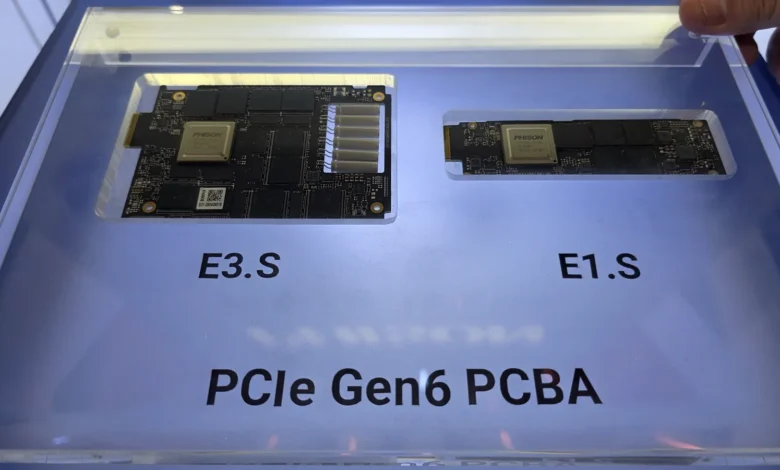
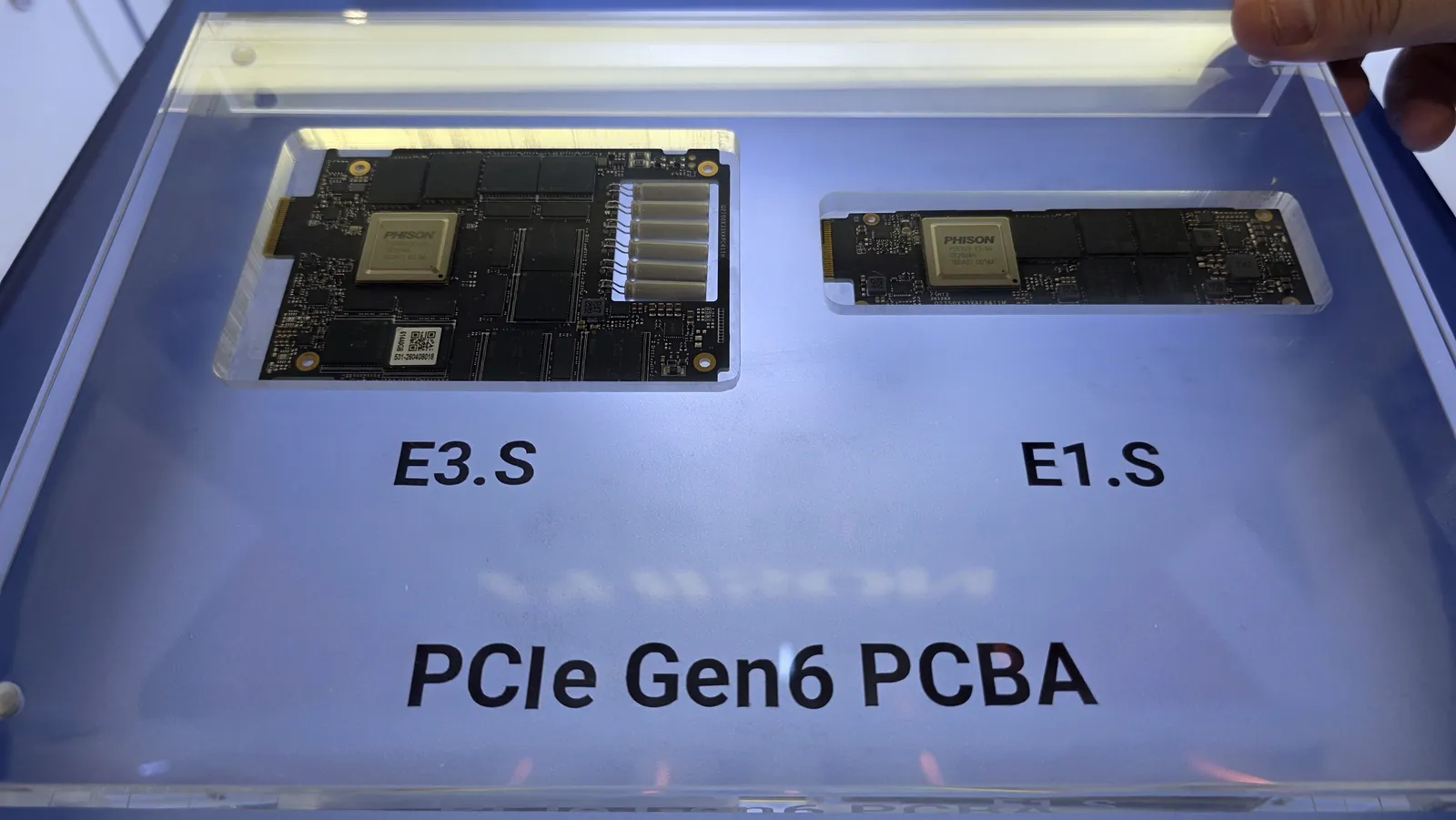
In a strategic move poised to redefine enterprise data center architectures and accelerate artificial intelligence workloads, storage controller giant Phison has unveiled two groundbreaking enterprise Solid State Drive (SSD) designs. The most striking innovation among the announcements is a specialized enterprise SSD equipped with an integrated Neural Processing Unit (NPU) and a massive 64GB of dedicated memory. By bringing compute power directly to the storage medium, this novel hardware approach aims to alleviate the severe data movement bottlenecks that currently plague modern server infrastructures, particularly in the realm of large-scale machine learning and generative AI training and inference.
Revolutionizing Enterprise Storage: The NPU-Powered AI SSD
Modern artificial intelligence models—ranging from massive Large Language Models (LLMs) like Llama to complex deep learning frameworks—require immense computational throughput and staggering memory bandwidth. Historically, data centers have relied on a traditional compute model: massive datasets are stored on storage arrays, pulled through the PCIe bus, loaded into system memory (RAM), and finally processed by high-powered Central Processing Units (CPUs) and Graphics Processing Units (GPUs). This constant shuffling of data creates a well-documented bottleneck known in the industry as the "memory wall" and the "storage-to-compute transfer penalty."
Phison’s new AI-centric SSD architecture directly challenges this paradigm. By embedding an on-drive NPU alongside 64GB of RAM directly onto the storage device, the SSD achieves an astonishing internal bandwidth of up to 130 GB/s. This configuration allows the storage device to execute AI frameworks and software libraries—such as PyTorch, vLLM, OpenVINO, and llama.cpp—internally. Instead of continuously streaming gigabytes or terabytes of raw data back and forth across the motherboard to the host server’s CPU, the drive performs foundational processing locally. It transmits only the distilled results back to the server, dramatically cutting down data transit overhead.
According to preliminary internal performance data released by Phison, this localized processing model can reduce data movement between storage and server resources by up to 100 times for specific, data-intensive workloads. The onboard NPU is rated at 36,800 DMIPS (Dhrystone Million Instructions Per Second), a metric reflecting the processing horsepower of its companion processing architecture. Although Phison has yet to disclose the exact specifications of the memory technology utilized or the granular capabilities of the NPU accelerators, the design signals a profound shift toward computational storage, where the drive is no longer a passive repository but an active participant in data computation.
The Mixed Media Innovation: Combining pSLC Speed with QLC Capacity
Alongside the NPU-equipped drive, Phison introduced a second innovative enterprise storage design termed "Mixed Media." This architecture addresses a different, yet equally pressing, challenge in enterprise data centers: balancing high-speed endurance with massive capacity density in a cost-effective manner.
Traditional enterprise setups often require a tiered storage strategy, utilizing expensive, high-endurance SLC (Single-Level Cell) or pSLC (Pseudo Single-Level Cell) SSDs for caching and write-intensive operations, paired with high-capacity QLC (Quad-Level Cell) or PLC (Penta-Level Cell) drives for archival and read-heavy data. Phison’s Mixed Media design merges these two disparate NAND flash technologies—pSLC and QLC—behind a single, powerful 16-channel SSD controller.
In this configuration, the pSLC portion handles high-speed write caching and heavy endurance demands, while the QLC section supplies dense, cost-effective capacity for long-term data storage. Crucially, the drive firmware manages these media types as logically separate storage spaces within the same physical device. This intelligent partitioning allows the host operating system or storage management software to route data dynamically to the most appropriate medium without requiring specialized, proprietary software drivers at the host level. By integrating cache and capacity into a single physical form factor using standard NVMe interfaces, data centers can significantly reduce their hardware footprint, eliminate the need for dedicated caching drives, and maximize valuable rack unit (RU) space.
Background, Development Timeline, and Industry Context
The announcement of these advanced enterprise designs comes at a time of unprecedented global demand for artificial intelligence infrastructure. As organizations worldwide race to deploy generative AI applications, data centers are facing severe constraints related to power consumption, thermal dissipation, and spatial limitations. Traditional server architectures are struggling to scale efficiently, as the power required to move data across buses often rivals the power required to compute it.
Phison’s recent disclosures build upon years of incremental research into computational storage and controller optimization. While the company has long been recognized as a leading independent designer of NAND flash controllers—supplying silicon and firmware to numerous major consumer and enterprise brand names—these latest enterprise products represent a definitive push up the value chain toward high-margin, specialized enterprise solutions.
The developmental timeline for these drives indicates that they are currently in advanced engineering and sampling phases. Industry analysts note that while the technological concepts are sound, commercial deployment into tier-one hyperscale data centers will require rigorous validation, ecosystem software adaptation, and ecosystem-wide software support for frameworks like PyTorch and llama.cpp to fully exploit on-drive processing capabilities. Consequently, Phison has not yet provided a definitive commercial release date or pricing structure for either the NPU-integrated SSD or the Mixed Media drive.
Strategic Implications for the Data Center Ecosystem
The introduction of computational storage devices carrying integrated neural processors and high-bandwidth memory could trigger significant shifts across the hardware and software landscape.
From a hardware perspective, offloading preliminary AI data parsing and inference tasks to the storage layer frees up vital PCIe lane bandwidth, system RAM capacity, and CPU cycles on the host server. In densely populated server racks, this optimization translates directly into higher query throughput, lower latency for end-users, and reduced thermal output. Data centers burdened by exorbitant power bills may find relief in architectures that minimize the heavy energetic cost of moving massive datasets across system buses.
From a software standpoint, developers of machine learning frameworks and database management systems will need to adapt their software stacks to leverage computational storage effectively. APIs and middleware must evolve to recognize storage devices not merely as block-storage targets, but as intelligent nodes capable of executing localized code and returning processed tensors or query results.
Despite the promising technical horizons, challenges remain. Enterprise customers are notoriously conservative when adopting new storage paradigms, demanding flawless reliability, predictable wear-leveling, and robust error-correction mechanisms—especially when dealing with mixed media architectures that combine high-endurance pSLC with higher-density QLC flash. Furthermore, transparency regarding the exact power draw, thermal characteristics, and longevity of the NPU-equipped drives under sustained enterprise workloads will be critical factors in their eventual market acceptance.
As Phison continues to refine these technologies through ongoing prototyping and industry collaboration, the company is positioning itself at the vanguard of the computational storage revolution. If these designs successfully transition from engineering laboratories to commercial deployment, they may fundamentally rewrite the rulebook on how enterprise systems store, move, and process the world’s burgeoning AI workloads.
Related posts: