
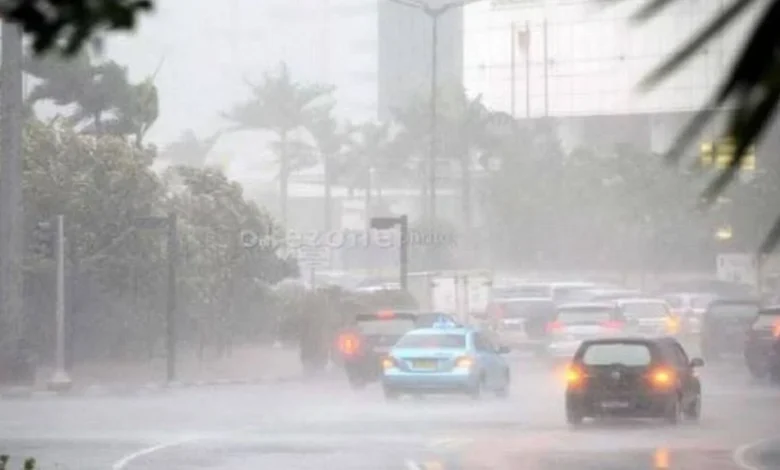
The Meteorology, Climatology, and Geophysics Agency (BMKG) has released its official weather forecast for Jakarta on Tuesday, September 22, 2026, indicating that while the capital will experience generally mild conditions, several key administrative regions are expected to face light rainfall throughout the day. This forecast serves as a critical update for the millions of residents navigating the city’s complex urban environment, as fluctuations in precipitation can significantly impact transportation, infrastructure, and public health in the metropolitan area.
According to the latest meteorological data, the atmosphere over Jakarta is experiencing a degree of instability, typical for this time of year, leading to localized rain showers. While the northern coastal regions and the Thousand Islands are currently predicted to remain under cloudy skies, the southern, western, and eastern corridors of the city are braced for intermittent light rain.
Regional Breakdown and Meteorological Data
The distribution of weather patterns across Jakarta’s six administrative regions shows a clear variation in humidity and temperature levels. As of early Tuesday morning, the BMKG monitoring stations provided the following data:
- Kepulauan Seribu (Thousand Islands): The maritime region is expected to remain predominantly cloudy. Residents and marine operators can anticipate temperatures ranging between 28 and 29 degrees Celsius, with humidity levels holding steady between 71% and 79%.
- Jakarta Pusat (Central Jakarta): Light rain is expected to impact the city’s administrative core. Temperatures are forecasted to fluctuate between 26 and 31 degrees Celsius, accompanied by humidity levels reaching as high as 91%.
- Jakarta Utara (North Jakarta): Similar to the islands, the northern coastal area is slated for cloudy conditions, with temperatures spanning 26 to 30 degrees Celsius and humidity between 65% and 87%.
- Jakarta Barat (West Jakarta): Light precipitation is likely, with thermometers expected to read between 25 and 32 degrees Celsius. Humidity in this region is notably higher, peaking at 93%.
- Jakarta Selatan (South Jakarta): This region, often the first to experience convective rain during the transitional season, is forecasted to see light rain. Temperatures are expected to reach a high of 32 degrees Celsius, with humidity levels potentially climbing to 96%.
- Jakarta Timur (East Jakarta): Similar to the southern districts, East Jakarta is set for light rain with a temperature range of 25 to 32 degrees Celsius and high humidity peaking at 95%.
Understanding Jakarta’s Micro-Climate Dynamics
The weather patterns observed today are a result of complex atmospheric interactions that characterize the Indonesian archipelago’s tropical climate. Jakarta, situated on a low-lying plain with a dense urban landscape, is particularly susceptible to what meteorologists describe as the "urban heat island" effect. This phenomenon occurs when urban structures, concrete, and asphalt trap heat, influencing local air currents and moisture retention.
When warm, moist air flows from the Java Sea toward the inland districts of South and East Jakarta, it often rises and cools, leading to cloud formation and subsequent rainfall. This explains why, even on days when the coastal areas remain clear, the inland districts frequently experience precipitation. For the average commuter, this means that even a "light rain" forecast can lead to significant traffic congestion, as the city’s drainage systems and road networks face sudden spikes in load.
Historical Context and Seasonal Trends
The date of September 22 marks a period of transition in the regional climate. As the year progresses toward the end of the third quarter, the intensity and frequency of rainfall in Jakarta often begin to shift. Historical data from the BMKG indicates that this period is often characterized by high humidity, which can be taxing on public health, particularly for those with respiratory conditions.
Furthermore, the management of Jakarta’s weather-related risks has become a priority for the provincial government. Over the past several years, the city has invested heavily in hydraulic infrastructure, including the expansion of reservoirs (waduk), the revitalization of river channels, and the installation of advanced sensor networks to monitor water levels in real-time. These efforts are designed to mitigate the impact of even minor rainfall, ensuring that light precipitation does not escalate into localized flooding.
Official Guidance and Public Safety Protocols
In light of the potential for rainfall, the BMKG has issued a standard advisory urging members of the public to remain vigilant. While the predicted rainfall is categorized as "light," the agency emphasizes that weather conditions in the tropics can change rapidly.

"We advise the public to stay informed through official channels," stated a spokesperson for the BMKG. "Even light rain can affect road safety. Motorcyclists, in particular, should ensure they have appropriate rain gear, and drivers are encouraged to maintain safe following distances and monitor visibility."
Public health officials also recommend that individuals sensitive to humidity ensure they remain well-hydrated, as the combination of temperatures reaching 32 degrees Celsius and high humidity levels—up to 96%—can lead to physical discomfort and fatigue during outdoor activities.
The Role of Technology in Weather Monitoring
The precision of today’s forecast is supported by a robust network of automated weather stations and satellite imagery. The BMKG utilizes high-resolution meteorological models that ingest data from multiple platforms, including the Himawari-8 satellite, which provides continuous observation of cloud movement and atmospheric pressure.
By integrating these technological assets, the agency is able to provide localized alerts. For instance, the distinction between the cloudy forecast for Jakarta Utara and the rain-prone forecast for Jakarta Selatan allows for more targeted public service announcements. This granular approach to weather reporting is a significant upgrade from the broad, city-wide forecasts of the past, allowing for more efficient urban planning and emergency response coordination.
Broader Implications for Urban Infrastructure
The recurring nature of these weather patterns poses long-term challenges for Jakarta’s urban development. As the city continues to expand, the "impermeable surface" ratio—the amount of land covered by buildings and pavement—continues to grow. This reduces the ground’s ability to absorb rainfall, placing greater pressure on the city’s drainage infrastructure.
Urban planners have noted that the integration of "sponge city" concepts—a strategy that utilizes green spaces and permeable materials to manage water—is becoming essential. By incorporating these elements, the city aims to reduce the risk of inundation during the rainy season. Today’s weather report, while seemingly routine, acts as a daily stress test for these systems, reinforcing the need for continuous maintenance and strategic investment in environmental resilience.
Conclusion: Staying Informed in a Changing Climate
As Jakarta navigates the complexities of its tropical environment, the reliance on accurate, real-time meteorological data remains a cornerstone of public safety. Today’s forecast of light rain across several regions is a reminder of the city’s dynamic relationship with its climate.
Whether commuting to work, planning outdoor events, or managing logistical operations, residents are encouraged to monitor updates throughout the day. The BMKG continues to provide real-time data through its website and official social media channels, ensuring that the public has access to the information necessary to navigate the day safely and effectively.
For the millions living and working in Jakarta, the ability to anticipate these minor weather shifts is not just a convenience—it is an essential component of urban life in a rapidly evolving, climate-sensitive metropolis. By staying prepared and heedful of official advisories, the community can mitigate the minor disruptions that come with the daily weather, keeping the city moving even when the clouds roll in.