Donald Trump Attends 2026 FIFA World Cup Final Amidst Mixed Reception and Lingering Controversy

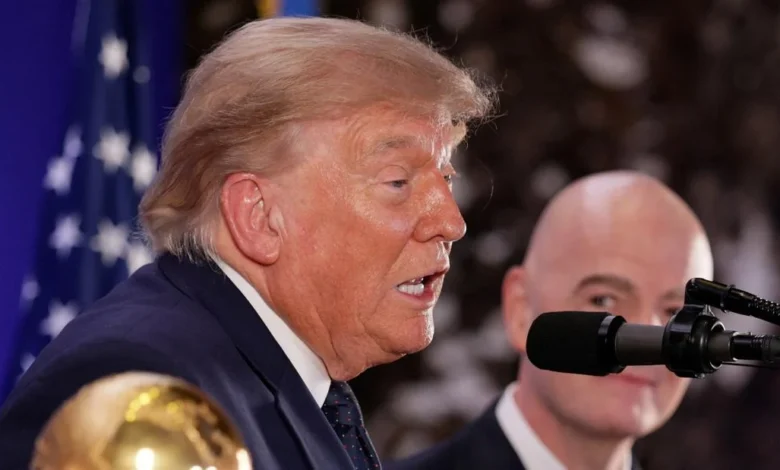
In a scene that underscored the persistent intersection of global sport and high-stakes politics, former United States President Donald Trump made a high-profile appearance at the 2026 FIFA World Cup Final at MetLife Stadium in New Jersey. The spectacle, marking the culmination of the first-ever 48-team tournament co-hosted by three North American nations, was colored by Trump’s presence, which drew a polarizing reception from the capacity crowd and reignited discussions around his unprecedented intervention in a previous tournament decision. While the world watched to see which nation would hoist the coveted golden trophy, many eyes were also fixed on the former President, whose every move seemed to invite scrutiny and commentary.
The Grand Stage: The 2026 FIFA World Cup and MetLife Stadium
The 2026 FIFA World Cup represented a monumental shift in the landscape of international football. Expanding from 32 to 48 teams, the tournament was a logistical and sporting marvel, spread across 16 cities in the United States, Canada, and Mexico. This expanded format brought new nations to the global stage, increasing the tournament’s reach and economic footprint. The United States, as the primary host, bore the brunt of the organizational responsibilities, with MetLife Stadium in East Rutherford, New Jersey, selected as the prestigious venue for the final match. A modern marvel with a seating capacity exceeding 82,500, MetLife Stadium, home to NFL franchises the New York Giants and New York Jets, had undergone significant upgrades to meet FIFA’s stringent requirements for a World Cup final. Its proximity to New York City, a global media and financial hub, further amplified its appeal as the perfect backdrop for football’s ultimate showpiece. The final itself was expected to draw a global television audience numbering in the billions, cementing its status as the most watched single sporting event on the planet. The economic impact on the host region, encompassing tourism, hospitality, and infrastructure, was projected to be in the tens of billions of dollars, making the tournament a significant boon for the tri-nation hosts.
Arrival and Reception: A Familiar Divide
On Sunday, July 19, 2026, the atmosphere at MetLife Stadium was electric, a mosaic of national colors and fervent anticipation. Just hours before kickoff, the iconic Marine One helicopter, synonymous with the U.S. presidency, descended near the stadium, delivering Donald Trump to the venue. Accompanied by his wife, former First Lady Melania Trump, his arrival was a high-visibility event, immediately drawing the attention of both security personnel and the throngs of arriving fans. As the former President made his way to a VIP box, his image was broadcast on the colossal jumbotron screens within the stadium, a standard practice for recognizing dignitaries and celebrities at such events.
The crowd’s reaction was immediate and sharply divided. A significant portion of the spectators erupted in a chorus of boos and jeers, a vocal expression of dissent that resonated through the stadium. This reaction was not unfamiliar to Trump, who had experienced similar mixed receptions at various public and sporting events following his presidency. However, interspersed with the jeers were pockets of enthusiastic cheers and applause, demonstrating the enduring loyalty of his supporter base. While the volume of the negative reaction was notable, observers noted it was perhaps less intense than some of the more overtly hostile receptions he had encountered in other recent public appearances, suggesting either a more diverse crowd demographic or a heightened focus on the impending match.
Unfazed by the crowd’s vocal display, the 80-year-old former President maintained a stoic demeanor. Before the final match began, Trump was afforded the rare privilege of interacting with the gleaming golden FIFA World Cup trophy, a symbol of global football supremacy. He was observed patting the trophy as it was brought into the VIP box, a moment captured by photographers and broadcast globally. He then took his seat alongside FIFA President Gianni Infantino, a close acquaintance, and Melania Trump. As the national anthems of the competing finalists echoed through the stadium, Trump, like many in attendance, stood and offered a respectful salute during the performance of the U.S. national anthem, which traditionally precedes major international events hosted in the United States.
Prior to the match, Trump shared his predictions, offering insights that blended sports commentary with political endorsement. "I think it’s hard to bet against Messi," Trump stated, indicating his belief that Argentine superstar Lionel Messi would lead his team to victory. He also took the opportunity to commend Argentina’s right-wing President, Javier Milei, stating, "He’s my friend. He has done an incredible job." Milei, known for his unconventional style, was notably absent from the final, reportedly due to a personal superstition against attending such events.
A Precedent-Setting Intervention: The Balogun Controversy
Trump’s presence at the final, however, was not merely a matter of a prominent figure attending a major event. It carried the weight of a significant and controversial incident earlier in the tournament, one that had deeply shaken the principles of sporting integrity and brought the former President into direct conflict with FIFA’s autonomous disciplinary processes. The controversy centered around American striker Folarin Balogun.
Chronology of the Incident:
During the group stage match between the United States and Ghana on June 23, 2026, Folarin Balogun, a pivotal figure in the U.S. attacking lineup, received a straight red card in the 78th minute. The incident occurred following a VAR review, where Balogun was judged to have committed a dangerous tackle on Ghanaian defender Tariq Lamptey. While Balogun appeared to win the ball, the follow-through was deemed reckless, with studs showing and direct contact made with Lamptey’s shin. Referee Abdulrahman Al-Jassim, after reviewing the pitch-side monitor, upheld his decision, leading to Balogun’s dismissal and a mandatory one-match suspension, with the potential for further sanctions depending on FIFA’s disciplinary committee review.
The red card was a critical blow to the U.S. team’s aspirations, as Balogun was a key offensive threat. Within hours of the match, which the U.S. eventually drew 1-1, Donald Trump took to his social media platform, "Truth Social," to vehemently protest the decision. In a series of posts, he labeled the red card "a total disgrace," "an attack on American soccer," and accused FIFA of "rigging the tournament against the USA." He went further, directly calling upon FIFA President Gianni Infantino to "IMMEDIATELY overturn this outrageous call!" and insinuating that failure to do so would reflect poorly on the integrity of the entire tournament and its hosts.
The unprecedented nature of a former head of state publicly demanding the reversal of a referee’s decision, especially one confirmed by VAR, sent shockwaves through the sporting world. Initially, FIFA issued a statement reaffirming its commitment to the independence of refereeing and disciplinary procedures. "All disciplinary decisions are made by independent committees based on the Laws of the Game," a FIFA spokesperson stated, implicitly rebuffing Trump’s demand. Sports analysts and commentators widely condemned Trump’s intervention, calling it an unacceptable breach of sporting protocol and a dangerous precedent that could undermine the authority of referees and the integrity of the sport.
However, just 48 hours later, FIFA’s Disciplinary Committee issued a revised ruling. In an astonishing reversal, the committee announced that Folarin Balogun’s red card had been "provisionally suspended pending further review," effectively making him eligible for the USA’s next match. The official justification cited "new evidence" and "technical ambiguities in the VAR protocol interpretation," though no specific details of this "new evidence" were publicly disclosed. This decision, widely seen as bowing to political pressure, sparked outrage among football purists and international media. Critics argued that FIFA had compromised its independence and set a perilous precedent, suggesting that future disciplinary actions could be subject to political interference from powerful figures. The incident led to widespread accusations of favoritism and questions about the ethical governance of the world’s most popular sport.
Despite the controversial intervention and Balogun’s return to the lineup, the U.S. Men’s National Team’s journey in the tournament was cut short. On July 7, 2026, in a Round of 16 match, the United States was convincingly defeated by Belgium with a score of 4-0. The heavy loss ended the host nation’s hopes of progressing further, leaving the final without a North American representative. This elimination further contextualized Trump’s presence at the final, as he attended not as a proud host nation supporter, but as a prominent global figure whose prior actions had left an indelible mark on the tournament’s narrative.
The Nexus of Politics and Sport: Reactions and Analysis
The intertwining of politics and sport at the 2026 World Cup Final, largely centered around Donald Trump, ignited a firestorm of reactions and analyses from various sectors.
FIFA’s Stance and Infantino’s Relationship: FIFA President Gianni Infantino, often criticized for his pragmatic approach to global football politics, found himself in a precarious position. His personal relationship with Donald Trump, cultivated during Trump’s presidency, became a focal point. While FIFA’s official statements regarding the Balogun incident were initially firm, the subsequent reversal was widely interpreted as a direct result of political pressure. "FIFA must always uphold the integrity of the game above all else," commented former UEFA President Michel Platini, "but when you see such reversals, one wonders what forces are truly at play." Infantino, while not directly addressing Trump’s intervention, consistently emphasized FIFA’s commitment to "unity" and "collaboration" with host nations, subtly hinting at the complexities of navigating relationships with powerful political figures. Critics suggested that FIFA’s desire to maintain favorable relations with the U.S., a crucial market and primary host, might have influenced its disciplinary decisions, thereby undermining its credibility.
Political Commentary: Political analysts viewed Trump’s appearance and the crowd’s reaction as a microcosm of his enduring political influence and the deep divisions within American society. "Donald Trump remains a master of commanding attention," noted political strategist Sarah Jenkins. "His presence at the World Cup Final, regardless of the boos, keeps him in the public consciousness, projecting an image of power and defiance. The mixed reception is entirely consistent with his political brand – he thrives on polarization." Others suggested that such high-profile appearances were strategic, aimed at maintaining visibility and signaling his continued relevance, particularly if he were contemplating another run for office in the future. The event underscored how global sporting spectacles have become increasingly politicized, serving as informal barometers of public sentiment towards controversial figures.
Sports Ethicists and Integrity Concerns: The Balogun incident, in particular, provoked strong condemnation from sports ethicists and former referees. "This sets a dangerous precedent for the autonomy of sports governance," stated Dr. Eleanor Vance, a leading scholar in sports ethics. "When disciplinary decisions can be influenced by external political pressure, it erodes the fundamental principles of fairness, impartiality, and the rule of law within sport. It tells players and fans that some are more equal than others, depending on who has powerful friends." The concern was that such interventions could open the floodgates for other powerful nations or individuals to exert undue influence on future tournaments, fundamentally compromising the integrity of football.
Public Opinion and Media Discourse: Social media platforms buzzed with debates following Trump’s appearance and the Balogun controversy. Fans expressed a range of emotions, from outrage at perceived political interference to staunch defense of Trump’s actions. Mainstream media outlets largely highlighted the divisive nature of the event, with headlines questioning FIFA’s independence and the appropriateness of political figures leveraging their influence in sporting matters. The discourse reflected a broader societal struggle to reconcile the apolitical ideals of sport with the inescapable realities of political power and influence.
Broader Implications: A New Era for Global Events?
The events surrounding Donald Trump’s involvement in the 2026 FIFA World Cup Final carry significant broader implications for FIFA, the United States as a host nation, and the future intersection of politics and major global events.
For FIFA: The controversy surrounding the Balogun red card reversal represents a critical challenge to FIFA’s credibility and its ability to maintain independence. It highlights the immense pressure the organization faces from powerful political entities, especially in major markets. In an era where human rights and ethical governance are increasingly scrutinized in sports, FIFA’s handling of such incidents will define its reputation for years to come. Future disciplinary decisions will inevitably be viewed through the lens of this precedent, potentially leading to accusations of bias or capitulation whenever a powerful nation or figure is involved. This may necessitate a re-evaluation of its governance structures and a clearer articulation of its boundaries with political influence.
For the United States as a Host: The U.S., in co-hosting the World Cup, aimed to project an image of unity, diversity, and sporting excellence. The presence of a polarizing figure like Donald Trump, and the controversy he generated, complicated this narrative. While the tournament was undoubtedly a success in many aspects, the political undertones served as a reminder of the complex societal landscape of the host nation. It poses questions for future international events hosted in the U.S. about how to manage the visibility of controversial domestic political figures without detracting from the primary sporting or cultural objectives.
For Donald Trump: His attendance and the ensuing discussions reaffirmed his unique ability to remain a central, albeit polarizing, figure in public life, even outside of direct political office. High-profile events like the World Cup Final provide him with a platform to connect with a broad audience, test public sentiment, and project an image of power and influence. This strategy of leveraging major events for visibility is likely to continue, irrespective of his direct political ambitions in the future, maintaining his role as a significant force in American public discourse.
The Future of Sports Governance: The 2026 World Cup served as a stark illustration of the growing challenge for international sports organizations to uphold sporting integrity in an increasingly globalized and politically charged world. The incident with Balogun’s red card sets a dangerous precedent, suggesting that the "rules of the game" can be bent under sufficient political pressure. This raises fundamental questions about who truly governs global sports – independent bodies or powerful political actors. It underscores the urgent need for robust, transparent, and unyielding governance frameworks to safeguard the autonomy and integrity of sport against external interference.
Conclusion: A Final Whistle on a Controversial Chapter
As the final whistle blew at MetLife Stadium, crowning a new World Champion, the 2026 FIFA World Cup Final was etched into history not only for its sporting drama but also for its profound political undertones. Donald Trump’s polarizing presence, his unfazed demeanor amidst a cacophony of boos and cheers, and the lingering shadow of his unprecedented intervention in a crucial disciplinary decision, all contributed to a narrative far richer and more complex than a mere football match. It was a global spectacle that powerfully demonstrated the enduring, often contentious, nexus of sport and politics, leaving observers to ponder the evolving landscape of international events in an era where power, influence, and the pursuit of integrity are constantly in tension.