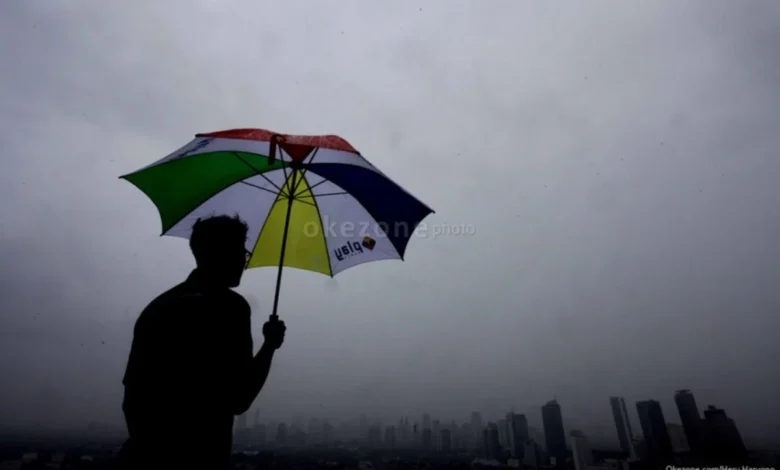
The Meteorology, Climatology, and Geophysics Agency (BMKG) of Indonesia has released its official weather outlook for the Greater Jakarta area, commonly referred to as Jabodetabek, for Saturday, September 19, 2026. According to the latest data, residents across the capital and its satellite cities should prepare for intermittent light rainfall throughout the day. This atmospheric condition is attributed to regional moisture convergence and localized convection patterns that have persisted throughout the mid-September transition period.
The forecast indicates that the entirety of the Special Capital Region of Jakarta—including the Thousand Islands, Central Jakarta, North Jakarta, West Jakarta, South Jakarta, and East Jakarta—will experience light rain. Similar conditions are expected to extend into the suburban regions of Bogor, Depok, and Tangerang. While the intensity is largely categorized as light, local meteorological experts caution that the accumulation of moisture could impact traffic flow and outdoor activities during the weekend.
Meteorological Overview and Regional Distribution
The climate profile for the Jabodetabek region on this date reflects the complex topography of the area, which often influences localized weather patterns. While the general forecast points toward light precipitation, the intensity varies slightly by district. In West Java, the Bogor Regency and the City of Bogor are slated for light showers, consistent with their high-altitude characteristics which frequently facilitate cloud formation.
In contrast, the Bekasi region presents a slightly different outlook. The BMKG model indicates that while the City of Bekasi will see light rain, the surrounding Bekasi Regency is currently under a forecast for moderate rainfall. This distinction is vital for commuters and regional authorities who manage drainage and flood mitigation systems. In Banten province, the urban centers of Tangerang City, South Tangerang, and the Tangerang Regency are also expected to see light rain, maintaining a uniform weather pattern across the western corridor of the metropolitan area.
Historical Context and Seasonal Transitions
September marks a critical period in the Indonesian climate calendar as the nation experiences a transition between the dry season and the onset of the transition period, locally known as pancaroba. During this phase, the atmospheric dynamics are highly volatile. Intense solar heating during the morning hours often triggers significant convective activity by the afternoon, leading to the rapid development of cumulonimbus clouds.
Historically, Jabodetabek has been prone to sudden weather shifts during the transition months. While the current forecast suggests light rain, meteorologists emphasize that the suddenness of these events can lead to localized pooling of water, especially in areas with high impervious surface coverage. The BMKG has urged the public to remain vigilant, as the transition period is often characterized by extreme variations in wind speed and localized lightning strikes, even if the primary precipitation forecast remains "light."
Infrastructure and Urban Resilience
The impact of rain, regardless of its intensity, is a matter of significant concern for the urban planners and emergency management agencies of Jabodetabek. With a population exceeding 30 million people, the metropolitan area’s resilience depends heavily on the maintenance of its water management infrastructure.
Data from the Jakarta Regional Disaster Management Agency (BPBD) indicates that the city has been undergoing extensive dredging of rivers and reservoirs in anticipation of the upcoming wet season. While light rain is generally manageable, the cumulative effect of saturated soil and clogged drainage channels remains a persistent challenge. Authorities have consistently advised citizens to avoid disposing of waste in drainage channels, as blockages are the primary cause of localized inundation during rainfall events in the capital.

Economic and Logistical Implications
For a region that serves as the economic engine of Indonesia, even minor weather events can have significant logistical consequences. Saturday, being a weekend, typically sees a shift in traffic patterns from commuter-heavy transit to leisure and retail-focused movement. The prediction of rain across the entire Jabodetabek area may lead to increased reliance on private vehicles and ride-hailing services, potentially causing congestion in major commercial hubs such as Sudirman, Kuningan, and the various malls located in Tangerang and Bekasi.
Logistics companies operating within the Greater Jakarta area are also advised to factor in these weather conditions. While light rain is unlikely to halt major supply chain operations, it may result in minor delays for last-mile delivery services. Road safety experts suggest that motorists exercise increased caution during these periods, as the first hour of rainfall often lifts accumulated oils and grime from road surfaces, making them exceptionally slippery.
BMKG Advisory and Public Safety Measures
The BMKG’s role in providing timely information is part of a broader mandate to ensure public safety in a country highly susceptible to hydrometeorological disasters. The agency utilizes a network of automated weather stations and satellite imagery to provide real-time updates. Residents are encouraged to monitor the official BMKG mobile application or their social media channels for any sudden updates or "early warning" alerts that may be issued if the weather conditions escalate beyond the current light rain forecast.
Public health officials also take note of such weather reports. The transition period, characterized by fluctuating temperatures and humidity, is often associated with a rise in vector-borne diseases. The presence of light rain creates small, stagnant pools of water that serve as breeding grounds for mosquitoes. Consequently, the government has reminded the public to maintain the cleanliness of their surroundings through the "3M" program (Menguras, Menutup, Mendaur ulang)—draining, covering, and recycling containers that could hold water.
Expert Analysis of Meteorological Trends
Climatologists studying the region have noted that the 2026 weather patterns have been influenced by broader oceanic-atmospheric interactions, including the ongoing fluctuations in sea surface temperatures in the Indian Ocean. While these macro-level events dictate the overall season, the localized forecast for Jabodetabek remains heavily influenced by the sea-land breeze cycle.
During the day, the heating of the landmass draws in moisture-laden air from the Java Sea, which, when combined with the urban heat island effect—where the city’s concrete and asphalt trap heat—often intensifies the precipitation in the afternoon. This explains why the rainfall is distributed across the entire metropolitan area rather than being confined to a single district. The current forecast of light rain suggests that while moisture levels are sufficient for precipitation, there is currently no major low-pressure system driving high-intensity storms.
Conclusion and Future Outlook
As the residents of Jakarta, Bogor, Depok, Tangerang, and Bekasi navigate their Saturday, the weather will remain a focal point of their daily planning. The forecast of light rain serves as a reminder of the region’s climate reality and the necessity of constant preparedness.
Moving forward into the final quarter of 2026, the BMKG will continue to refine its forecasting capabilities. The agency is currently investing in more granular localized sensors to improve the accuracy of its city-level predictions. For now, the message to the public is clear: while the rain is expected to be light, the combination of urban density and seasonal transition requires residents to remain informed and prepared for potential changes in weather intensity as the day progresses. Staying updated through official channels remains the most effective way for citizens to mitigate the minor inconveniences posed by the daily weather cycle in this sprawling, dynamic megacity.
Related posts: