Champions League 2026/2027 Matchday One Delivers High-Scoring Drama and Tactical Intensity across Europe

The 2026/2027 UEFA Champions League campaign officially roared into life this week, as the continent’s elite clubs convened for the opening round of the newly formatted group phase. With the structure of the tournament emphasizing high-stakes encounters from the very first whistle, the matches held between Wednesday, September 9, and Thursday, September 10, 2026, served as a resounding statement of intent from the tournament’s traditional heavyweights. Across various venues, European football’s premier competition reminded fans why it remains the pinnacle of club sports, characterized by clinical finishing, resilient comebacks, and tactical masterclasses that have set an early benchmark for the season ahead.
The headlines were undoubtedly dominated by the offensive masterclasses displayed by FC Barcelona and Paris Saint-Germain. Both clubs, perennial contenders for the crown, sent a clear message to the rest of the field that their squads are well-equipped to handle the rigors of the expanded league phase. While the scorelines were lopsided in these specific encounters, the underlying statistics suggest a shift in tactical philosophy for both managers, who prioritized aggressive pressing and vertical transitions over the traditional reliance on prolonged possession.
Dominant Displays in Catalonia and Paris
At the iconic Camp Nou, FC Barcelona dismantled Feyenoord with a comprehensive 5-1 victory. The match was a testament to the club’s evolving identity, as Barcelona’s frontline operated with a fluidity that left the Dutch visitors struggling to maintain their defensive shape. Raphinha was the standout performer, netting a brace that underscored his importance as a primary creative and scoring outlet for the Blaugrana. The scoring was further bolstered by Karim Adeyemi, the electric Lamine Yamal, and the experienced Gabriel Jesus, who showcased his poaching instincts within the box. While Sem Steijn managed to salvage a consolation goal for Feyenoord, the narrative of the match was firmly controlled by the hosts, whose high-octane attacking style overwhelmed the visitors’ backline.
Parallel to the excitement in Spain, Paris Saint-Germain delivered a chilling reminder of their pedigree as reigning champions. Hosting Slovan Bratislava at the Parc des Princes, the Parisians secured a dominant 6-1 win. The match belonged to Ferran Torres, whose hat-trick provided the catalyst for the rout. Ousmane Dembele added a brace, while Fabian Ruiz capped off the scoring, ensuring that PSG’s pursuit of back-to-back titles begins on the strongest possible footing. Despite a goal from Suleiman Camara, Slovan Bratislava found themselves consistently second-best, unable to cope with the relentless pace and technical superiority displayed by the PSG midfield.
Hard-Fought Wins for English Contenders
While the giants of the continent enjoyed high-scoring affairs, the English Premier League representatives faced significantly more difficult tests in their respective openers. Both Liverpool and Arsenal were forced to dig deep, demonstrating the mental fortitude required to navigate the complexities of European competition.
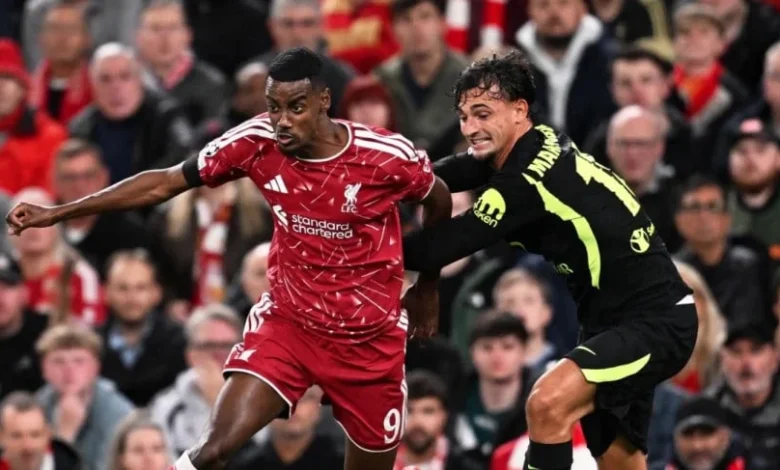
Liverpool’s encounter with Atletico Madrid at Anfield was perhaps the most compelling tactical battle of the round. True to their identity, Diego Simeone’s side arrived with a disciplined defensive block, looking to exploit transitions. Their strategy bore fruit early when Marcos Llorente silenced the Anfield crowd with a composed finish. However, the atmosphere at Liverpool’s home ground is designed for such reversals. Dominik Szoboszlai leveled the score with a long-range strike, shifting the momentum back in favor of the hosts. Alexis Mac Allister eventually completed the comeback, directing a strike into the bottom corner to secure a vital 2-1 victory. The result highlights Liverpool’s resilience, a trait that will be essential as they navigate a challenging schedule.
Arsenal, meanwhile, maintained their focus in a cagey affair against Napoli at the Emirates Stadium. The match was defined by tactical discipline and restricted space, with both sides cautious not to concede early. It took until the 75th minute for the deadlock to be broken, as Martin Odegaard capitalized on a momentary lapse in the Napoli defense. His goal ensured a narrow 1-0 victory for the Gunners, a result that, while less spectacular than the scorelines in Barcelona or Paris, is arguably as significant for their long-term progression in the competition.
Statistical Context and Tactical Trends
The opening round of the 2026/2027 season has provided analysts with significant data points regarding the evolving nature of the Champions League. One of the most noticeable trends is the increase in successful transitions. Teams are increasingly looking to exploit the space behind high defensive lines, a strategy clearly utilized by both PSG and Barcelona in their respective wins.
Furthermore, the integration of new signings into these established squads has been largely seamless. Gabriel Jesus’s performance for Barcelona and the continued impact of Ferran Torres at PSG indicate that the summer transfer windows were effectively utilized to address specific positional needs. The average goal count per match for this opening round sits significantly higher than the average recorded in the opening weeks of the previous three seasons, suggesting that the tactical shift toward "total attacking football" is becoming the dominant trend among Europe’s elite.
Official Responses and Managerial Sentiment
Post-match reactions from the coaching staffs emphasized a mixture of satisfaction and cautious optimism. Barcelona’s manager praised his side’s "clinical execution," noting that the ability to convert high-percentage chances into goals has been a primary focus of their preseason training. He cautioned, however, that the league phase is a marathon, not a sprint, and that defensive lapses—such as the one that allowed Feyenoord to score—must be rectified before facing more potent offensive sides.
In Paris, the mood was one of controlled confidence. The PSG coaching staff highlighted the squad’s ability to rotate players effectively without losing structural integrity. Ferran Torres, speaking briefly to the media after his hat-trick, emphasized that the team’s success is a product of the collective effort, noting that the depth of the squad allows them to maintain high pressure throughout the full 90 minutes.
At Liverpool, the sentiment was one of relief and appreciation for the home support. The tactical staff acknowledged the difficulty of breaking down a team as structured as Atletico Madrid, noting that the ability to win when not playing at peak fluidity is the hallmark of a champion. Arsenal’s camp echoed similar sentiments, with focus placed on the importance of "clean sheets" and defensive organization in tight, low-scoring European nights.
Broader Implications for the Season Ahead
The implications of these opening results are substantial. For clubs like PSG and Barcelona, the emphatic wins provide a cushion that may prove vital in the final standings of the league phase. In the new Champions League format, where goal difference and total points are critical for securing direct qualification to the Round of 16, every goal scored and conceded carries immense weight.
Conversely, for teams like Atletico Madrid and Napoli, the narrow defeats are not terminal, but they do place increased pressure on their subsequent matches. The nature of the current league phase means there is little room for a sustained slump in form. The coming weeks will see these teams attempting to recalibrate their strategies, with many likely to adopt more aggressive tactics in their second matchday to regain lost ground.
As the tournament progresses, the focus will inevitably shift toward the endurance of these squads. With domestic leagues also in full swing, the physical demands placed on players are reaching unprecedented levels. The ability of managers to rotate squads while maintaining consistency will likely become the decisive factor in who progresses to the knockout stages and who falls by the wayside.
Looking Toward Matchday Two
As the dust settles on the first round of fixtures, the focus shifts to the upcoming matches in late September. The initial victories have established a clear pecking order, but the Champions League is renowned for its volatility. The resilience shown by the English sides and the offensive firepower displayed by the Spanish and French giants have set a high bar for the remainder of the competition.
Fans and analysts alike are now looking toward the next set of fixtures, where the pressure will mount for those looking to recover from opening-day setbacks. With the tactical landscape shifting and the margins for error becoming thinner, the 2026/2027 Champions League is shaping up to be one of the most competitive iterations of the tournament in recent memory. The journey to the final in May has only just begun, and if this opening week is any indication, the road will be paved with extraordinary performances and unpredictable twists.
The integration of advanced analytics, higher-intensity pressing, and a more robust tournament structure is clearly paying dividends in terms of entertainment value. As these clubs prepare for their second outings, the football world remains fixated on whether the early leaders can sustain their momentum or if the challengers will find the tactical keys to disrupt the current hierarchy. The early evidence suggests that the 2026/2027 season will be defined by those who can best balance the demands of domestic duty with the intense, high-stakes nature of continental glory.