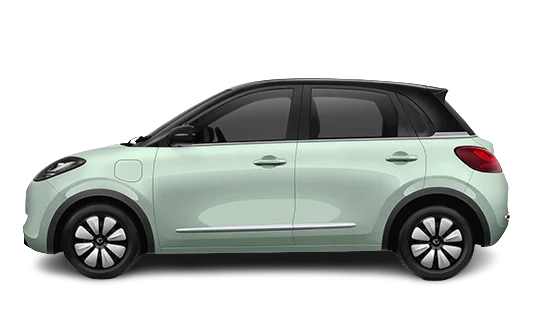
The global automotive landscape is undergoing a profound transformation as manufacturers pivot toward electrification, with a specific focus on compact urban mobility solutions. Small electric vehicles (EVs) have emerged as the primary remedy for the dual challenges of urban congestion and the urgent need for carbon footprint reduction. While early iterations of these vehicles were often criticized for their limited operational range, technological advancements in battery chemistry—specifically the transition toward Lithium Iron Phosphate (LFP) and high-density nickel-based chemistries—have enabled smaller frames to house significant energy capacity. Today, a segment of "micro" and "compact" EVs has successfully bridged the gap between daily urban commuting and the capability for longer-range travel, offering drivers between 200 and 400 kilometers of range on a single charge.
The Evolution of Urban Micro-Mobility
The rise of the compact EV segment is not merely a trend but a strategic response to shifting urban demographics. According to data from the International Energy Agency (IEA), electric car sales surpassed 14 million in 2023, with a significant portion of this growth attributed to the compact and sub-compact categories in emerging markets, particularly in Southeast Asia and China. These vehicles are designed for the "last mile" and daily commuting, where agility, ease of parking, and reduced charging times are prioritized over high-speed performance.
Historically, the micro-EV segment was dominated by low-speed neighborhood electric vehicles (NEVs). However, the market has matured significantly since 2020. The introduction of standardized testing cycles like the New European Driving Cycle (NEDC) and the Worldwide Harmonized Light Vehicles Test Procedure (WLTP) has provided consumers with more accurate expectations regarding range, leading to a surge in demand for models that can handle both city traffic and occasional inter-city excursions.
Market Dynamics and Consumer Behavior
The shift toward compact EVs is driven by economic and infrastructural necessity. As metropolitan areas struggle with increased traffic density, the physical footprint of vehicles has become a critical purchase factor. In many high-density cities, the ability to maneuver through narrow streets and occupy smaller parking spaces—often referred to as "micro-parking"—provides a significant quality-of-life advantage.
Financial analysts observe that the affordability of these vehicles is their strongest value proposition. By utilizing modular platforms and simplified electronic architectures, manufacturers have managed to lower the entry price point for electric mobility. This has democratized access to green technology, allowing middle-income households to transition away from internal combustion engine (ICE) vehicles.
Detailed Review of Leading Compact Electric Vehicles
Wuling Air ev: The Pioneer of Compact Utility
The Wuling Air ev represents a seminal shift in how urban commuters perceive electric mobility. Since its global debut, the vehicle has been praised for its minimalist design and utilitarian approach. It is essentially a "city-pod" that maximizes interior volume despite a truncated exterior. Equipped with a LFP battery, the Air ev is optimized for high-cycle longevity. Its charging infrastructure compatibility, including support for standard AC wall outlets, makes it highly accessible for home charging.
- Performance Metrics: With a range that typically reaches up to 300 km (depending on the variant), it serves the average urban commuter who travels between 30 and 50 km per day, requiring a recharge only once or twice a week.
- Market Impact: The Air ev has set a benchmark for the "easy-to-own" category, forcing competitors to rethink their pricing strategies to remain relevant.
Wuling BinguoEV: The Transition to Hatchback Utility
The Wuling BinguoEV signifies a step up from the micro-segment into the compact hatchback category. By increasing the wheelbase and overall length, Wuling has addressed the primary complaint of micro-EV owners: lack of cargo space. The BinguoEV incorporates a more sophisticated battery management system (BMS), which enhances efficiency during stop-and-go city driving.
- Strategic Advantage: The BinguoEV is designed to accommodate small families or professionals who require more utility than a traditional two-door microcar. Its extended range, which reaches up to 410 km in some configurations, positions it as a viable secondary vehicle for weekend getaways.
- Design Philosophy: The rounded, retro-futuristic aesthetic appeals to a broader demographic, moving away from the purely functional look of earlier compact EVs.
DFSK Seres E1: Agile Performance and Safety
The DFSK Seres E1 is a direct competitor in the compact EV space, focusing heavily on safety features and interior comfort. Unlike some entry-level competitors, the Seres E1 emphasizes occupant protection through a reinforced chassis and a suite of active safety systems, such as Anti-lock Braking Systems (ABS) and Electronic Brakeforce Distribution (EBD).
- Engineering Focus: The Seres E1 utilizes a rear-wheel-drive configuration, which provides a more engaging driving experience compared to the front-wheel-drive bias of many other micro-EVs. Its charging protocol is robust, supporting rapid charging capabilities that can bring the battery from 30% to 80% in approximately 30 to 45 minutes, a critical feature for users with limited downtime.
Industry Analysis: The Impact of Battery Technology
The primary factor enabling the current generation of long-range compact EVs is the advancement in energy density. The transition from older lead-acid or nickel-metal hydride batteries to modern lithium-ion chemistries has been revolutionary. Furthermore, the integration of "Cell-to-Pack" (CTP) technology allows manufacturers to eliminate unnecessary modules within the battery casing, effectively increasing the space available for active cells.
This technological leap has significant implications for the environment. By reducing the size of the battery pack while maintaining a sufficient range, manufacturers are effectively reducing the total amount of raw materials—such as lithium, cobalt, and nickel—required for each vehicle. This not only lowers the vehicle’s price but also reduces its "cradle-to-gate" carbon emissions.
Infrastructure and Policy Implications
The success of these vehicles is inextricably linked to the availability of charging infrastructure. Governments globally are increasingly subsidizing the installation of public charging stations in residential and commercial zones. However, the true growth of this segment relies on "destination charging"—placing chargers where people spend their time, such as office complexes, shopping malls, and residential apartment buildings.
Public policy, particularly in the form of tax incentives and exemptions from traffic restriction zones (such as odd-even license plate policies in major cities), has acted as a catalyst for adoption. In many jurisdictions, the tax savings over a five-year period can offset nearly 20-30% of the initial purchase price of a compact EV, making the transition financially prudent for the average consumer.
Looking Ahead: The Future of the Compact EV
The trajectory for the next three years suggests that the compact EV market will move toward higher levels of connectivity and automation. We expect to see more models equipped with Advanced Driver Assistance Systems (ADAS) specifically tuned for urban environments, such as autonomous parking and proximity-based collision avoidance.
Furthermore, the integration of vehicle-to-load (V2L) technology will become a standard feature. This allows the car’s battery to power external appliances, effectively turning the vehicle into a mobile power bank. For urban residents, this is a significant selling point, as it expands the utility of the vehicle beyond simple transportation.
Conclusion
The evolution of small electric vehicles from limited-range urban curiosities to capable, long-range daily drivers is one of the most significant developments in the modern automotive industry. For the consumer, the choice now rests on balancing the specific need for cargo space, desired aesthetic, and the required daily range. Models like the Wuling Air ev, BinguoEV, and the DFSK Seres E1 exemplify the diversity available in this growing market. As battery costs continue to decline and charging networks expand, the compact EV is set to become the standard vehicle of choice for the modern urban inhabitant, marking a permanent shift in how we conceive of personal mobility in the 21st century.