Suzuki Baleno 2018 Bekas Masih Menjadi Pilihan Hatchback Stylish dan Terjangkau di Bawah Rp150 Juta

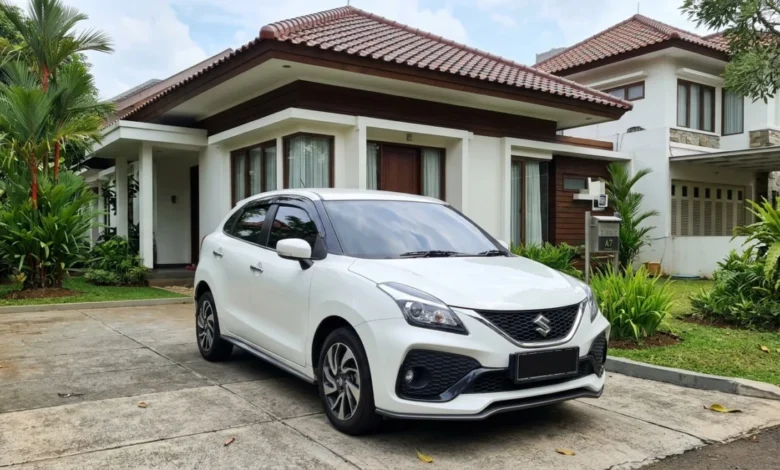
The automotive landscape in Indonesia has long been dominated by the MPV (Multi-Purpose Vehicle) segment, yet the hatchback market maintains a robust foothold among urban commuters who prioritize agility, style, and operational efficiency. Among the most resilient players in the pre-owned hatchback market is the 2018 Suzuki Baleno. As the model continues to age, it has transitioned from a contemporary new release to a highly sought-after value proposition, frequently trading hands at prices below the IDR 150 million mark. This shift has democratized access to a vehicle that balances modern aesthetics with the practical demands of daily metropolitan navigation.
Historical Context and Evolution of the Baleno
To understand the significance of the 2018 model year, one must look at the vehicle’s evolution. Suzuki reintroduced the Baleno nameplate in Indonesia in 2017, marking a drastic departure from the sedan silhouette that characterized the badge in the late 1990s and early 2000s. By 2018, the model had solidified its position as a "Liquid Flow" design concept vehicle, characterized by its fluid curves and aerodynamic profile.
The 2018 iteration was strategically positioned to compete with established rivals like the Honda Jazz and Toyota Yaris. Unlike its predecessors, which were built on older platforms, the 2018 Baleno utilized Suzuki’s TECT (Total Effective Control Technology) platform, which focused on reducing vehicle weight while increasing structural rigidity. This engineering pivot was designed to improve fuel economy and handling, factors that remain crucial for today’s second-hand buyers looking for longevity in a vehicle.
Technical Specifications and Mechanical Performance
At the core of the 2018 Suzuki Baleno lies the K14B engine, a 1.373 cc, 4-cylinder DOHC unit featuring Variable Valve Timing (VVT). This powerplant produces a peak output of 92 PS at 6,000 rpm and 130 Nm of torque at 4,200 rpm. While these figures may not appear aggressive on paper, they are optimized for the stop-and-go nature of Indonesian traffic.
The vehicle’s mechanical layout—a front-engine, front-wheel-drive (FWD) configuration—allows for an impressively spacious cabin relative to its compact exterior dimensions. This layout maximizes the wheelbase, providing rear-seat legroom that often exceeds that of its direct competitors. For the 2018 model year, consumers were given the choice between a 5-speed manual transmission and a 4-speed automatic transmission. The automatic variant, while conventional in its 4-speed setup, remains a popular choice for urban dwellers due to its durability and relative ease of repair compared to modern CVT (Continuously Variable Transmission) systems found in newer models.
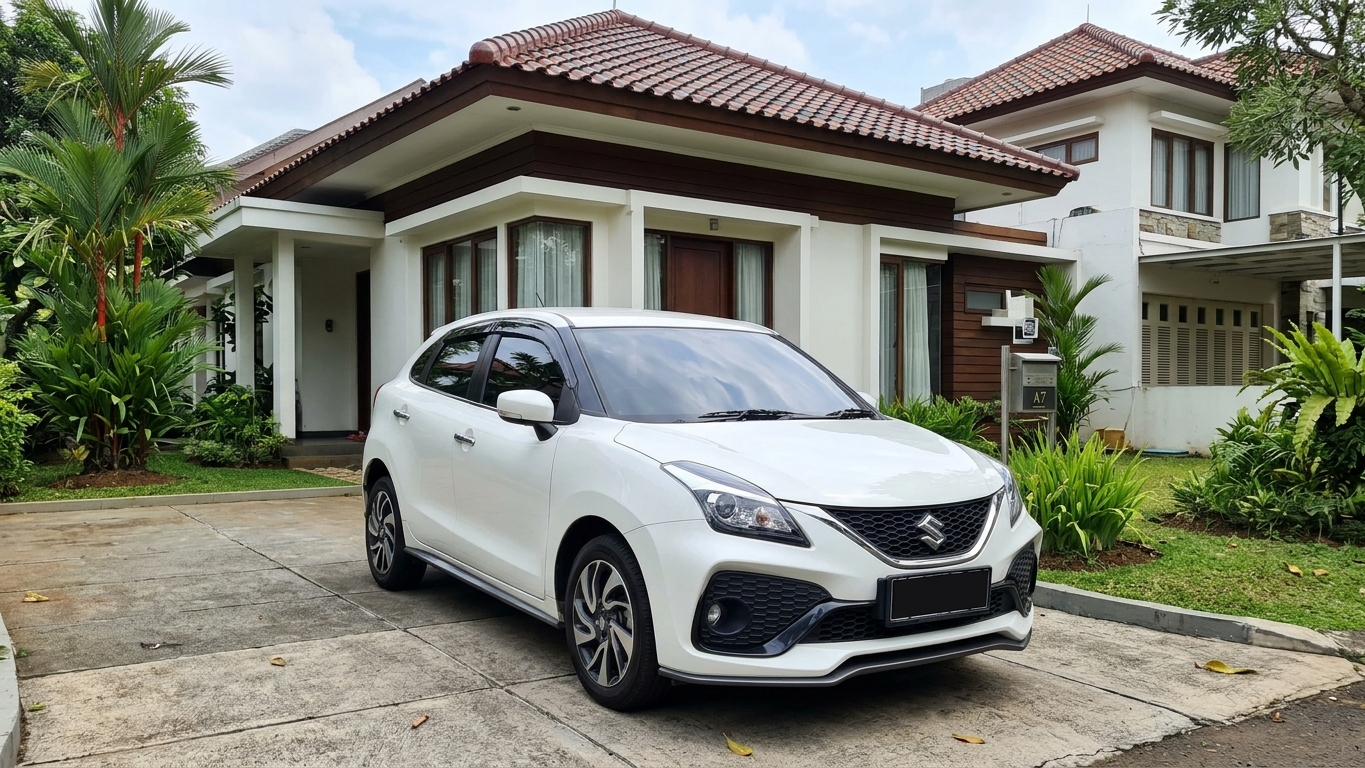
Fuel efficiency remains one of the Baleno’s most cited advantages. Real-world testing suggests that under optimal driving conditions, the vehicle can achieve between 12 and 18 kilometers per liter. This efficiency is largely attributed to the vehicle’s lightweight architecture, which minimizes the load on the engine during city driving.
Comparative Market Analysis
When evaluating the 2018 Baleno against its contemporaries, such as the 2018 Toyota Vios or the 2018 Honda City, the differences in utility become apparent. The Baleno is a pure hatchback, offering a versatile cargo area that can be expanded by folding the rear seats. Conversely, the Vios and City are sedans, which provide the security of a closed trunk but lack the vertical storage flexibility of a hatchback.
From a pricing perspective, the 2018 Baleno holds a competitive edge. While the Honda City 2018 typically commands a premium—often ranging from IDR 155 million to IDR 175 million due to brand perception and build quality—the Baleno offers a more accessible entry point for budget-conscious families. The Toyota Vios, which is frequently utilized in fleet and taxi services, often carries a more complex depreciation curve, making the Baleno a more straightforward "private-use" ownership prospect for many buyers.
Safety and Comfort Features
The 2018 Suzuki Baleno was marketed as a feature-rich entry in its class. Standard safety equipment includes dual SRS airbags, an Anti-lock Braking System (ABS), and Electronic Brakeforce Distribution (EBD). These features were standard across the range, ensuring that even entry-level trims met basic safety expectations.
Interior amenities were designed with the modern user in mind. The inclusion of a leather-wrapped steering wheel with integrated audio controls, an automatic climate control system, and a touchscreen infotainment system added a premium feel to the cabin. Furthermore, the inclusion of a keyless entry system and a push-start/stop button—features that were once considered luxury—became standard equipment, enhancing the vehicle’s value proposition in the used car market years later.
Market Implications and Buying Guidance
The current market for the 2018 Baleno is characterized by high liquidity. Because the model is popular, parts availability is high, and independent workshops are well-versed in the maintenance of the K14B engine. However, prospective buyers should exercise caution. Given that the newest of these vehicles is now entering its seventh year of service, standard wear-and-tear items such as suspension bushings, cooling system components, and transmission fluid integrity require professional inspection.

Industry analysts suggest that the "sweet spot" for purchasing a 2018 Baleno lies in units with a verified service history. A full record from authorized Suzuki service centers is a strong indicator of a vehicle’s longevity. Buyers are encouraged to prioritize units that have not been subjected to severe flooding, as the sophisticated electronic control units (ECU) and sensors, while reliable, can be costly to replace if damaged by water intrusion.
The Role of Independent Inspections
As the used car market shifts toward digital platforms like Moladin, the importance of third-party vehicle inspections has grown. When considering a transaction in the range of IDR 125 million to IDR 179 million, the cost of a professional inspection is marginal compared to the risk of acquiring a vehicle with hidden defects.
A comprehensive inspection should cover three primary areas:
- Structural Integrity: Checking for frame damage or signs of major collision repair that might affect the vehicle’s structural safety.
- Powertrain Health: Using diagnostic tools to read the ECU for error codes and performing a road test to verify the smoothness of transmission shifts, particularly in the automatic models.
- Electrical Systems: Ensuring all convenience features, such as the air conditioning, multimedia unit, and power windows, are fully operational.
Broader Economic Impact
The sustained demand for the 2018 Suzuki Baleno highlights a broader trend in the Indonesian automotive sector: the shift toward "smart" used-car ownership. As new car prices continue to rise due to inflation and the transition toward electrification, the segment for high-quality, pre-owned combustion-engine vehicles is expanding.
The Baleno occupies a unique space in this ecosystem. It is not as utilitarian as a low-cost green car (LCGC), nor is it as expensive as a premium sedan. It offers a "Goldilocks" solution for the middle-class consumer—reliable enough for daily work commutes, stylish enough for social engagements, and economical enough to remain within a manageable budget.
Conclusion
As of 2024, the Suzuki Baleno 2018 remains a viable, practical, and stylish choice for those navigating the pre-owned vehicle market. Its combination of a proven engine, reasonable maintenance costs, and a design that has aged gracefully makes it a standout contender. While market prices fluctuate based on the specific condition of the unit and the region, the general consensus remains that the 2018 Baleno offers one of the best price-to-performance ratios in the hatchback category. For those in the market for a reliable daily driver, the 2018 Baleno represents a calculated, sensible, and rewarding investment.