Marc Marquez Admits Future Teammate Pedro Acosta Possesses the Talent to Defeat Him in MotoGP

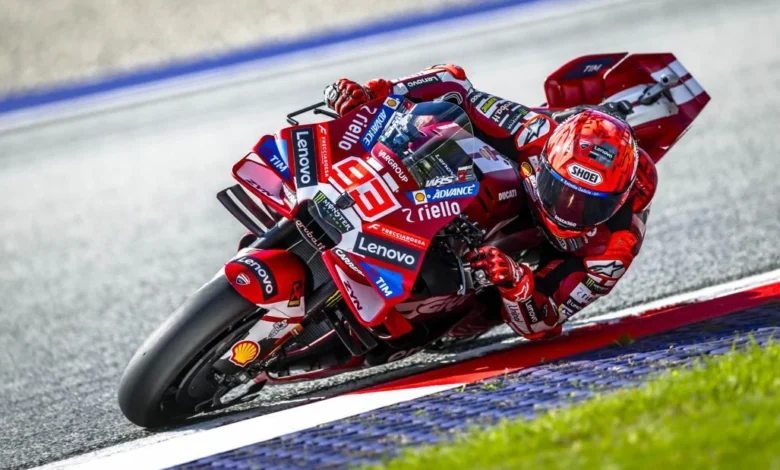
The landscape of premier-class motorcycle racing is poised for a seismic shift as the sport looks toward the 2027 season, headlined by one of the most anticipated teammate pairings in modern Grand Prix history. Marc Marquez, the eight-time world champion whose tenure in the premier class has defined an era, has openly acknowledged that his incoming teammate, Pedro Acosta, possesses the raw speed and capability to outpace him on identical machinery. This candid assessment arrives as the sport adapts to shifting manufacturer alliances, sweeping technical regulation changes, and the generational handover of competitive dominance.
As the MotoGP grid prepares for future cycles, the trajectory of Pedro Acosta has become one of the most closely monitored narratives in motorsport. The young sensation, born on May 25, 2004, has consistently defied the traditional learning curves associated with the premier class. His journey reached a significant milestone with his maiden premier-class victory at the Austrian Grand Prix, a triumph that validated the immense hype surrounding his ascension to the highest level of motorcycle racing.
The Evolution of a Phenom: From Rookie Sensation to Factory Contender
Pedro Acosta’s path to the pinnacle of motorcycle racing has been characterized by rapid adaptation and record-breaking achievements. Entering the premier class with sky-high expectations, the Spanish rider required 56 race weekends to secure his inaugural victory in the division. While some critics initially viewed this timeline as a steady progression rather than an overnight explosion, the timing of his breakthrough coincided with a pivotal career development: securing a coveted factory contract with Ducati, the dominant powerhouse originating from Borgo Panigale.
The recruitment of Acosta by the Italian manufacturer for the 2007 and 2008 racing seasons signals a long-term strategic investment. Ducati, which has systematically dismantled competition through advanced aerodynamic development and meticulous engineering, has secured two of the sport’s most formidable talents to lead its charge. By pairing the seasoned acumen of Marc Marquez with the youthful exuberance and aggressive adaptability of Pedro Acosta, the manufacturer is constructing a formidable intra-team dynamic.
For Marquez, sharing a garage with elite riders is a familiar, albeit intense, experience. Throughout his illustrious career in the premier class, the Spanish veteran has faced numerous highly touted teammates who arrived with ambitions of dethroning him. His historical roster of garage partners includes seasoned world champions and race winners such as Dani Pedrosa, Pol Espargaro, Joan Mir, Alex Marquez, and Francesco Bagnaia. To date, Marquez has successfully maintained an intra-team statistical advantage over every single one of these competitors, establishing a reputation as a notoriously difficult benchmark within the paddock.
Yet, when confronted with the prospect of Acosta joining his side of the garage on equal machinery, Marquez offered a remarkably pragmatic and uncharacteristic appraisal. Refusing to dismiss the threat, the veteran champion delivered a direct assessment when asked if the youngster could outperform him. "According to me, yes, he is the rider who can beat me," Marquez stated, recognizing the unique blend of fearlessness and technical aptitude that defines Acosta’s riding style.
Analyzing the Rivalry: Experience Versus Relentless Ambition
The impending partnership bridges two distinct eras of Grand Prix motorcycle racing. By the time the 2027 season commences, Marc Marquez will celebrate his 34th birthday, placing him firmly in the veteran phase of a career punctuated by severe physical injuries, courageous comebacks, and relentless technical evolution. Conversely, Pedro Acosta will arrive at this milestone at just 22 years of age, possessing the physical resilience and cognitive elasticity typical of a rising generation that has grown up training on modern, high-performance machinery.
This generational juxtaposition brings to light fascinating technical and psychological considerations. Throughout his career, Marquez has carved out a distinct riding style characterized by immense front-end feel, aggressive corner entry, and an innate ability to compensate for structural bike limitations through sheer physical intervention. Transitioning to the Ducati Desmosedici required Marquez to adapt his methodologies, proving his capacity to evolve even after a decade spent developing motorcycles for a rival Japanese manufacturer.
Marquez noted that Acosta’s arrival within the factory structure will not catch the team off guard, but emphasized that success on the Desmosedici demands individualized adaptation. Rather than advocating for a uniform blueprint, Marquez suggested that the young prodigy must extract performance by aligning the machine with his natural instincts.
"Pedro will undoubtedly be one of the benchmark names next year and deep into the future, and he possesses the capacity to learn a tremendous amount regarding how to pilot the Ducati effectively," Marquez explained. "He will inevitably establish his own methodology and riding style to suit his preferences, just as I will maintain my established approach to extracting maximum performance from the package."
Technical Implications and Factory Dynamics
The decision by Ducati to house two generational talents under the same corporate banner carries profound tactical implications for the championship. Historically, intra-team rivalries within dominant factories tend to generate intense internal friction, often culminating in on-track altercations and complex political dynamics within the pit lane.
Industry analysts point out that Ducati’s management philosophy has traditionally favored a balanced approach to rider support, ensuring that technological advancements and aerodynamic packages are distributed equitably. However, the contrast in career stages between Marquez and Acosta introduces a novel administrative challenge. Marquez brings the irreplaceable currency of data, championship pedigree, and psychological gravity, while Acosta represents the untamed future, unburdened by historical injuries and driven by the urgency of a rising star.
Furthermore, the technical landscape of MotoGP is slated for significant regulatory adjustments in the coming years, aimed at curbing aerodynamic dominance and reducing engine displacement. These impending rule changes will place an even higher premium on rider adaptability. A young rider like Acosta, who has demonstrated an uncanny ability to master radically different machinery within compressed timeframes, may find these regulatory shifts advantageous. At the same time, Marquez’s extensive engineering feedback history remains an invaluable asset for navigating development cycles.
Broader Impact on the MotoGP Landscape
The convergence of Marquez and Acosta under the factory Ducati awning reshapes the competitive hierarchy of the entire paddock. Rival manufacturers—including KTM, Aprilia, Yamaha, and Honda—are closely monitoring the internal dynamic, understanding that a cooperative yet fiercely competitive garage could yield an even more formidable technical package.
For the sport’s commercial stakeholders, the narrative writes itself. The mentor-versus-protégé dynamic offers a compelling storyline that transcends traditional motorsport journalism, capturing mainstream attention as the veteran champion actively acknowledges the capabilities of his eventual successor. As the timeline ticks closer to the commencement of this high-profile partnership, the paddock remains transfixed by a singular question: can the established master successfully defend his territory against the most potent rising force the sport has seen in a decade?
As Marquez enters his mid-thirties, his approach remains grounded in realism and relentless determination. "Next year I will be 34 years of age, I am Marc, and I will continue to commit my utmost effort to this sport, and ultimately, the stopwatch will determine the results," he reflected.
With the staging set for an extraordinary clash of generations, the 2027 season promises to redefine the competitive benchmarks of motorcycle racing, cementing a chapter in MotoGP history where past dominance and future potential collide on the tarmac.