Jakarta Art Exhibition Blends Fire Safety Equipment With Fine Art to Promote Electric Vehicle Awareness

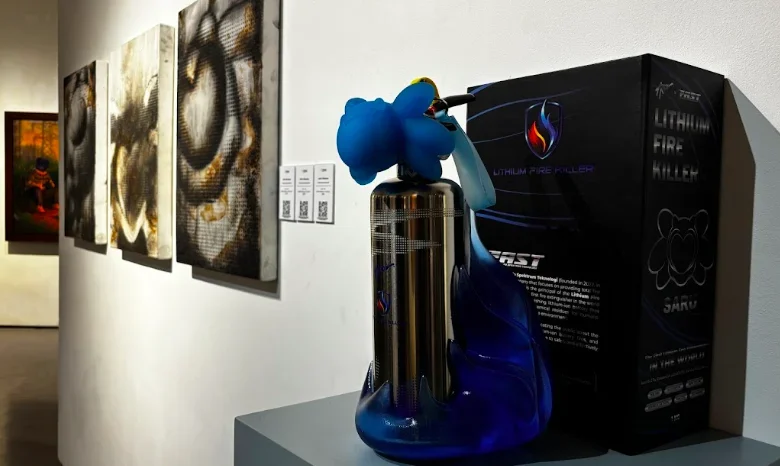
When art and industrial safety intersect, the boundaries of conventional creativity dissolve, giving way to unprecedented forms of expression. This philosophical reality manifested vividly at the Zen1 Gallery in Menteng, Central Jakarta, where a groundbreaking exhibition officially opened its doors to the public. Titled Jelaga di Ujung Raya, the exhibition successfully bridged two seemingly disparate industries that rarely cross paths: the fire safety sector and contemporary fine art. By redefining everyday objects typically associated with emergency response, the event challenged traditional perceptions of what constitutes an artistic medium.
The exhibition, which ran from September 12 to September 13, 2026, showcased how industrial instruments, specifically fire extinguishers or Alat Pemadam Api Ringan (APAR), could be transformed into visually striking aesthetic objects. Rather than remaining hidden in building corners or vehicle trunks, these safety tools were reimagined as canvases and sculptural elements. The initiative served as a creative medium to raise public awareness regarding vehicle safety, particularly concerning the burgeoning electric vehicle (EV) ecosystem in Indonesia.
A Unique Collaboration Between Technology and Creativity
At the core of this cultural and industrial fusion is a strategic collaboration between Lithium Fire Killer (LFK), a specialized electric vehicle safety product line manufactured by PT Famindo Alfa Spektrum Teknologi (PT FAST), and renowned Indonesian contemporary artist Arkiv Vilmansa. The partnership aimed to humanize and normalize safety equipment by integrating it into everyday lifestyle aesthetics, thereby reducing the psychological distance between the public and industrial safety protocols.
Arkiv Vilmansa, widely recognized for his distinct artistic style, spearheaded the creative exploration by introducing a novel technique: painting with fire. This experimental approach utilized controlled thermal energy and soot deposition to create intricate artworks on canvas, marking a pioneering milestone in modern Indonesian art history. Complementing Arkiv’s visionary pieces, 20 other prominent Indonesian artists contributed their works, each interpreting the overarching themes of soot, flame, and industrial resilience through diverse artistic lenses.
The exhibition drew high-profile figures from government and industry sectors. The opening ceremony was jointly inaugurated by the Deputy Governor of Jakarta, H. Rano Karno, and the General Chairman of the Indonesian Electric Vehicle Industry Association (Periklindo), Dr. H. Moeldoko. Their presence underscored the intersection of public policy, industrial innovation, and cultural development in shaping the capital’s modern landscape.
Bridging Safety and Aesthetics: Insights from Leadership
During his opening remarks, Deputy Governor H. Rano Karno expressed admiration for the thematic depth of the exhibition, emphasizing the conceptual shift from traditional painting materials to elements born from combustion.
"Conventional paintings are common to me, but the extraordinary theme this time revolves around the language of soot. It speaks specifically through the medium of soot. As it turns out, the material of a painting is not limited to ink or paint; it can also be created using fire," remarked Rano Karno, highlighting the technical ingenuity required to produce the featured artworks.
Meanwhile, Dr. H. Moeldoko elaborated on the strategic necessity of merging technology with art to cultivate public safety awareness. He noted that conventional safety devices often suffer from neglect due to their purely utilitarian design, which hides them away until an emergency arises.
"How technology and art are combined ultimately builds an engaging form of awareness. If fire extinguishers are merely placed in a corner, perhaps our awareness is never truly built. But once these APAR units are polished with art and placed in open spaces, even in a living room, everyone becomes naturally attracted to them. Through this approach, all of us who utilize electric vehicles no longer need to feel anxious," Moeldoko stated.
The psychological barrier of fear often associated with new technologies, such as lithium-ion battery safety in EVs, was addressed through this creative normalization. By transforming safety equipment into interior design statements, the initiative successfully communicated that safety can be both accessible and aesthetically pleasing.
Chronology of the Exhibition and Immersive Visitor Experience
Planning for the Jelaga di Ujung Raya exhibition began months prior, involving meticulous coordination between PT FAST, the curators at Zen1 Gallery, and participating artists. The logistical challenge involved modifying functional safety hardware without compromising their mechanical integrity while simultaneously curating a cohesive fine art collection that adhered to the soot and flame motif.
September 12, 2026: The exhibition officially opened with an exclusive VIP preview and ribbon-cutting ceremony attended by government officials, industry leaders, art collectors, and media representatives. The event featured live demonstrations of fire safety applications alongside gallery tours led by the curators.
September 13, 2026: The second and final day of the public exhibition welcomed art enthusiasts, environmental advocates, and automotive community members. Visitors engaged directly with the artists during scheduled talk shows discussing the philosophy behind painting with fire and the technical aspects of EV safety.
September 14, 2026: Post-exhibition documentation and institutional handovers concluded the event’s primary operational phase, cementing its legacy as a milestone for industrial-artistic partnerships in Indonesia.
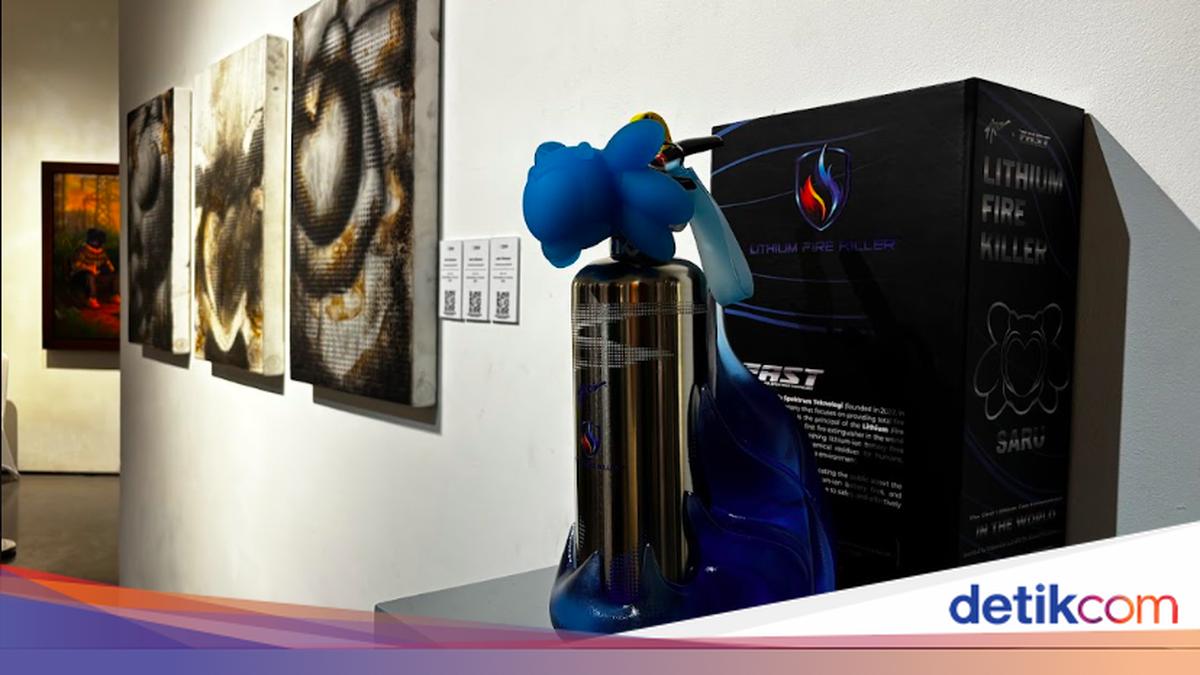
Throughout the two-day event, visitors were immersed in a sensory journey. The gallery space was curated to contrast the stark, metallic reality of industrial safety gear with the organic, fluid textures of soot-based artworks. The centerpiece installations featured modified APAR units painted by Arkiv Vilmansa and fellow artists, standing as functional sculptures that merged utility with avant-garde design.
Strengthening Jakarta’s Emergency Response Infrastructure
Beyond the artistic showcase, the event served as a platform for practical advancements in urban disaster management. During the exhibition, the Head of the Jakarta Provincial Fire and Rescue Department (Gulkarmat), Dr. Bayu Meghantara, M.Si., formally accepted a contribution from PT FAST in the form of Portex EV Fire Blanket units.
These specialized thermal barriers are engineered specifically to contain and suppress lithium-ion battery fires in electric vehicles. As Jakarta experiences an exponential rise in EV adoption—driven by government electrification mandates and environmental initiatives—the readiness of first responders becomes paramount. The integration of advanced fire blankets into the operational inventory of Jakarta’s Gulkarmat units significantly bolsters the city’s emergency preparedness along major thoroughfares.
Dr. Bayu Meghantara expressed deep appreciation for the private sector’s proactive support in equipping municipal rescue workers with cutting-edge tools. The collaboration exemplifies a holistic approach to urban safety, where private innovation, municipal infrastructure, and public awareness campaigns converge to mitigate emerging urban risks.
Broader Implications and Future Outlook
The convergence of industrial safety and contemporary art at Zen1 Gallery offers a compelling case study in modern public communication. In an era where information fatigue often diminishes the impact of traditional safety campaigns, creative interventions provide a fresh avenue to capture public attention.
The initiative carries several broad implications for urban centers transitioning toward sustainable technologies:
-
Changing Consumer Psychology: By placing safety devices in domestic or commercial spaces as artistic objects, the perception of emergency equipment shifts from a burdensome regulatory requirement to a desirable lifestyle accessory. This familiarity can lead to faster, more confident responses during actual emergencies.
-
Fostering Cross-Sector Synergies: The success of the partnership between PT FAST and Indonesia’s art community demonstrates that commercial enterprises can effectively leverage cultural platforms to communicate complex technical messages. Such collaborations are likely to serve as a blueprint for future public-private awareness campaigns.
-
Elevating EV Infrastructure Confidence: As electric vehicles become mainstream, addressing range anxiety and safety concerns is critical for market stabilization. Initiatives that normalize safety gear—like artistic APARs and specialized fire blankets—help build consumer trust in the broader EV ecosystem.
The Jelaga di Ujung Raya exhibition ultimately transcended the traditional boundaries of a gallery showing. It transformed industrial hardware into cultural artifacts while reinforcing Jakarta’s commitment to urban resilience and innovation. As cities worldwide grapple with the dual demands of technological transition and public safety, creative integrations of art and industry provide a promising roadmap for the future.