Ferran Torres Adopts Pragmatic Stance Amid Intense Global Debate Surrounding the 2026 Ballon d Or Race

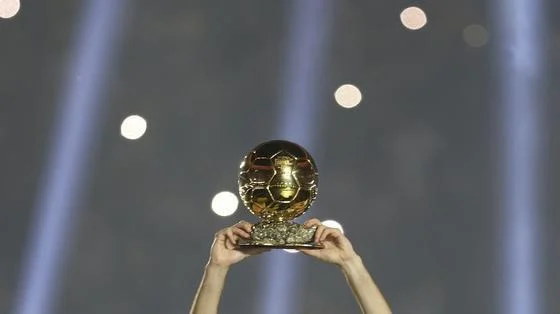
The international football landscape is once again gripped by the annual anticipation of the Ballon d’Or, with the race for the 2026 accolade sparking rigorous debates among analysts, fans, and players alike. Amidst the swirling discourse, Paris Saint-Germain forward and Spanish international Ferran Torres has found his name circulating within the conversation of potential nominees. However, rather than fueling the speculation or actively campaigning for his own inclusion, Torres has chosen a measured, team-first approach, deflecting the personal spotlight in favor of collective achievements and national pride.
As the footballing calendar progresses toward the climax of the European season and the aftermath of an eventful international cycle, the shortlist for football’s most prestigious individual prize has become increasingly competitive. Torres, who recently completed a high-profile transfer from Spanish giants Barcelona to French powerhouse Paris Saint-Germain, remains remarkably grounded regarding his status among the world’s elite. While his performances for both club and country have earned him recognition, the forward insists that individual accolades are secondary to the broader success of his teams and compatriots.
The 2026 Ballon d’Or Contenders: A Crowded Field of Elite Talent
The conversation surrounding the 2026 Ballon d’Or is defined by a fascinating blend of established global superstars and breakout prodigies who dominated the previous footballing year. Chief among the frontrunners is Lamine Yamal, the teenage sensation whose meteoric rise with Barcelona has captured the imagination of the football world. Yamal’s stellar club form was mirrored on the international stage, where he played a pivotal role in guiding the Spanish national team to a historic World Cup triumph. His ability to influence high-stakes matches with maturity well beyond his years has made him a clear favorite in early power rankings.
Yet, competition at the summit of European football remains intensely fierce. Ousmane Dembele, who secured the coveted award in the previous cycle, enters the current debate as a primary contender once again. Dembele’s scintillating form for Paris Saint-Germain was instrumental in the club successfully defending its UEFA Champions League title, cementing his status as one of the most lethal and consistent attackers in the modern game.
Further complicating the voting matrix are perennial heavyweights Kylian Mbappe of Real Madrid and France, alongside Bayern Munich and England talisman Harry Kane. Mbappe’s lethal conversion rate and match-winning capabilities continue to terrorize defenses in La Liga and the Champions League, while Kane’s relentless goalscoring prowess in the Bundesliga and for the Three Lions keeps him firmly entrenched in the upper echelons of the global football hierarchy. The intersection of domestic dominance, European glory, and international success has thus created a multi-layered race where margins for error are exceptionally slim.
A Geopolitical Shift: The Dominance of Spain and Paris Saint-Germain
When analyzing the macro-trends influencing the 2026 Ballon d’Or voting bloc, analysts have noted a distinct gravitational pull toward two primary entities: the Spanish national team and Paris Saint-Germain. Spain’s triumph on the global stage demonstrated a masterclass in technical supremacy, tactical cohesion, and the successful integration of a vibrant golden generation. Players who wore La Roja with distinction during their championship run have naturally inherited a massive advantage in individual award considerations.
Simultaneously, Paris Saint-Germain’s sustained dominance in France and their back-to-back triumphs in the UEFA Champions League have transformed the Parc des Princes into a crucible of global talent. The club’s financial backing, coupled with an astute tactical framework implemented by their coaching staff, has allowed marquee signings to flourish on the biggest stages.
It is within this unique intersection that Ferran Torres finds himself. Having experienced the tactical cultures of both Barcelona and Paris Saint-Germain, and operating as a vital component of Spain’s attacking machinery, Torres possesses a rare vantage point on the dynamics shaping the current football landscape. Despite being a part of this elite echelon, Torres has maintained a philosophical perspective on the individual honors that often distract from team objectives.
Ferran Torres Responds to the Speculation
When pressed by media outlets regarding his inclusion in the peripheral discussions of the Ballon d’Or shortlist, Torres offered a pragmatic and diplomatic response that underscored his maturity. Speaking to Mundo Deportivo, the versatile forward deflected personal ambition and placed the focus on objective merit.
"Siapapun yang pantas memenanginya, akan memenanginya. Itu bukan tergantung pada saya juga," stated Torres, emphasizing that the final verdict rests outside his direct control. Translated into the broader context of the fiercely contested award, his remarks reflect an awareness of the complex voting mechanisms involving journalists, national team captains, and coaches.
However, Torres did not shy away from expressing his underlying preference regarding the nationality of the eventual winner. In a nod to the immense success enjoyed by his international teammates over the past year, the PSG star made it clear where his loyalties lie.
"Tapi kalau seorang pemain Spanyol meraihnya, itu lebih baik," added Torres. His statement highlights the deep camaraderie within the Spanish national team camp, where individual accolades are frequently viewed as a collective validation of the country’s footballing philosophy and developmental infrastructure.
The Chronology and Evolution of Ferran Torres’s Career Trajectory
To understand Torres’s current standing in European football, one must examine the trajectory of his career development. Emerging from the youth academy of Valencia, Torres quickly established himself as one of Europe’s most promising young wingers, characterized by his blistering pace, tactical intelligence, and eye for goal. His early exploits earned him a high-profile move to Manchester City under the tutelage of Pep Guardiola, where he further refined his positional versatility, frequently operating as a wide forward or a central striker.
A subsequent transfer to Barcelona brought Torres back to his homeland, where he experienced both the pressures of playing for a rebuilding Catalan giant and the tactical demands of Xavi Hernandez. During his tenure at Camp Nou, Torres played a crucial role in stabilizing the club’s frontline, contributing vital goals during domestic title pursuits.
His most recent chapter involves a high-stakes transfer to Paris Saint-Germain. Moving to the French capital presented a new set of challenges and opportunities: competing for a starting berth in a star-studded offensive line and adapting to the rigorous physical and tactical demands of Ligue 1 and European competition. Torres’s seamless integration into Luis Enrique’s tactical blueprint at PSG has not only elevated his club profile but has also solidified his indispensable status within the Spanish national team setup.
Implications of the Ballon d’Or Race on Modern Football Culture
The annual obsession with the Ballon d’Or reflects the modern football industry’s fascination with individual branding and statistical supremacy. In an era dominated by advanced analytics, tracking metrics, and 24-hour sports media coverage, awards like the Ballon d’Or serve as both a celebration of athletic excellence and a powerful economic driver for players and clubs alike.
For players like Ferran Torres, navigating this media storm requires a delicate balance. Embracing personal ambition without alienating teammates or disrupting team chemistry is a perennial challenge for elite athletes. Torres’s public stance—acknowledging the debate while deferring to merit and national solidarity—serves as a masterclass in professional media management. It shields him from unnecessary scrutiny while keeping the focus squarely on his on-field contributions.
Furthermore, the prominence of Spanish players and PSG stars in the 2026 discussion underscores a broader shift in the global balance of power. While traditional powerhouses like Real Madrid and Barcelona remain influential, state-backed projects like PSG and the relentless production line of Spanish football academies are increasingly dictating the narrative of elite club and international success.
Looking Ahead to the Gala and Beyond
As the season enters its decisive phase, performances in domestic title run-ins and European knockout rounds will ultimately finalize the voting preferences of the global panel. While early favorites like Lamine Yamal, Ousmane Dembele, Kylian Mbappe, and Harry Kane continue to make headlines with their week-in, week-out displays, the dark horses and squad players who enable their success remain vital to the ecosystem.
For Ferran Torres, the immediate priority remains securing silverware with Paris Saint-Germain and maintaining his competitive edge for the Spanish national team. Whether his name eventually features prominently on the final Ballon d’Or podium or remains in the realm of respectful consideration, his pragmatic approach ensures that his primary focus stays where it belongs: on the pitch, contributing to collective victory. As the footballing world counts down the months to the official ceremony, Torres’s balanced perspective offers a refreshing reminder of the team-first ethos that underpins the world’s most popular sport.
Related posts: