Zlatan Ibrahimovic Condemns Leandro Paredes for Unprofessional Conduct During Spains Dramatic 2026 World Cup Final Victory Over Argentina

Spain secured their second FIFA World Cup title in a grueling and high-intensity final at the New York New Jersey Stadium on Monday, July 20, 2026, defeating Argentina 1-0 in a match defined as much by its tactical discipline as by its late-game volatility. The decisive moment arrived in the second half of extra time when Ferran Torres capitalized on a defensive lapse to fire home the winning goal, sparking scenes of jubilation for the Spanish side and despair for the defending champions. However, the sporting achievement was partially overshadowed by a series of disciplinary infractions and aggressive outbursts from the Argentine squad, drawing sharp criticism from footballing legends, most notably former AC Milan and Swedish international striker Zlatan Ibrahimovic.
The encounter, held in the sweltering summer heat of the East Coast, was expected to be a clash of footballing philosophies: the intricate, possession-based "tiki-taka" evolution of Luis de la Fuente’s Spain against the gritty, resilient, and star-studded lineup of Lionel Scaloni’s Argentina. While the first 90 minutes remained goalless, the match was far from stagnant. Spain dominated the ball, utilizing the youthful energy of Pau Cubarsi and Gavi to navigate the midfield, while Argentina relied on a low block and explosive counter-attacks. As the clock ticked toward the end of regulation and into extra time, the physical nature of the game escalated significantly, culminating in a total of five yellow cards and one red card for the South American side.
The disciplinary collapse of the Argentine team began in earnest during the latter stages of the match. Enzo Fernandez, a pivotal figure in Argentina’s midfield, was sent off after receiving a second yellow card for a reckless challenge on Spain’s teenage defensive sensation, Pau Cubarsi. Fernandez’s lunge, which saw him clatter into Cubarsi with enough force to send the defender airborne, left the referee with little choice but to brandish the red card. This dismissal forced Argentina to play the final segments of extra time with ten men, eventually leading to the defensive stretch that allowed Ferran Torres the space to score the winner.
However, the primary focus of post-match scrutiny has fallen upon Leandro Paredes. The Boca Juniors midfielder, known for his combative style, was a persistent source of friction throughout the final. Despite receiving a yellow card in the 52nd minute for a late tackle, Paredes continued to engage in high-risk physical play, narrowly avoiding a dismissal on several occasions during the remainder of the match. His aggression did not cease with the final whistle. As the Spanish players began their celebrations, a confrontation erupted involving Paredes, Eric Garcia, and Gavi. Reports and broadcast footage indicated that Paredes gripped Garcia by the throat during a heated exchange. When Gavi, the young Barcelona midfielder, attempted to intervene and de-escalate the situation, Paredes reportedly slammed him to the turf, further inciting the Spanish bench and coaching staff.
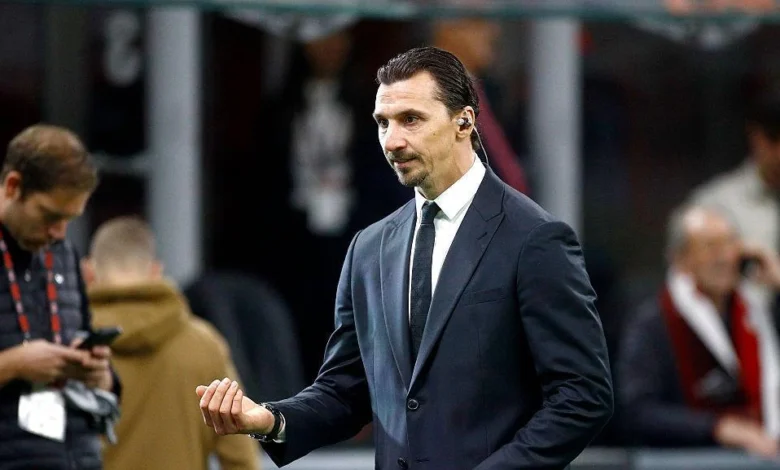
The fallout from these incidents reached a fever pitch when Zlatan Ibrahimovic, a man no stranger to on-field confrontations, provided his assessment of the match to international media outlets. Speaking with Metro, the Swedish icon did not mince words regarding Paredes’ behavior. Ibrahimovic suggested that Paredes’ antics were a sign of a lack of professionalism and expressed his frustration with the lack of a physical response from the Spanish contingent.
"Paredes can be happy because there were no players like me on the pitch," Ibrahimovic stated. "If I were there, I would have headbutted him and been sent off. It was unprofessional behavior from him. I don’t know what the Spanish players were doing? They just watched another player hit their teammate. In my time, you protect your brothers. You do not let someone behave like a bully without a consequence."
Ibrahimovic’s comments highlight a broader debate regarding the officiating and player conduct in high-stakes international finals. While Ibrahimovic’s own career was marked by a fierce competitive streak and several red cards, he categorized Paredes’ actions as being outside the bounds of "hard football," instead labeling them as a loss of emotional control. The Swedish legend’s critique also extended to the Spanish team’s temperament, questioning whether their modern, technical approach lacks the "old-school" grit required to handle intimidation tactics in the heat of a World Cup final.
The Road to the 2026 Final: Context and Stakes
The 2026 FIFA World Cup, hosted across the United States, Canada, and Mexico, was a landmark tournament, being the first to feature an expanded 48-team format. The journey to the New York New Jersey Stadium (MetLife Stadium) was arduous for both finalists. Spain had navigated a difficult knockout bracket, overcoming heavyweights like France and Germany to reach the final. Their squad represented a generational shift, blending the veteran leadership of players like Rodri with the meteoric rise of La Masia graduates.
Argentina, on the other hand, entered the tournament as the defending champions, seeking to cement a dynasty. Their path was characterized by defensive solidity and the continued influence of their veteran core. However, the final revealed a side of the "Albiceleste" that has occasionally surfaced in moments of extreme pressure—a tendency toward hyper-aggression when tactical plans fail to yield results.
The match statistics tell the story of a lopsided disciplinary record. Spain committed 12 fouls and received two yellow cards, largely tactical in nature. Argentina, conversely, committed 22 fouls, resulting in five yellow cards and the crucial red card for Fernandez. The disparity in disciplinary actions suggests a team that struggled to cope with Spain’s ball retention, leading to frustration-led challenges.
Chronology of the Final’s Key Incidents
The timeline of the final reveals how the tension built toward the post-match explosion:
- 1st – 45th Minute: A cagey opening half. Spain controls 65% of possession. Argentina remains compact. No major disciplinary issues.
- 52nd Minute: Leandro Paredes receives his first yellow card for a cynical foul on Pedri to stop a fast break. This marks the beginning of his high-tension involvement.
- 90th Minute: Regulation ends 0-0. Both teams show signs of fatigue, but the physical intensity increases.
- 102nd Minute: Enzo Fernandez receives his first yellow card for a verbal altercation with the referee.
- 108th Minute: GOAL. Ferran Torres scores for Spain after a precise cross from the right flank. The atmosphere in the stadium shifts as Argentina faces the prospect of losing their crown.
- 114th Minute: Enzo Fernandez receives his second yellow card and is sent off for a dangerous tackle on Pau Cubarsi. Argentina is reduced to ten men.
- 120th Minute + 3: The final whistle blows. Spain is crowned champions.
- Post-Match: Leandro Paredes initiates a physical confrontation with Eric Garcia. Gavi is thrown to the ground by Paredes. FIFA officials and security intervene to separate the squads.
Analysis of the Implications
The actions of Leandro Paredes and the subsequent comments by Ibrahimovic raise significant questions for FIFA’s disciplinary committee. Historically, FIFA has been stringent regarding post-match violence. Given the high-profile nature of the World Cup final and the global viewership, which is estimated to have surpassed 1.5 billion people for the 2026 edition, the governing body is expected to conduct a thorough review of the match footage.
Potential sanctions for Paredes could include a multi-match ban from international competition, which would affect Argentina’s upcoming qualifying campaigns for the next Copa América and World Cup cycles. For Enzo Fernandez, the red card carries an automatic suspension, but the severity of the tackle on Cubarsi could lead to further review.
From a tactical perspective, the final demonstrated the evolution of Spanish football. Under Luis de la Fuente, the team has maintained its technical superiority while adding a level of verticality and defensive resilience that was perhaps lacking in the 2018 and 2022 iterations. The ability of young players like Cubarsi and Gavi to withstand the physical onslaught of a veteran Argentine midfield speaks to the mental fortitude of the new Spanish generation.
Conversely, for Argentina, the loss marks the end of an era. While the team remains a global powerhouse, the lack of discipline in the final minutes suggests a need for emotional recalibration as they transition away from the veteran leaders who have defined their recent successes. The "win at all costs" mentality, which served them well in Qatar 2022, crossed the line into counter-productive aggression in the 2026 final.
Global Reactions and the Role of the Veteran Critic
Zlatan Ibrahimovic’s intervention is noteworthy because it bridges the gap between the "tough" era of football and the modern game. While his suggestion of a headbutt is clearly hyperbolic and meant to emphasize his point, his underlying message about "professionalism" resonates with many analysts. A World Cup final is the pinnacle of the sport, and when the spectacle descends into physical brawls, it detracts from the achievement of the winners.
The Spanish media has largely focused on the triumph of "The Red Fury," praising Ferran Torres for his composure and the midfield for its endurance. However, there is also a sense of indignation regarding the treatment of Gavi and Garcia. Spanish sports dailies have called for "exemplary punishment" for Paredes, arguing that his actions were a "stain on the beautiful game."
In Argentina, the reaction is more nuanced. While there is disappointment over the result and the red card, some sections of the fans and media have defended the team’s "garra" (spirit), though few have attempted to justify the post-match physical altercations. The focus in Buenos Aires is expected to turn toward the future of the squad and whether Leandro Paredes remains a viable long-term leader in the midfield given his disciplinary volatility.
As the dust settles on the 2026 World Cup, the image of Spain lifting the trophy will remain the primary historical marker. Yet, the "Battle of New York," as some are already calling it, will serve as a reminder of the thin line between competitive passion and unsporting conduct. The tournament, which successfully brought the world’s most popular sport to the massive stadiums of North America, concluded with a match that offered everything: tactical brilliance, individual heroics, and a controversy that will be debated in the footballing world for years to come. For now, Spain stands alone at the top of the world, while Argentina and players like Paredes must face the repercussions of a final that spiraled out of control.