Mexico Bans Smartphones in Primary and Secondary Schools to Protect Student Focus and Mental Health

Mexico City — In a decisive move aimed at safeguarding the mental well-being and academic focus of the nation’s youth, the Mexican government has officially announced a nationwide ban on mobile phones in all primary and secondary schools. The landmark policy, unveiled by President Claudia Sheinbaum during a high-profile national address on Monday, September 21, marks one of the most comprehensive legislative efforts in Latin America to curb the encroachment of digital distractions and social media into the traditional learning environment.
The regulation, scheduled to take effect in November of this year, prohibits students from using smartphones not only during instructional classroom hours but also across all recess and break periods. Exemptions will be made strictly for documented medical emergencies or under specific, pre-approved pedagogical scenarios where digital devices are explicitly required for coursework. However, the mandate does exempt older students in the final three years of high school leading up to university, as well as undergraduate and graduate university students, recognizing a higher degree of digital autonomy and academic necessity in higher education.
As governments worldwide grapple with the profound societal shifts ushered in by ubiquitous smartphone ownership among minors, Mexico joins a growing international consensus that classrooms must remain sanctuaries of focused intellectual development and interpersonal socialization. The announcement sets a new precedent for public education policy in the region, reflecting a shifting paradigm from digital integration at all costs to cautious, health-conscious restriction.
Background and Context of the Digital Crackdown
The genesis of Mexico’s school smartphone ban lies in years of escalating concern among educators, parents, and public health officials regarding the omnipresence of screens in the daily lives of children. Over the past decade, the proliferation of affordable smartphones and widespread internet access transformed how adolescents interact, study, and consume information. While digital literacy remains a priority, the unchecked growth of smartphone usage has raised alarms regarding chronic distraction, sleep deprivation, and the erosion of sustained attention spans.
President Sheinbaum’s administration prioritized the initiative following extensive consultations with educational experts, pediatricians, psychologists, and school administrators. These stakeholders presented a cohesive narrative: the constant tether to notification-driven platforms was fundamentally altering the cognitive habits of developing minds.
“The objective is to restore creativity and avoid the indiscriminate use of mobile phones, which, when linked to social media, can generate a very negative impact,” President Sheinbaum stated during her address, as reported by international news agencies. The administration emphasized that the policy is not merely a disciplinary measure, but a restorative educational intervention designed to return classrooms to environments of active participation, peer-to-peer socialization, and deep, uninterrupted thought.
Chronology of Policy Development and Implementation
The path to Mexico’s nationwide ban unfolded through a structured sequence of research, consultation, and legislative formulation:
- Early 2025: The Mexican Ministry of Education initiates a comprehensive national survey targeting educators, school principals, and administrative staff to gauge the perceived impact of digital devices on academic performance and classroom management.
- Mid-2025: Results from the Ministry of Education reveal overwhelming support for restrictions, with 81 percent of surveyed teachers asserting that the limitation of mobile phones in educational settings is an absolute necessity.
- August 2025: Consultations are held with pediatric mental health specialists, child psychologists, and digital ethics experts to review empirical data concerning adolescent screen time, social media addiction, and academic decline.
- September 21, 2025: President Claudia Sheinbaum officially announces the nationwide ban on smartphones in primary and secondary schools during a press briefing in Mexico City.
- November 2025 (Scheduled): The policy officially takes effect across all qualifying public and private primary and secondary institutions, accompanied by administrative guidelines for enforcement and communication strategies for parents.
Supporting Data and Mental Health Concerns
The decision by the Mexican government is heavily anchored in empirical research concerning the psychological and developmental toll of excessive screen time on minors. According to data compiled by educational and health authorities, the correlation between constant smartphone access and declining mental health indicators has reached critical levels globally.
Studies cited during the policy formulation process highlighted several primary risks associated with unrestricted smartphone access among school-aged children:
- Depression and Anxiety: Constant exposure to curated online lives and algorithmic reinforcement loops has been strongly linked to rising rates of clinical depression and generalized anxiety disorders among pre-teens and teenagers.
- Body Image Distortion: Platforms heavily reliant on visual validation contribute significantly to warped body image perceptions, particularly among young female adolescents.
- Social Isolation: Despite being digitally hyper-connected, modern youth report unprecedented levels of loneliness and a deficit in face-to-face social competence.
- Cyberbullying: The removal of smartphones from the school environment is anticipated to significantly reduce instances of on-campus cyberbullying, harassment, and the unauthorized recording and sharing of peer interactions.
Furthermore, the overwhelming institutional backing—evidenced by the 81 percent approval rating among surveyed teachers—demonstrates that frontline educators view the policy not as an inconvenience, but as an indispensable tool for regaining control over learning environments plagued by continuous digital fragmentation.
Global Precedents: An International Movement
Mexico’s policy does not exist in a vacuum; rather, it represents the latest chapter in a rapidly expanding global movement toward digital minimalism in education. Throughout 2024 and 2025, numerous nations have enacted similar bans, recognizing that self-regulation by technology companies or voluntary school guidelines are insufficient to counter the addictive design of modern mobile applications.
- France: Long a pioneer in educational policy, France instituted stringent bans on mobile phones in primary and middle schools years ago and has continuously expanded and tightened enforcement mechanisms to ensure complete compliance.
- New Zealand: The government enacted a mandatory rule requiring all state and state-integrated schools to ban phones for the entirety of the school day, aiming to lift academic achievement and curb behavioral disruptions.
- Peru: In alignment with regional educational reforms in Latin America, Peru implemented strict limitations on mobile device usage in classrooms to combat declining reading comprehension and mathematics scores attributed to digital distraction.
- The Netherlands and Sweden: Both European nations have issued strong national advisories and restrictions, with Sweden explicitly reversing course on heavy digital classroom investments after empirical data suggested a negative impact on fundamental literacy and numeracy skills.
These nations share a unified diagnostic framework: the immediate, short-term dopamine hits provided by social media feeds are directly undercutting the long-term cognitive endurance required for deep learning, critical thinking, and emotional resilience.
Fact-Based Analysis of Implications for Mexico
The implementation of Mexico’s smartphone ban carries profound implications across multiple facets of society, extending far beyond the physical boundaries of the school grounds. Analysts and educational economists are currently evaluating the potential short- and long-term consequences of the policy.
Academic Performance and Cognitive Focus
The most immediate anticipated impact is a measurable improvement in classroom engagement. Without the persistent temptation of notifications, text messages, and social media feeds, students are expected to exhibit longer attention spans, better retention of complex subjects, and improved performance in core academic disciplines such as mathematics, science, and literature. Educators anticipate that the elimination of multi-tasking—attempting to study while monitoring digital social status—will yield higher-quality critical analysis and problem-solving skills.
Social Dynamics and Interpersonal Skills
By reclaiming recess and lunch periods from the glow of individual screens, schools are artificially creating a compulsory space for organic human interaction. Sociologists suggest this will encourage the revival of traditional playground socialization, conflict resolution through verbal communication, and team-building activities. For younger children whose formative social development was disrupted by pandemic-era isolation and subsequent digital immersion, this structured return to analog socialization is viewed as vital.
Administrative and Enforcement Challenges
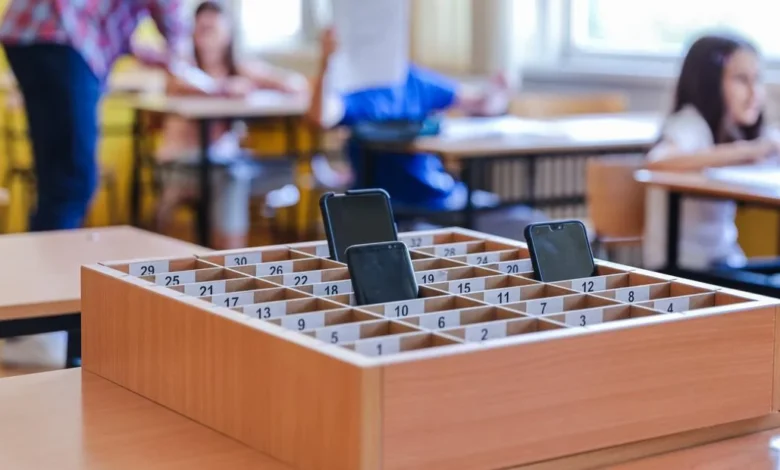
Despite the broad support from teachers and policymakers, the practical enforcement of the ban will present logistical hurdles. School administrators must establish clear protocols for the collection, secure storage, and return of devices at the end of each school day. Furthermore, institutions must prepare for resistance from students accustomed to constant digital connectivity, as well as pushback from parents who insist on maintaining direct, real-time lines of communication with their children throughout the day. Successful execution will heavily depend on robust institutional communication, ensuring parents understand that emergency contact channels through school administrative offices remain fully operational.
Broader Cultural and Economic Repercussions
On a macroeconomic scale, the policy signals a cultural pushback against Big Tech’s influence over the developmental years of citizens. By legally establishing schools as digital-free zones, the Mexican government is making a normative statement about the boundaries of corporate digital ecosystems. This may stimulate broader national conversations regarding digital wellness, parental controls, and the ethical design of products marketed toward minors.
As November approaches, education authorities across Mexico are finalizing guidelines to assist school districts in transitioning smoothly into this new era of focused, analog education. The international community will undoubtedly monitor Mexico’s implementation closely, evaluating whether this decisive legislative intervention serves as a viable blueprint for other nations struggling to balance the undeniable benefits of technological literacy with the imperative of human cognitive preservation.