
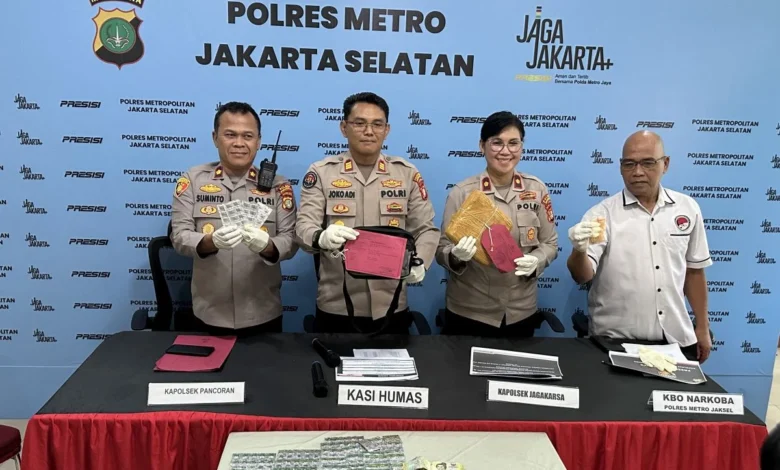
In a decisive move to curb the proliferation of illicit substances within the capital, law enforcement authorities in South Jakarta have successfully apprehended two individuals suspected of involvement in a large-scale drug trafficking network. The arrests, conducted as part of the ongoing Operasi Nila Jaya 2026, underscore the persistent challenges faced by the Jakarta Metropolitan Police in dismantling narcotics supply chains that leverage both local distribution points and national courier services.
The operation, which focused on the administrative jurisdiction of the South Jakarta Metro Police, resulted in the capture of two suspects, identified by their initials as AK (31) and RS (38). These arrests serve as a critical component of a wider, multi-agency effort to stabilize regional security and protect the youth from the escalating threat of controlled substances.
Chronology of the Investigation and Arrest
The operation leading to the arrest of AK began following a surge in intelligence reports from local residents. Concerned citizens living in the vicinity of Jalan Jagakarsa had alerted authorities to suspicious activities involving frequent visitors and the clandestine movement of goods, which they suspected were related to illicit drug distribution.
Acting on these tip-offs, officers from the Jagakarsa Sector Police initiated a comprehensive surveillance operation. Through careful monitoring of the suspects’ movements and digital footprints, investigators were able to trace the distribution network back to a residential rental property located in Bedahan, Sawangan, Depok. On Wednesday, September 16, 2026, tactical units executed a raid on the property, resulting in the immediate apprehension of AK.
During the search of the suspect’s residence, investigators uncovered a significant quantity of narcotics. The primary discovery consisted of approximately 955 grams of high-grade cannabis. According to the preliminary interrogation conducted by the Jagakarsa Sector Police, the suspect confessed that the shipment was not intended solely for the local market in South Jakarta. Instead, AK revealed that he was acting as a logistics intermediary for a larger distributor, identified only as ‘S’. The plan involved using commercial courier services to transport the contraband to the Maluku region. The timely intervention by the police prevented the shipment from entering the distribution pipeline.
The Scope of Operasi Nila Jaya 2026
Operasi Nila Jaya is an annual, intensive law enforcement initiative conducted by the Jakarta Metro Police to crack down on drug trafficking, manufacturing, and distribution. In 2026, the operation has taken on increased significance due to shifting patterns in how narcotics are moved across the Indonesian archipelago.
Law enforcement analysts have noted that the 2026 campaign is particularly focused on "trans-regional" distribution. Criminal syndicates have increasingly relied on domestic expedition services to bypass traditional face-to-face transactions, which are easier for undercover officers to monitor. By utilizing the legitimate logistics sector, perpetrators attempt to camouflage their activities amidst the high volume of daily shipments. The case of AK highlights the necessity for stricter oversight and the implementation of better screening technologies within the logistics and courier industry to prevent the exploitation of these services by criminal elements.
Official Statements and Legal Implications
Kompol Nurma Dewi, spokesperson for the Jagakarsa Sector Police, addressed the media on Monday, September 21, 2026, to provide further clarity on the operation. She emphasized the importance of community cooperation in the success of this investigation.
"The apprehension of AK was the direct result of a proactive partnership between the local police and the community," stated Kompol Nurma. "The suspect was caught in the act of preparing the 955 grams of cannabis for shipment to Maluku. Our investigation confirms that he was operating under the direction of a higher-level handler, ‘S’. We are currently expanding our inquiry to track down the primary supplier and dismantle the network in its entirety."
The legal implications for those involved in this case are severe. Under Indonesia’s strict narcotics laws, specifically Law Number 35 of 2009 regarding Narcotics, the possession and intent to distribute such a large quantity of cannabis carry heavy penalties, including lengthy imprisonment and substantial fines. As the investigation progresses, the South Jakarta Police are working in coordination with the regional narcotics division to determine if there are links between this case and other ongoing investigations involving controlled substances and psychotropic drugs in the southern suburbs of Jakarta.
The Rising Trend of Illicit Drug Distribution in Urban Centers
The arrest in Jagakarsa is emblematic of a broader trend affecting Indonesia’s major metropolitan areas. As urban density increases, so too does the complexity of drug distribution networks. The transition from physical street dealing to digital-led, courier-facilitated logistics represents a sophisticated evolution in criminal methodology.
Data from the National Narcotics Agency (BNN) indicates that despite aggressive law enforcement campaigns like Operasi Nila Jaya, demand for narcotics in metropolitan hubs remains a consistent driver of criminal activity. Experts suggest that the illicit trade in "obat keras" (over-the-counter medicines used for recreational abuse) has also seen an uptick, often acting as a gateway or a supplementary income stream for low-level dealers who primarily trade in cannabis or methamphetamine.
The challenge for the police is twofold: they must continue to target the high-level suppliers while simultaneously addressing the vulnerability of residential neighborhoods being used as storage hubs for illicit inventory. The "contract house" model—where dealers rent properties in quiet neighborhoods to serve as warehouses—is becoming a common tactic to evade the watchful eyes of local security and law enforcement.
Community Impact and Future Vigilance
For the residents of South Jakarta, the arrest of AK and the ongoing operations against the network involving RS serve as a stark reminder of the hidden risks within their neighborhoods. Police have urged the public to remain vigilant, particularly regarding the activities in rental properties that show signs of irregular occupancy or high-frequency courier deliveries.
The Jagakarsa Sector Police have announced that they will continue to increase the frequency of patrols and community engagement sessions throughout the remainder of the year. The focus will be on hardening the security of residential sectors and educating residents on how to report suspicious activity without compromising their own safety.
As the investigation into the connections between AK, RS, and the mysterious figure ‘S’ continues, authorities are optimistic that this momentum will lead to further breakthroughs. The dismantling of this specific supply chain—intended for inter-island transit—is seen as a significant victory in preventing the expansion of illicit narcotics markets from the capital city into the outer provinces.
Conclusion: A Sustained Law Enforcement Effort
The apprehension of these two suspects is not an isolated incident but part of a persistent, systemic battle against the drug trade in Jakarta. By combining traditional investigative techniques—such as physical surveillance and informant management—with modern intelligence gathering, the South Jakarta Police are attempting to stay ahead of the curve.
The success of Operasi Nila Jaya 2026 depends not only on the efficacy of the police force but also on the continued involvement of the public in maintaining secure environments. As the legal process against AK and RS moves toward trial, the focus of the police remains on the broader objective: to sever the links between urban dealers and the clandestine distribution networks that threaten the health and security of the community. The authorities have reaffirmed their commitment to zero tolerance for narcotics, promising that the pursuit of those involved in the illicit trade will remain a top priority for the foreseeable future.