Viral Video of Severe River Pollution in Depok Shows Thick Foam Blanketing Entire Waterway

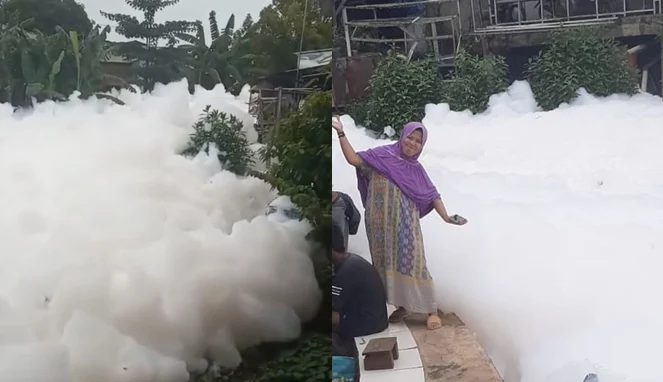
The quiet community of Cimanggis in Depok, West Java, became the center of public attention following the sudden and alarming appearance of massive foam formations blanketing the Kali Baru river. On Monday, November 27, 2023, a series of viral videos captured by local residents began circulating widely across various social media platforms, including TikTok and X (formerly Twitter). The footage depicted an extraordinary environmental phenomenon: a thick, white, towering layer of foam completely obscuring the surface of the river.
In the widely shared videos, the water of the Kali Baru river was entirely invisible, choked by a dense accumulation of bubbles that rose several meters high. The scale of the pollution was so severe that the billowing foam spilled over the riverbanks, encroaching upon the immediate surroundings and directly affecting at least five residential properties located adjacent to the waterway. Puzzled and alarmed onlookers captured the bizarre spectacle, with local voices heard on camera expressing shock at the unprecedented scale of the contamination. The incident has since reignited urgent conversations surrounding water security, industrial regulation, and domestic waste management in rapidly urbanizing regions across Indonesia.
Chronology of the Environmental Incident
The emergence of the foam was not instantaneous, according to local testimonies gathered by journalists from regional and national publications. Residents living along the banks of the Kali Baru river noted that the contamination began as a subtle, thin layer of suds during the early afternoon hours of November 27. However, as the day progressed, the volume of the foam escalated dramatically, fueled by shifting water currents and rising volume levels.
By late afternoon, the substance had expanded into a towering barrier of white foam that completely choked the river channel. Beyond its visual impact, the accumulation released a potent, sharp chemical odor that starkly contrasted with the scent of standard commercial detergents. The overpowering smell caused immediate discomfort for nearby homeowners. Fortunately, as temperatures cooled and changes in flow dynamics took effect later that evening, the massive blanket of foam gradually dissipated, leaving behind the murky, polluted waters characteristic of the urban drainage system.
Public Reaction and Social Media Speculation
The surreal nature of the viral footage triggered widespread reactions across digital platforms. Netizens flooded the comments sections of the viral posts, with many expressing initial confusion over the phenomenon. Due to the towering height and dense texture of the white substance, numerous social media users mistook the foam for an unusual weather occurrence, suggesting it resembled low-lying clouds or heavy snowdrifts trapped within the ravine-like riverbanks.
As the reality of the situation became clear—that the substance was toxic industrial or domestic runoff—public sentiment quickly shifted from amusement to outrage. Commenters and digital communities flooded local government handles with calls for immediate intervention. Citizens demanded strict accountability and transparent investigations into the sources of unregulated dumping, highlighting a growing public intolerance toward chronic environmental degradation in urban waterways.
Official Response and Government Investigation
In the wake of the public outcry, the Depok City Environmental and Hygiene Office (Dinas Lingkungan Hidup dan Kebersihan – DLHK) mobilized a field investigation team to determine the root cause of the contamination. Preliminary assessments conducted by environmental officials pointed toward domestic greywater accumulation as a primary suspect. The hypothesis suggests that massive volumes of surfactant-heavy waste, such as household soaps, shampoos, and laundry detergents, had accumulated within the upstream drainage networks.
Furthermore, environmental analysts indicated that seasonal weather transitions played a significant role in the sudden manifestation of the foam. The incident coincided with the transition period from the dry season to the rainy season. During this meteorological shift, increased runoff and sudden surges in water debit effectively churned the accumulated chemical compounds, aerating the polluted water and generating massive quantities of stable foam that erupted to the surface.
To prevent future occurrences, DLHK announced plans to conduct systematic inspections of commercial establishments, local industries, and residential housing clusters situated along the Kali Baru watershed. Officials aim to trace the specific discharge points responsible for introducing high concentrations of untreated chemical agents into the public drainage system.
Broader Implications of Urban Water Pollution
The severe foaming incident in Depok serves as a stark micro-example of the broader ecological and public health challenges facing Indonesia’s densely populated urban centers. Rivers like the Kali Baru serve multiple vital functions, ranging from regional drainage and flood mitigation to agricultural irrigation. When such waterways are subjected to heavy chemical loading, the repercussions extend far beyond aesthetic degradation.
From a public health perspective, exposure to heavily polluted surface water poses direct risks to local communities. Pathogens, heavy metals, and toxic chemical residues trapped within domestic and industrial waste can proliferate in stagnant or slow-moving urban rivers. Direct contact with contaminated foam or water can lead to acute skin irritations, respiratory issues from inhalation of toxic aerosols, and long-term systemic health risks for populations residing in close proximity.
Ecologically, the influx of high concentrations of surfactants and organic pollutants triggers severe biochemical imbalances. The chemical agents lower the surface tension of the water and drastically reduce dissolved oxygen levels as bacteria attempt to break down the organic load. This process suffocates aquatic life, decimating local fish populations and collapsing the micro-ecosystem of the river.
Furthermore, the agricultural sector faces significant threats when polluted river water is utilized for crop irrigation. Farmers relying on the Kali Baru and connected watersheds risk introducing chemical toxins into the agricultural supply chain, which can stunt crop growth, contaminate arable soil, and ultimately introduce hazardous elements into the local food supply.
Moving Forward: Policy and Community Action
The Depok foaming incident underscores the urgent need for enhanced wastewater management infrastructure and stricter enforcement of environmental regulations. As cities like Depok continue to experience rapid population growth and urban sprawl, municipal sanitation systems must evolve to handle the exponential rise in domestic and commercial greywater.
Environmental experts emphasize that localized waste treatment plants and communal grease-and-detergent traps are essential investments for densely populated residential zones. Additionally, public education campaigns focusing on the responsible use of biodegradable cleaning agents and the reduction of phosphate-heavy detergents can mitigate the daily chemical burden placed on natural waterways.
Ultimately, the viral video of the Kali Baru river functions as a critical wake-up call for both municipal authorities and civil society. Protecting urban aquatic ecosystems requires a collaborative approach combining rigorous government oversight, industrial compliance, and heightened environmental consciousness among urban residents to ensure the long-term sustainability of vital water resources.