
US President Donald Trump Announces Infinite Agreement with Denmark and Greenland Securing Permanent Security Control

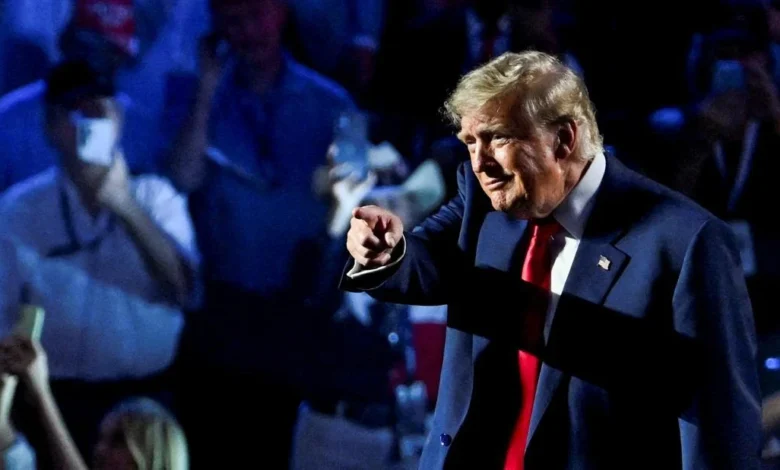
Washington — United States President Donald Trump announced on Saturday that his administration has successfully brokered an unprecedented, open-ended agreement with the Kingdom of Denmark and the autonomous territory of Greenland. According to the statements released by the American leader, the newly signed pact effectively grants the United States permanent oversight regarding security and associated strategic operations across the vast Arctic island.
The announcement, disseminated via the president’s official social media platform Truth Social and subsequently verified by international news agencies including AFP, marks a monumental shift in transatlantic geopolitics and the geopolitical architecture of the polar region. The agreement arrives on the heels of months of heightened diplomatic friction, aggressive territorial rhetoric, and strategic positioning by both Washington and Copenhagen regarding the future governance and defense of the resource-rich Arctic territory.
According to President Trump, the freshly finalized arrangement supersedes previous tensions and cements a long-term strategic footprint for the United States in the High North. The framework of the pact allegedly bars foreign adversaries from establishing a foothold, military presence, or engaging in economically sensitive investments without direct, written authorization from Washington.
Geopolitical analysts note that while the White House has framed the development as a mutually beneficial security alignment, the precise legal and constitutional mechanisms within Danish and Greenlandic law required to enact such a permanent transfer of security control remain ambiguous. Lawmakers in Copenhagen, alongside regional authorities in Nuuk, are facing intense domestic scrutiny as international observers parse the true implications of what the Trump administration has termed an infinite security pact.
Chronology of Escalation: From Territorial Threats to Strategic Pacts
The path toward the current agreement has been defined by a rapid escalation of tensions that began early in President Trump’s second term, characterized by a renewed American push for dominance in the Arctic circle. The foundational friction of the crisis was rooted in Washington’s increasing alarm over foreign—specifically Chinese and Russian—incursions into Arctic shipping lanes and mineral-rich territories.
Months prior to the announcement of the agreement, the White House publicly floated the controversial possibility of annexing Greenland to protect what it described as vital continental security interests. The rhetoric sent shockwaves through European capitals, prompting immediate pushback from the government in Copenhagen, which firmly reiterated that Greenland’s sovereignty is non-negotiable.
As diplomatic channels strained, the rhetoric momentarily shifted following closed-door consultations. President Trump previously moderated his annexation threats, pointing to a vague "framework agreement" purportedly established in coordination with the Secretary-General of the North Atlantic Treaty Organization (NATO). However, that framework lacked specific institutional details, leaving European defense officials uncertain regarding the extent of American military ambitions on the island.
The situation intensified domestically within Denmark as the government sought to demonstrate its independent capability to safeguard the Arctic. In late June 2026, the Danish Ministry of Defense announced a decisive policy shift: the formal deployment of national conscripts to Greenland. Danish Defense Minister Jeppe Bruus, responding to parliamentary inquiries, confirmed that conscripted personnel would be integrated alongside professional military units to participate fully in all sovereign defense missions across the territory.
This decision followed investigative reports by Danish broadcaster TV2, which revealed that the nation’s armed forces were actively expanding their footprint in the region in direct response to mounting pressure from the United States. The deployment of conscripts was widely interpreted as a symbolic and practical measure by Copenhagen to reaffirm its administrative control over Greenland amid relentless pressure from Washington.
Strategic Significance and Data Regarding the Arctic Frontier
To understand the gravity of the recent diplomatic maneuvers, one must examine the immense strategic, military, and economic value that Greenland commands in the twenty-first century. Spanning over 2.1 million square kilometers, Greenland is the world’s largest island, situated strategically between North America and Europe, flanked by the North Atlantic Ocean and the Arctic Ocean.
The island holds critical military infrastructure, most notably the United States Space Force’s Pituffik Space Base (formerly Thule Air Base). Situated roughly 1,200 kilometers north of the Arctic Circle, Pituffik represents a cornerstone of America’s ballistic missile early warning system and space surveillance network. Washington has long viewed the security of this facility as non-negotiable, particularly given the rapid modernization and expansion of Russian Arctic military installations and the emergence of Beijing as a self-proclaimed "Near-Arctic State."
Furthermore, beneath Greenland’s rapidly melting ice sheet lie staggering reserves of critical minerals and rare earth elements—including neodymium, praseodymium, terbium, and dysprosium—which are indispensable for the manufacturing of modern electronics, renewable energy technologies, and advanced defense systems.
Previous statements by high-ranking American officials laid bare the underlying frustrations of Washington regarding the region’s management. Former and current administration officials, including Vice President JD Vance, have openly criticized Denmark for what they characterized as a historic underinvestment in the defense of its massive Arctic territory. American defense strategists have consistently argued that Copenhagen’s conventional military capabilities are insufficient to deter potential great-power aggression in an increasingly accessible polar theater, thereby necessitating a more direct and assertive American security umbrella.
Official Reactions and Diplomatic Implications
The immediate international reaction to President Trump’s declaration of an "infinite agreement" has been characterized by cautious silence, institutional confusion, and intense internal debate across allied capitals.
In Washington, proponents of the administration’s foreign policy have lauded the development as a masterstroke of realpolitik that secures vital American hegemony in the Arctic without requiring a formal, costly annexation. Lawmakers aligned with the White House argue that neutralizing the threat of adversarial military or economic infiltration in Greenland is an absolute prerequisite for maintaining national defense integrity in an era of renewed great-power competition.
Conversely, legal scholars and foreign policy experts have raised immediate questions regarding the constitutional validity of the claimed agreement. Under the Act on Greenland Self-Government, matters concerning foreign policy and national security formally remain under the jurisdiction of the Danish realm, though Nuuk maintains significant autonomy over domestic affairs and resource management. Representatives from the Greenlandic government have historically maintained that while international cooperation is welcome, any arrangement that compromises local sovereignty or bypasses democratic institutions in Nuuk is unacceptable.
European Union and NATO partners are currently evaluating the fallout of the announcement. While NATO has historically served as the primary multilateral forum for mediating security concerns among member states, the bilateral nature of Trump’s proclaimed pact—negotiated largely through high-pressure tactics—bypasses traditional institutional frameworks. Analysts suggest this approach could strain intra-alliance cohesion, forcing European capitals to recalibrate their defense strategies in the face of unilateral American maneuvers.
Economic and Environmental Aftershocks
Beyond the immediate geopolitical maneuvering, the agreement carries profound implications for the global economy and environmental governance in the Arctic. As climate change accelerates the retreat of polar ice, previously impassable shipping routes—such as the Northwest Passage and the Northern Sea Route—are becoming increasingly viable for commercial maritime transit, drastically reducing shipping times between Asia, Europe, and North America.
Control over security infrastructure in Greenland inherently translates to dominant influence over these emerging maritime corridors. By asserting permanent security oversight and barring unauthorized foreign investments, the United States is positioning itself to dictate the terms of commercial navigation and resource extraction in the region.
Environmental organizations and indigenous Greenlandic communities have expressed deep concern over the militarization and commercial scramble for the territory’s resources. Leaders in Nuuk have repeatedly emphasized that the economic development of Greenland must benefit its native population and adhere strictly to environmental protection standards, warning against the pitfalls of becoming a proxy battleground for foreign superpowers.
Looking Ahead: The Road to Implementation
As the international community digests the ramifications of President Trump’s announcement, the coming weeks will likely see intense diplomatic clarifying sessions between Washington, Copenhagen, and Nuuk. The practical execution of the proclaimed "infinite agreement" remains contingent upon whether the Danish parliament and the Greenlandic legislature, the Inatsisartut, are willing to ratify or accommodate the sweeping terms outlined by the White House.
For now, the Arctic theater has shifted from a peripheral theater of geopolitical competition to the absolute forefront of global strategy. The unfolding situation will test the resilience of traditional alliances, the limits of national sovereignty in the polar north, and the strategic resolve of the United States as it secures its footprint atop the world.