NSA Undergoes Historic Restructuring to Prioritize Artificial Intelligence and Strategic Competition with China

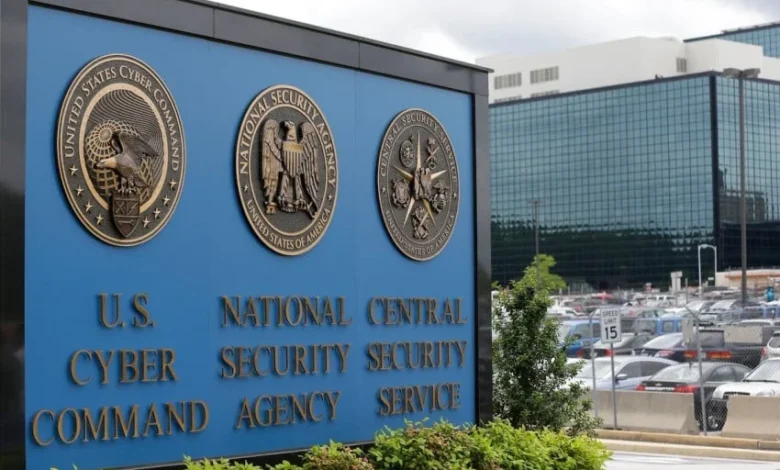
The National Security Agency (NSA) is currently embarking on the most significant internal reorganization in at least a decade, a strategic pivot designed to align the sprawling intelligence apparatus with the rapidly evolving realities of 21st-century warfare. As geopolitical tensions mount and the technological arms race intensifies, the agency—long considered the United States’ premier signals intelligence organization—is shifting its operational focus toward the dual imperatives of mastering artificial intelligence (AI) and countering the strategic ambitions of the People’s Republic of China. According to reports confirmed by current and former intelligence officials, this transformation represents a fundamental shift in how the U.S. monitors, analyzes, and responds to global threats.
The Strategic Shift: A New Organizational Architecture
At the heart of this restructuring is an ambitious timeline set by NSA Director General Timothy Haugh, who took the helm of the agency with a clear mandate to modernize its capabilities. The plan involves the creation of five specialized organizations within the agency’s hierarchy. These units are tasked with addressing specific, high-priority pillars of national security: artificial intelligence, counter-China operations, cybersecurity, combat support for military operations, and global intelligence collection.
The agency aims to have these units formally established by mid-October, with the objective of achieving full operational capability by early 2027. This timeline underscores the urgency felt within the intelligence community regarding the "pacing challenge" posed by Beijing. By dedicating entire bureaucratic structures to these specific domains, the NSA intends to break down traditional silos that have historically hampered the rapid synthesis of signals intelligence (SIGINT) with advanced data analytics.
Contextualizing the NSA’s Modern Mission
The NSA, an agency that operates under the umbrella of the Department of Defense, employs approximately 30,000 personnel, ranging from elite cryptologists and data scientists to military intelligence officers and civilian analysts. Its mission is two-fold: the protection of U.S. national security systems through sophisticated cybersecurity measures and the acquisition of foreign intelligence through digital espionage.
Historically, the agency’s focus was largely dominated by counter-terrorism efforts, particularly in the two decades following the September 11, 2001, terrorist attacks. During that era, the agency refined its ability to track individuals and communications networks across conflict zones in the Middle East and Central Asia. However, the current geopolitical climate—defined by what the Biden administration has termed "strategic competition"—requires a different set of tools. Unlike decentralized terrorist cells, China represents a "near-peer" adversary with state-level resources, sophisticated domestic encryption, and a massive investment in its own indigenous AI and quantum computing capabilities.
A Chronology of NSA Evolution
To understand the magnitude of this shift, one must look back at the agency’s recent history:
- 2013: The Snowden Disclosure: The agency faced a period of intense public and legal scrutiny after whistleblower Edward Snowden leaked classified documents exposing the scope of the NSA’s domestic and international surveillance programs. This event forced the agency into a defensive posture, leading to significant legislative reforms, including the USA FREEDOM Act, which curtailed some bulk data collection practices.
- 2017–2020: The Cybersecurity Pivot: Recognizing the rise of state-sponsored ransomware and digital warfare, the NSA began formalizing its "Cybersecurity Directorate," which focuses on defending critical infrastructure and sensitive government networks from foreign intrusion.
- 2023: The AI Security Center: Building on the Cybersecurity Directorate, the NSA launched the AI Security Center, signaling its intent to protect the U.S. AI ecosystem from intellectual property theft and adversarial manipulation.
- 2024: The Comprehensive Restructuring: The current initiative marks the culmination of these previous efforts, moving beyond mere task forces to a total reorganization of the agency’s foundational structure.
The China Factor: Intelligence and Deterrence
The primary driver of this restructuring is the realization that the United States is no longer the sole dominant power in cyberspace. China’s "Military-Civil Fusion" strategy, which mandates that private companies share data and technology with the People’s Liberation Army (PLA), has created a target environment that is increasingly difficult to penetrate.
The NSA’s new "China-focused" unit will likely act as a central clearinghouse for all intelligence regarding Beijing’s military advancements, economic espionage, and influence operations. By concentrating resources, the agency hopes to improve its "signal-to-noise" ratio. In an age of massive data proliferation, the challenge is no longer just collection; it is the ability to extract actionable intelligence from petabytes of information in real-time. This is where AI becomes the linchpin.
The Role of Artificial Intelligence in Signals Intelligence
The integration of AI into the NSA’s workflow is not merely about automation; it is about cognitive dominance. The agency is developing large language models and machine learning algorithms that can process signals, detect patterns, and predict adversarial behavior far faster than human analysts.
However, this reliance on AI introduces new risks. As the agency deploys AI for offensive operations, it must also defend its own algorithms against "data poisoning" and adversarial attacks. The new AI unit will be tasked with ensuring that the NSA’s internal tools are resilient, ethical, and aligned with the broader U.S. government directives on AI safety and security.
Broader Implications and Official Perspectives
While the NSA has not publicly disclosed the full details of its internal reorganization—citing the need to protect sensitive sources and methods—the move has been welcomed by many in the defense policy community. Analysts suggest that the restructuring is a necessary admission that the intelligence landscape has shifted from the "Long War" on terror to a "Great Power" competition.
Critics and civil liberties advocates, however, remain watchful. The integration of AI into surveillance capabilities often raises concerns regarding privacy and the potential for "mission creep." Given the NSA’s history with the Snowden disclosures, any expansion of the agency’s analytical power is bound to be met with calls for rigorous oversight. Members of the House and Senate Intelligence Committees have periodically pushed for increased transparency, though they generally support the necessity of modernizing the agency’s capabilities to counter Beijing.
Analyzing the 2027 Horizon
The 2027 timeline for full operational capability is not arbitrary. It aligns with various intelligence estimates regarding China’s military modernization goals. The next few years will serve as a critical transition period for the agency. The success of this restructuring will be measured by several key performance indicators:
- Latency Reduction: How quickly can the NSA move from intercepting raw data to delivering an intelligence product to policymakers?
- Cyber-Resilience: Can the agency successfully defend against the rising tide of sophisticated state-sponsored cyberattacks that have plagued U.S. corporations and government bodies in recent years?
- Technological Superiority: Can the agency maintain its lead in cryptology and signals intelligence despite the democratization of powerful AI tools among its adversaries?
Conclusion
The NSA’s move to restructure is a recognition that the old ways of conducting signals intelligence are insufficient for the modern era. By prioritizing AI, the agency is acknowledging that the future of espionage will be won by those who can process information the fastest and with the greatest degree of accuracy. Simultaneously, by elevating the focus on China, the agency is signaling a definitive end to the post-Cold War era of global cooperation.
As the NSA begins its transformation, the international community will be watching closely. The agency’s ability to navigate the tension between necessary modernization and the need for public trust will define its role in the global security architecture for the next decade. For the 30,000 men and women of the NSA, the mandate is clear: adapt to the era of AI and state-level competition, or risk obsolescence in an increasingly digital and dangerous world. The coming months of reorganization are merely the first steps in a long-term campaign to secure the digital frontier against a new class of threats.