Escape Plan 2: Hades Returns to Trans TV, Highlighting Production Challenges and Star Power

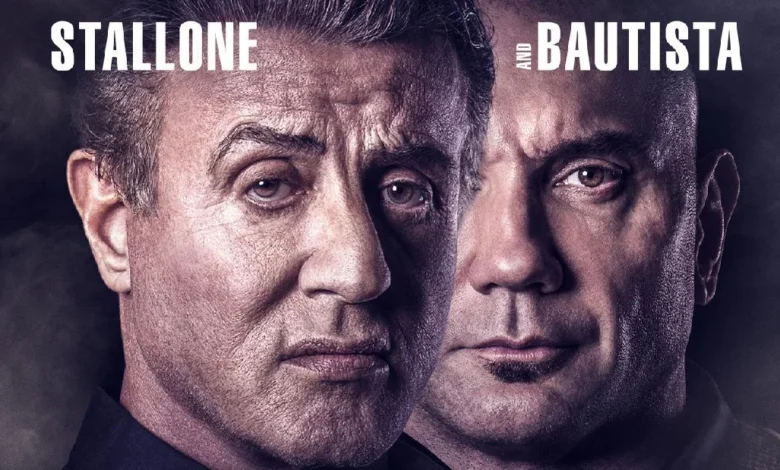
Jakarta prepares for a primetime action spectacle as the film ‘Escape Plan 2: Hades’ is scheduled for re-broadcast on Bioskop Trans TV. This high-octane action feature will air on Friday, July 24, 2026, at 20:00 WIB, promising an evening of intense thrills and intricate prison break sequences. The film’s return to the small screen offers an opportunity to revisit a sequel that garnered significant attention not only for its star-studded cast, led by action icon Sylvester Stallone, but also for its intriguing behind-the-scenes production narrative and its place within the evolving landscape of direct-to-video action cinema.
The Genesis of a High-Stakes Sequel: The Escape Plan Franchise Journey
The journey to ‘Escape Plan 2: Hades’ began with the original ‘Escape Plan’ in 2013. Directed by Mikael Håfström, the first film brought together two titans of the action genre, Sylvester Stallone and Arnold Schwarzenegger, for the first time as co-leads. The premise revolved around Ray Breslin (Stallone), a structural security expert who tests the reliability of maximum-security prisons by allowing himself to be incarcerated and then attempting to escape. His ultimate challenge comes when he is wrongly imprisoned in "The Tomb," a clandestine, high-tech facility, and must rely on the help of fellow inmate Emil Rottmayer (Schwarzenegger) to break free. The original ‘Escape Plan’ was a modest box office success, grossing over $137 million worldwide against a $50 million budget, and was generally well-received by audiences for its classic action sensibilities and the charismatic pairing of its leads. Its performance, particularly in international markets, signaled potential for a franchise.
The decision to greenlight a sequel, ‘Escape Plan 2: Hades’, came swiftly, despite the absence of Schwarzenegger. Released in 2018, ‘Hades’ faced the inherent challenge of building upon a successful predecessor while navigating the complexities of a reduced budget and the evolving distribution models for action films. The shift from a wide theatrical release to a predominantly direct-to-video (VOD/DVD) model in many territories marked a significant change in strategy, reflecting a common trend for sequels featuring established, but aging, action stars. This approach often allows studios to capitalize on brand recognition and star power without the massive marketing and distribution costs associated with a full theatrical rollout.
Behind the Scenes: Directorial Changes and Star Dynamics
One of the most notable aspects of ‘Escape Plan 2: Hades’ production was the change in leadership. The film was helmed by Steven C. Miller, a director known for his work in the direct-to-video action genre, having previously directed films like ‘Marauders’ and ‘Extraction.’ Miller’s experience in efficiently producing action-packed features on tighter budgets made him a suitable choice for the sequel. However, a significant revelation from IMDb, as cited in the original report, details Miller’s dismissal during the post-production phase of the film. While the exact reasons for his departure were not publicly detailed, such occurrences in Hollywood often stem from "creative differences" between the director and producers, budgetary disputes, or a misalignment of vision during the crucial editing and effects stages. For a director, being removed during post-production is a challenging experience, potentially affecting the final cut and the overall artistic coherence of the film. It suggests that the producers, among whom Sylvester Stallone was a prominent figure, might have intervened to steer the film in a direction they deemed more appropriate, possibly to align with franchise expectations or market demands.
Sylvester Stallone’s return as Ray Breslin was undoubtedly the film’s main draw. A cinematic icon with a career spanning over five decades, Stallone’s presence lends instant credibility and star power to any action project. However, ‘Escape Plan 2: Hades’ presented an intriguing paradox regarding his involvement. Despite reportedly receiving the highest remuneration among the cast, Stallone’s on-screen presence was limited to approximately 20 minutes in the entire film. This strategic decision, likely made to manage production costs while still leveraging his marketability, sparked considerable discussion among fans and critics. While not uncommon for major stars to have extended cameos or limited roles in franchise installments, especially in direct-to-video sequels, Stallone’s minimal screen time in a film where he was the ostensible lead raised questions about the true focus of the narrative and the value proposition for viewers primarily tuning in to see him in action. His role as a producer, however, indicates a continued commitment to the franchise, perhaps seeing it as a vehicle to develop other characters or extend the ‘Escape Plan’ universe, even if his own physical involvement was scaled back.
The ensemble cast further bolstered the film’s appeal. Curtis "50 Cent" Jackson reprised his role as Hush, Breslin’s tech-savvy ally, adding continuity and a familiar face from the first film. 50 Cent has successfully transitioned from a Grammy-winning rapper to a prolific actor and producer, carving out a niche in action films and television dramas. The addition of Dave Bautista, fresh off his breakout role as Drax the Destroyer in Marvel’s ‘Guardians of the Galaxy’ franchise, significantly enhanced the film’s physical action quotient. Bautista, a former professional wrestler, brought a formidable screen presence and a growing reputation as a versatile actor. His character, Trent Derosa, becomes a crucial figure alongside Breslin, particularly in the film’s intense action sequences.
The cast also featured prominent Asian talent, most notably Xiaoming Huang, a highly popular and respected actor in Chinese cinema. Huang’s inclusion was a clear move to strengthen the film’s appeal in the lucrative Asian market, a strategy increasingly common for Hollywood productions. His character, Shu Ren, is central to the film’s plot, providing the emotional core for Breslin’s mission. Jesse Metcalfe, known for his roles in television series like ‘Desperate Housewives’ and ‘Dallas,’ rounded out the key supporting cast, adding another recognizable face to the ensemble. The diverse cast composition aimed to broaden the film’s global reach and cater to a wider audience demographic.
Synopsis Unveiled: The Labyrinthine World of Hades
The narrative of ‘Escape Plan 2: Hades’ plunges Ray Breslin (Sylvester Stallone) into another seemingly insurmountable challenge. Following the events of the first film, Breslin has established an elite security team specializing in testing and breaking out of the world’s most impenetrable prisons. His expertise is put to the ultimate test when one of his trusted team members, Shu Ren (Xiaoming Huang), is kidnapped and forcibly incarcerated in a revolutionary, high-tech prison known as "Hades."
The prison itself is the film’s most innovative antagonist. Hades is not merely a facility but a constantly evolving, self-modifying structure. Its cells, corridors, and security systems are designed to shift and reconfigure automatically, creating an unpredictable and disorienting environment for its inmates. This dynamic architecture ensures that no two escape attempts would ever be the same, and any learned layout could instantly become obsolete. Furthermore, Hades operates under a brutal code: its prisoners are forced to engage in gladiatorial combat for the amusement of unseen overseers, with only the strongest surviving. This "fight to the death" mandate elevates the stakes beyond mere incarceration, transforming the prison into a deadly arena.
Breslin, driven by loyalty to his team, must assemble a new unit to infiltrate Hades and extract Shu Ren. His mission is not just about breaking out but breaking in and navigating a system designed to be impenetrable from both sides. The film showcases Breslin’s strategic genius as he meticulously plans the infiltration, leveraging the skills of his new team members. The plot thickens as Breslin and his allies uncover the true purpose behind Hades and the shadowy figures orchestrating its operations.
The action sequences are a hallmark of the film, with the original report specifically highlighting a dangerous confrontation where Stallone, alongside Dave Bautista’s character, Trent Derosa, finds himself under a barrage of bullets. These moments emphasize the raw physicality and high stakes of the mission, showcasing the seasoned action stars in perilous, life-threatening scenarios. The blend of advanced technology, brutal combat, and Breslin’s signature strategic thinking forms the core of ‘Escape Plan 2: Hades,’ promising a relentless thrill ride for action enthusiasts.
Critical Reception and Market Performance
Upon its release, ‘Escape Plan 2: Hades’ received generally negative reviews from critics. On Rotten Tomatoes, the film holds a significantly low approval rating, with critics often citing its convoluted plot, excessive use of CGI, and especially Stallone’s limited screen time as major drawbacks. Metacritic, another review aggregator, assigned the film a score indicative of "generally unfavorable reviews." Common criticisms included a lack of the original film’s charm, a reliance on generic action tropes, and a narrative that struggled to justify the high-tech prison concept. Many reviewers felt that the film failed to capitalize on its star power, particularly by relegating Stallone to a background role for much of the runtime.
Audience reception was similarly mixed, with many fans expressing disappointment over Stallone’s reduced presence. While some appreciated the new cast members and the expanded universe, others felt it strayed too far from the essence of the first film. Despite the critical panning, the film’s direct-to-video release strategy proved to be a commercially viable model. While specific box office figures are scarce for films primarily distributed via VOD and DVD, the fact that a third installment, ‘Escape Plan 3: The Extractors,’ was released in 2019 suggests that ‘Hades’ performed adequately enough within its niche market to warrant a continuation of the franchise. This underscores the economic reality that for certain genres and star combinations, the direct-to-video market offers a sustainable platform, even in the face of critical disapproval. The film’s performance in international markets, particularly Asia, where its diverse cast had strong appeal, likely played a significant role in its overall financial viability.
A Chronology of Confinement and Release
The ‘Escape Plan’ franchise has unfolded over several years, marking distinct points in the careers of its lead actors and the evolution of film distribution:
- September 2013: The original ‘Escape Plan,’ starring Sylvester Stallone and Arnold Schwarzenegger, is released theatrically worldwide, establishing the core premise and characters.
- 2017: Production for ‘Escape Plan 2: Hades’ commences, with Steven C. Miller at the helm, signaling the franchise’s expansion.
- Late 2017/Early 2018: Steven C. Miller is reportedly dismissed during the post-production phase of ‘Escape Plan 2: Hades,’ leading to speculation about creative control and the final vision of the film.
- June 2018: ‘Escape Plan 2: Hades’ is released, primarily through video-on-demand and direct-to-video formats in many regions, marking a shift from the theatrical strategy of its predecessor.
- July 2019: ‘Escape Plan 3: The Extractors’ is released, continuing the narrative and further cementing the franchise’s presence in the direct-to-video market, again featuring Stallone in a more central role than ‘Hades’.
- July 24, 2026, 20:00 WIB: ‘Escape Plan 2: Hades’ is broadcast on Bioskop Trans TV, bringing the film to a wide free-to-air television audience in Indonesia.
Industry Perspectives: The Evolving Landscape of Action Cinema
The production and distribution of ‘Escape Plan 2: Hades’ offer several insights into the contemporary film industry. From a directorial standpoint, Steven C. Miller’s reported dismissal highlights the often-complex power dynamics on a film set, especially when a major star like Sylvester Stallone is also a producer. Such events underscore the pressure to deliver a product that aligns with the vision of key stakeholders, potentially at the expense of a director’s original intent. While Miller has continued to direct other action films, this incident serves as a cautionary tale about the challenges faced by directors in the commercial filmmaking environment.
Sylvester Stallone’s approach to ‘Hades’ also exemplifies a strategic shift for veteran action stars. By lending his name and image, even with limited screen time, he provides the essential marketing hook for a project that might otherwise struggle to find funding or audience attention. This model allows stars to maintain their brand presence, contribute to the continuity of beloved characters, and potentially mentor newer talent, all while managing their physical commitment. Industry analysts often point to this as a way for established actors to extend their careers and remain relevant in a rapidly changing market, particularly as the physical demands of lead action roles become more taxing with age.
For broadcasters like Trans TV, licensing films like ‘Escape Plan 2: Hades’ is a crucial part of their programming strategy. Free-to-air television channels in Indonesia and other global markets continue to rely on popular international films, especially action and thriller genres, to attract and retain primetime viewership. Despite the proliferation of streaming services, linear TV still holds significant appeal, particularly for communal viewing experiences and accessibility. By airing a film featuring a globally recognized star like Stallone, Trans TV aims to capture a broad audience, offering premium entertainment without subscription fees. This strategy ensures that even films initially released on VOD find a second life and broader exposure through traditional broadcast media.
The Enduring Appeal of Action: Implications for Franchise Films and Broadcast Media
‘Escape Plan 2: Hades’ stands as a fascinating case study in the longevity of action franchises and the economics of star power. Despite its critical reception, the film contributed to the continuation of the ‘Escape Plan’ series, demonstrating that audience demand for familiar characters and high-octane entertainment remains robust. The franchise’s ability to adapt its distribution model, moving from theatrical to direct-to-video, reflects a pragmatic approach to filmmaking in a competitive market. It shows that commercial success can be measured not solely by box office gross but also by performance in the home entertainment sector, which has become increasingly vital with the rise of digital platforms.
The film’s re-broadcast on Trans TV further underscores the enduring appeal of action cinema and the role of free-to-air television in disseminating global entertainment. For Indonesian audiences, it represents an accessible opportunity to engage with a Hollywood production featuring an iconic actor. This continued visibility on traditional media channels ensures that even films that bypass major theatrical releases can reach a wide viewership, reinforcing their cultural footprint and contributing to their overall commercial lifecycle. The dynamic interplay between star power, evolving distribution channels, and audience preferences continues to shape the landscape of how films are made, consumed, and experienced globally.
Conclusion: A Night of Thrills Awaits
As ‘Escape Plan 2: Hades’ prepares for its re-broadcast on Bioskop Trans TV, it offers more than just a standalone action movie. It presents a window into the intricate mechanics of franchise filmmaking, the strategic deployment of star power, and the adaptability of distribution models in the modern era. For viewers tuning in on Friday, July 24, 2026, at 20:00 WIB, it promises a gripping narrative of betrayal, technological confinement, and relentless escape attempts, all spearheaded by the enduring presence of Sylvester Stallone and a formidable ensemble cast. It’s a reminder that in the world of action cinema, the thrill of the chase, the ingenuity of the escape, and the magnetic pull of its stars continue to captivate audiences, regardless of the screen on which they are viewed.