Indonesian Finance Ministry and Quarantine Agency to Integrate X-Ray Monitoring Systems for Enhanced Border Security and Trade Efficiency

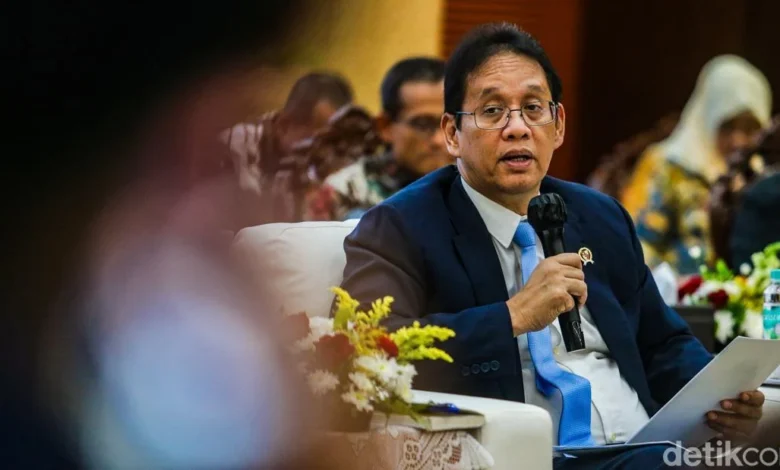
In a significant move to bolster Indonesia’s border security and streamline international trade logistics, Minister of Finance Purbaya Yudhi Sadewa has officially granted permission for the Indonesian Quarantine Agency (Barantin) to participate in the real-time monitoring of X-ray scanning facilities currently managed by the Directorate General of Customs and Excise (Bea Cukai). This strategic decision follows a high-level meeting between the Minister and the Head of Barantin, Abdul Kadir Karding, at the Ministry of Finance headquarters in Central Jakarta on Friday, July 24, 2026. The collaboration aims to close existing gaps in the inspection of imported and exported goods, particularly those involving biological materials that pose a risk to the nation’s agricultural and environmental health.
The initiative marks a pivotal shift in the implementation of Ministry of Finance Regulation (PMK) Number 19, which initially laid the groundwork for joint oversight between Customs and the various quarantine authorities. While the regulation had been in place for some time, its full execution was previously suspended due to technical unreadiness and a lack of operational synchronization in the field. Minister Purbaya clarified that the regulation was never intended to be permanently shelved, but rather held back until both agencies could ensure a seamless integration of their technical teams and monitoring hardware. With Barantin now declaring its readiness to move forward, the Ministry of Finance is preparing to revise the regulatory framework to facilitate immediate joint operations at major ports of entry, including international airports and seaports.
Technical Synchronization and Field Readiness
The core of the new agreement focuses on the shared use of scanner technology to identify high-risk commodities. Under the current system, Customs officials primarily use X-ray technology to identify goods for tax assessment, contraband detection, and the prevention of illegal drug trafficking. However, commodities that may appear benign from a revenue perspective—such as certain fruits, seeds, or animal products—may carry significant biological risks, including invasive pests or contagious diseases. By allowing Barantin officers to monitor these scans simultaneously, the government hopes to catch biological threats that might otherwise bypass traditional quarantine checkpoints.
Minister Purbaya emphasized that while the "green light" has been given, the transition will not be instantaneous. He has instructed the technical teams from both the Directorate General of Customs and Excise and the Indonesian Quarantine Agency to conduct a thorough review of their operational protocols. This includes the harmonization of data feeds from X-ray machines and the establishment of a joint response protocol when a suspicious item is identified. "The goal is for Barantin to be able to monitor our scanners directly so they can see if there are items that require quarantine handling, such as agricultural products, meat, and other biological materials," Purbaya stated. "It is a positive step, but I have requested that they meet with our technical teams first to ensure that everything is truly ready for field implementation."
Addressing the Gaps in Biosecurity
The urgency of this integration was highlighted by Abdul Kadir Karding, who pointed out that the lack of real-time data sharing has historically created vulnerabilities at the border. In many instances, travelers or commercial importers have been able to bring in biological products because quarantine officers were not positioned at the primary X-ray points, or because the digital data from the Customs scanners was not relayed to Barantin’s systems. This "siloed" approach to border management meant that unless an item was specifically flagged for Customs reasons, it might never undergo a quarantine inspection.
Karding noted that items like exotic pets, fresh produce, and specialized animal products often slip through because they do not necessarily trigger a "red flag" for tax evasion or narcotics. "So far, people bringing in fruits or pets have sometimes escaped quarantine because we didn’t have officers on-site or our data didn’t relay with the X-ray data at Customs," Karding explained. He expressed gratitude that the Minister of Finance agreed to address these loopholes by revisiting PMK 19. The integration is expected to significantly reduce the entry of zoonotic diseases and agricultural pests, which could otherwise devastate Indonesia’s domestic farming and livestock industries.
The Evolution of the Indonesian Quarantine Agency (Barantin)
The push for integrated monitoring is part of a broader evolution of Indonesia’s quarantine infrastructure. The Indonesian Quarantine Agency (Barantin) was established as a consolidated entity to bring together various quarantine functions that were previously fragmented across the Ministry of Agriculture, the Ministry of Maritime Affairs and Fisheries, and the Ministry of Environment and Forestry. This consolidation, formalized under Presidential Decree No. 45 of 2023, was designed to create a more powerful and efficient "single window" for biosecurity.
Since its inception, Barantin has sought to modernize its operations by adopting digital technologies and seeking closer cooperation with other "front-line" agencies like Customs and Immigration. The integration of X-ray monitoring represents the next logical step in this modernization journey. By leveraging the existing infrastructure of the Ministry of Finance, Barantin can expand its reach without the massive capital expenditure required to install its own separate scanning machines at every terminal in the archipelago.
Economic Implications and Trade Facilitation
Beyond the security and biological benefits, the joint monitoring initiative is expected to have a profound impact on Indonesia’s trade efficiency. Indonesia has been working aggressively to improve its standing in the World Bank’s Logistics Performance Index (LPI) and to reduce the high logistics costs that have historically hindered its economic competitiveness. One of the primary complaints from the business community has been the "double inspection" process, where goods are inspected once by Customs and then again by Quarantine, often leading to delays and increased dwelling times at ports.
By synchronizing the monitoring process, the government aims to move toward a "Single Submission, Single Inspection" model. If both agencies can view the same X-ray feed and share data in real-time, many shipments can be cleared faster, as the need for physical inspections may be reduced for low-risk items. This aligns with the National Logistics Ecosystem (NLE) program, a government-wide initiative to integrate all logistics-related services into a single digital platform. The integration of Barantin into the Customs scanning workflow is a tangible step toward a more unified and business-friendly border management system.
Chronology of the Policy Shift
The path toward this integration has been marked by several key milestones:
- Issuance of PMK 19 (Pre-2024): The Ministry of Finance issued regulations allowing for joint facility usage, but implementation stalled due to hardware incompatibilities and administrative hurdles.
- Formation of Barantin (2023): The consolidation of quarantine services created a single authority capable of negotiating unified protocols with the Ministry of Finance.
- The July 24, 2026 Meeting: Head of Barantin Abdul Kadir Karding visited Minister Purbaya Yudhi Sadewa to formally request the activation of joint monitoring, citing improved technical capabilities within his agency.
- Technical Review Period (Current): Technical teams from both agencies are now tasked with mapping out the digital integration and personnel deployment at key "pilot" ports, such as Tanjung Priok in Jakarta and Soekarno-Hatta International Airport.
Stakeholder Reactions and Broader Impact
The announcement has been met with cautious optimism by industry stakeholders. The Indonesian Logistics and Forwarders Association (ALFI) has long advocated for better coordination between border agencies. "Any move that reduces the number of separate ‘touchpoints’ for a cargo shipment is a win for the economy," an ALFI spokesperson noted. "However, the success of this policy will depend entirely on how well the technology works. If the systems crash or if there is confusion over which agency has the final say on a shipment, it could actually cause more delays."
Environmental and agricultural experts have also praised the move. Dr. Heru Santoso, a biosecurity researcher, emphasized that Indonesia’s biodiversity is a massive economic asset that requires rigorous protection. "We have seen the devastating impact of Foot and Mouth Disease (FMD) and various crop blights in the past. Strengthening the ‘first line of defense’ at the X-ray scanner is much more cost-effective than trying to manage an outbreak once it has spread into the hinterland," Santoso said.
Future Outlook: A Digital Border
Looking ahead, the Ministry of Finance and Barantin are exploring the use of Artificial Intelligence (AI) to assist in the joint monitoring process. Modern X-ray systems can be equipped with AI algorithms trained to recognize the density and shapes of biological materials, such as specific types of meat or plant matter. By integrating these tools, the agencies could move toward an automated "flagging" system that alerts both Customs and Quarantine officers only when a high-probability risk is detected.
The successful implementation of this joint monitoring system will likely serve as a blueprint for further inter-agency cooperation in Indonesia. As the country continues to grow as a global trade hub, the ability to balance strict biosecurity with rapid trade movement will be a key factor in its long-term economic resilience. For now, the focus remains on the technical teams, who must ensure that the "green light" given by Minister Purbaya translates into a robust, functional, and efficient reality at the nation’s borders.