The Economic Winners and Losers of the 2026 FIFA World Cup as Argentina and Spain Prepare for the Historic Final

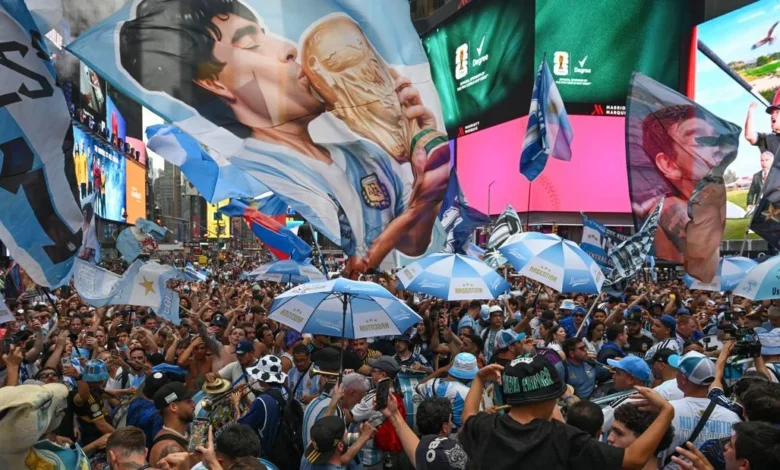
The 2026 FIFA World Cup has reached its dramatic conclusion after a month of high-stakes football that has captivated a global audience of billions. Tonight, the eyes of the world turn to the MetLife Stadium in East Rutherford, New Jersey, where the final match will see the defending champions, Argentina, face off against a formidable Spanish side. While the sporting narrative focuses on the clash between established icons and a new generation of European stars, a parallel story has unfolded in the balance sheets of corporations, host cities, and the governing body of world football. The 2026 tournament, the first to feature an expanded format of 48 teams across three host nations—the United States, Canada, and Mexico—has rewritten the record books for revenue generation, though the distribution of these financial gains remains starkly uneven.
As the final whistle approaches, an analysis of the economic landscape reveals a complex web of winners and losers. While the tournament has been hailed as a logistical triumph, the financial reality for many stakeholders, particularly fans and local businesses, has been more nuanced than the celebratory headlines suggest. From the multi-billion dollar revenue cycles of FIFA to the struggling hotel sectors in major American hubs, the 2026 World Cup serves as a case study in the economics of modern mega-events.
FIFA: The Undisputed Financial Victor
The Federation Internationale de Football Association (FIFA) has emerged as the primary financial beneficiary of the 2026 cycle. According to Marion Laboure, a senior strategist at Deutsche Bank Research, the organization has leveraged the expanded 48-team format to reach unprecedented levels of profitability. FIFA’s revenue for the 2023-2026 four-year cycle is projected to approach $13 billion, a staggering increase compared to the $7.6 billion generated during the 2022 cycle in Qatar. This growth is attributed to a combination of increased broadcasting rights, high-value sponsorship deals, and a sophisticated approach to ticket sales and hospitality.
A significant portion of this revenue stems from FIFA’s strategic entry into the secondary ticket market. By utilizing an official resale platform, FIFA has successfully captured a percentage of the lucrative scalping market, charging a 15% transaction fee to both buyers and sellers. This move has allowed the organization to monetize the high demand for matches even after the initial box-office sell-out. Furthermore, the 2026 tournament benefited from being the first "post-pandemic" World Cup held in high-capacity venues across North America, free from the travel restrictions and stadium limitations that hampered previous international sporting cycles.
Broadcasting Innovations and Advertising Windfalls
While broadcasting networks paid record sums for the rights to air the 2026 World Cup, many are seeing those investments pay off through aggressive advertising sales. In the United States, Fox Sports reportedly paid $485 million for the rights to the tournament. To maximize their return, broadcasters capitalized on new "hydration breaks" introduced by FIFA. While FIFA maintains these breaks were implemented solely for player safety in the North American summer heat, they provided a golden opportunity for commercial inventory.
Data suggests that a standard 30-second advertisement slot during the 2026 World Cup on major networks was valued between $200,000 and $300,000. However, for high-stakes matches involving the United States national team or major European powerhouses, these prices surged to as much as $750,000 per slot. Analysts note that the hydration breaks essentially functioned as a "third half" for advertisers, allowing for brand placement during high-tension moments when viewers were least likely to turn away from the screen. This commercial model, built on the increased scale of a 104-match tournament, is expected to become the blueprint for future FIFA events.
The Global Merchandise Surge
The retail sector has experienced a "bonanza" period, with national team jerseys becoming the season’s must-have items. Both Nike and Adidas have reported that jersey sales for the 2026 tournament have more than doubled compared to the 2022 figures. Nike’s portfolio was led by the England national team kit, which saw record-breaking sales, followed closely by France, Brazil, the Netherlands, and the United States. For Adidas, the Mexico national team jersey emerged as a global bestseller, fueled by the passion of the host nation’s fan base.
Major sports retailers, such as JD Sports, have noted that the 2026 World Cup triggered a unique shopping frenzy. Interestingly, while the tournament was held in North America, the demand for kits from traditional footballing nations in Europe and South America remained the primary driver of growth. The "Argentina effect," bolstered by the team’s status as defending champions, ensured that the iconic blue and white stripes remained a top seller throughout the month-long competition.
The Spectator’s Burden: Soaring Costs and Dynamic Pricing
While FIFA and its partners celebrate record revenues, the fans—the lifeblood of the sport—have faced significant financial strain. The 2026 tournament will likely be remembered as the most expensive World Cup for attendees in history. The primary point of contention has been FIFA’s implementation of "dynamic pricing," a model where ticket prices fluctuate based on real-time demand. This has led to astronomical figures for high-profile matches.
Official tickets for the final at MetLife Stadium were listed at $32,970, while the secondary market saw some "platinum" seats listed for as much as $2 million. FIFA President Gianni Infantino defended these prices, arguing they are consistent with other major American sporting events, such as the Super Bowl. However, the costs extended far beyond the stadium gates. Fans were hit by a "perfect storm" of high airfares, inflated accommodation rates, and surging local transportation costs. In one notable instance, the New Jersey Transit fare for a 30-minute trip to the stadium was hiked to $150 during the tournament, a massive increase from the standard $12.90 round-trip fare. Although public outcry eventually forced a slight reduction, the incident highlighted the predatory pricing environment surrounding the event.
Host Cities: The Myth of the Economic Windfall
The 16 host cities across the United States, Canada, and Mexico have welcomed millions of visitors, but economists warn that the promised local economic boom may be more illusory than real. FIFA estimated that the tournament would add $41 billion in value to the global economy, with $17 billion specifically earmarked for the U.S. economy, potentially creating 185,000 jobs. However, researchers like Alexander Budzier from the University of Oxford suggest these figures often fail to account for the "displacement effect."
Budzier argues that while World Cup fans flood into a city, regular tourists and business travelers often stay away to avoid the crowds and inflated prices. This results in a net neutral or even negative impact for many local businesses. Furthermore, the jobs created are typically temporary, low-wage positions in the hospitality sector. "The event creates jobs, but it doesn’t necessarily create long-term wealth for the community," Budzier noted. Because the 2026 tournament relied heavily on existing infrastructure—using NFL stadiums and established transport networks—the traditional "construction stimulus" seen in previous World Cups was largely absent, further limiting the local economic "trickle-down" effect.
The Hotel Industry’s Unmet Expectations
Perhaps the most surprising economic casualty of the 2026 World Cup has been the hotel and accommodation sector. Despite projections of a total sell-out across host cities, many hotels reported lower-than-expected occupancy rates. The American Hotel and Lodging Association (AHLA) has accused FIFA of "over-blocking" rooms. By reserving massive blocks of rooms for officials, sponsors, and staff and then releasing them late, FIFA allegedly created an artificial shortage that drove up prices and discouraged independent travelers.
In New York and Seattle, nearly 80% of hotel operators reported that bookings remained below initial projections as of late April 2026. Many travelers opted for short-term rentals in outlying areas or chose to day-trip to host cities rather than paying the exorbitant rates demanded by downtown hotels. This mismatch between projected demand and reality has left many in the hospitality industry viewing the tournament as a "non-event" in terms of profitability.
Broader Implications and the Future of Mega-Events
As the 2026 FIFA World Cup concludes tonight, the legacy of the tournament will be debated by economists and sports analysts for years to case. The shift toward a multi-national, high-capacity hosting model has proven to be a financial goldmine for FIFA, suggesting that the era of single-nation hosting for expanded tournaments may be over. The 2030 World Cup, set to span three continents, is already looking to the 2026 model as a template for success.
However, the 2026 experience also raises serious questions about the sustainability of fan attendance. If the "beautiful game" becomes a luxury product accessible only to the ultra-wealthy, the long-term cultural health of the sport could be at risk. The tension between FIFA’s commercial ambitions and the financial reality of the average supporter has never been more apparent than in the stadiums of North America this summer.
Ultimately, the 2026 World Cup has demonstrated that while football remains a powerful global unifier on the pitch, its economic impact is a divisive force. As Argentina and Spain prepare to kick off for the ultimate prize, the financial scorecards have already been tallied: a massive win for the institutions, a mixed bag for the hosts, and a heavy price paid by the fans.