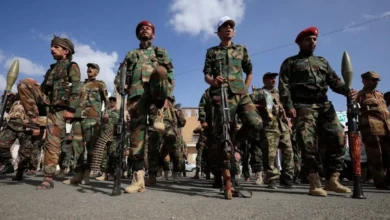
Manila – A senior United States official has voiced concerns that the Houthi rebel movement, based in Yemen, has been "duped" by Iran into escalating attacks on commercial shipping in the strategically vital Red Sea. This assertion comes amidst a dangerous uptick in maritime incidents, including a recent Houthi claim of striking two Saudi oil tankers, intensifying fears of broader regional conflict and severe disruptions to global trade and energy supplies.
The statement, delivered recently on the sidelines of a gathering of ASEAN foreign ministers in Manila, underscored Washington’s view that the Houthis, who had largely maintained a strategic distance from certain flashpoints in the past, are now being manipulated into direct confrontation. The official urged de-escalation, expressing hope that the Houthis would reconsider their actions, which are perceived as serving Iran’s broader regional agenda rather than their own.
The Spark: Houthi Claims and Saudi Confirmation
The immediate catalyst for this heightened concern was the Houthi movement’s declaration that its forces had successfully targeted two Saudi oil tankers, identified as the ENCELIA and LAYLA. The Houthis stated these attacks were a direct response to the tankers allegedly violating a maritime blockade they had imposed on Saudi ports in the Red Sea. According to the Houthi military spokesperson, their forces utilized a sophisticated array of weaponry, including ballistic missiles, cruise missiles, and unmanned aerial vehicles (drones), to execute the strikes. This operation, they asserted, was part of a legitimate defense against ongoing aggression and blockades against Yemen.
The imposition of a maritime blockade against Saudi Arabia was publicly announced by the Houthis just days prior, with a stark warning to all commercial vessels. The group cautioned that any ship attempting to enter or offload cargo at Saudi ports would be considered a legitimate military target. This unilateral declaration immediately raised alarms across international shipping lanes and geopolitical capitals, signaling a dangerous new phase in the protracted Yemeni conflict and its potential to spill over into critical maritime arteries.
In response to the Houthi claims, the official Saudi Press Agency (SPA), citing an official source from the Kingdom’s Public Transport Authority, confirmed that a Saudi-flagged vessel had indeed been struck while navigating the Red Sea, subsequently catching fire. Crucially, the SPA reported that all crew members on board were successfully evacuated and were safe. However, the Saudi statement notably refrained from explicitly identifying the perpetrator of the attack or specifying the type of vessel involved, maintaining a degree of ambiguity while confirming the incident’s severity. This measured response from Riyadh highlights the delicate balance Saudi Arabia must strike between confirming attacks and avoiding further escalation.
A Strategic Chokepoint: The Red Sea’s Critical Role
The Red Sea is not merely a body of water; it is a vital artery of global commerce and a linchpin of international energy security. Connecting the Mediterranean Sea via the Suez Canal in the north to the Indian Ocean through the Bab el-Mandeb Strait in the south, this waterway is one of the world’s busiest shipping lanes. Approximately 12% of global trade by volume, including a substantial portion of the world’s oil and natural gas shipments, transits through these narrow maritime passages annually. The Bab el-Mandeb, in particular, is a choke point, a mere 18-mile-wide strait between Yemen on the Arabian Peninsula and Djibouti and Eritrea on the African continent. Any disruption here has immediate and far-reaching consequences for international supply chains, energy prices, and global economic stability.
For centuries, control or influence over these routes has been a strategic imperative for regional and global powers. The recent Houthi actions, therefore, are not isolated incidents but rather direct challenges to the principle of freedom of navigation and a significant threat to the uninterrupted flow of goods that underpins the global economy. The potential for prolonged disruptions or the need for vessels to reroute around the Cape of Good Hope would add weeks to voyages, significantly increasing shipping costs, insurance premiums, and ultimately, consumer prices worldwide.
Unpacking the US Accusation: Iran’s Alleged Influence
The US official’s assertion that the Houthis have been "deceived" or "duped" by Iran is rooted in a long-standing narrative from Washington and its allies regarding Tehran’s alleged use of proxy forces to project power and destabilize the Middle East. The US government has consistently accused Iran of providing military, financial, and logistical support to the Houthi movement, including advanced missile and drone technology. While Iran denies directly commanding Houthi operations, it openly acknowledges its political and spiritual support for the group, framing it as part of its broader "Axis of Resistance" against American and Israeli influence in the region.
From the US perspective, Iran leverages groups like the Houthis to exert pressure on regional rivals, particularly Saudi Arabia, and to challenge American naval presence in the Gulf and the Red Sea. The current Red Sea attacks are viewed by Washington as a calculated move by Tehran to broaden the scope of its regional confrontation, potentially diverting attention from other geopolitical flashpoints or testing the resolve of international maritime security efforts. The US official’s call for de-escalation is thus not merely a plea for peace but a strategic demand for Iran to cease what Washington perceives as proxy warfare tactics that threaten international stability.
The Houthi Movement: A Deep Dive into Yemen’s Rebels
To understand the motivations behind the Red Sea attacks, it is essential to delve into the history and ideology of the Houthi movement. Officially known as Ansar Allah (Supporters of God), the Houthis emerged in the 1990s as a Zaydi Shia revivalist movement in northern Yemen, a region historically marginalized by the central government. Their grievances stemmed from perceived economic neglect, political disenfranchisement, and the rise of Sunni Salafist influence, which they viewed as a threat to their religious identity.
The movement gained significant traction following the killing of its founder, Hussein al-Houthi, by Yemeni government forces in 2004. Led by his brother Abdul-Malik al-Houthi, the group evolved into a formidable armed force, engaging in a series of conflicts with the Yemeni government. By 2014, capitalizing on widespread discontent and the power vacuum created by Yemen’s Arab Spring uprising, the Houthis launched a rapid offensive, seizing the capital Sana’a and effectively overthrowing the internationally recognized government of President Abd-Rabbu Mansur Hadi.
This Houthi takeover prompted a military intervention by a Saudi-led coalition in March 2015, aimed at restoring the Hadi government and curbing what Riyadh perceived as growing Iranian influence on its southern border. The ensuing Yemeni Civil War has devolved into one of the world’s worst humanitarian crises, with millions displaced and facing famine. The Red Sea attacks are, in the Houthis’ narrative, a direct extension of this conflict, a means to pressure the Saudi-led coalition to lift its own blockade on Yemen and cease military operations. Their rhetoric often frames these actions as resistance against foreign aggression and a defense of Yemeni sovereignty.
Iran’s Regional Strategy and Proxy Warfare
Iran’s relationship with the Houthi movement is a critical component of its broader regional foreign policy, often described as an "Axis of Resistance" or a strategy of "forward defense" through proxy forces. This network includes Hezbollah in Lebanon, various Shia militias in Iraq, and to a lesser extent, Hamas and Palestinian Islamic Jihad. For Tehran, supporting these groups serves multiple objectives: extending its influence across the Middle East, challenging the geopolitical dominance of the United States and its allies (Saudi Arabia and Israel), and creating deterrents against potential military action targeting Iran itself.
In the context of Yemen, Iran’s support for the Houthis provides it with a strategic foothold on the Arabian Peninsula, allowing it to harass shipping in the Bab el-Mandeb and potentially threaten Saudi infrastructure. While Iran consistently denies direct command and control over Houthi operations, evidence presented by the US and its allies, including UN reports, suggests the transfer of sophisticated weaponry, technology, and training. This support has enabled the Houthis to develop and deploy advanced ballistic missiles, cruise missiles, and drones capable of reaching targets deep within Saudi Arabia and navigating the Red Sea. The current Red Sea incidents are thus viewed by many analysts as a demonstration of Iran’s capacity to project power indirectly and escalate regional tensions without direct military engagement.
Escalating Risks: Economic and Geopolitical Implications
The recent Houthi attacks in the Red Sea carry profound implications, both economically and geopolitically. Economically, the immediate consequence is a spike in shipping costs and insurance premiums for vessels transiting the region. Maritime security firms have already begun issuing warnings, and some shipping companies may consider rerouting vessels, particularly oil tankers, around the longer and more expensive route via the Cape of Good Hope. Such diversions can add 10-14 days to a journey from Asia to Europe, consuming more fuel and delaying deliveries, which could translate into higher prices for consumers globally. The energy markets are particularly sensitive, as any perceived threat to the flow of oil from the Persian Gulf through the Red Sea can trigger price volatility, impacting global economies heavily reliant on stable energy supplies.
Geopolitically, these incidents risk igniting a broader regional conflagration. The Red Sea attacks introduce a new front in the complex web of conflicts involving the US, Iran, Saudi Arabia, and their respective allies. They undermine recent efforts at de-escalation between Saudi Arabia and Iran, which had seen some rapprochement brokered by China. The attacks also pose a direct challenge to the US naval presence in the region, particularly the Fifth Fleet, tasked with ensuring freedom of navigation. An escalation could lead to increased military deployments, heightened naval patrols, and the potential for miscalculation, drawing major powers into direct confrontation.
Moreover, the international community, including the United Nations and various maritime organizations, views these attacks with grave concern. They represent a clear violation of international maritime law and a threat to the global commons. Calls for restraint and adherence to international norms are likely to intensify, potentially leading to stronger international condemnations, sanctions, or even collective security measures to protect shipping lanes. The stability of countries bordering the Red Sea, such as Egypt (which relies heavily on Suez Canal revenues) and Djibouti, is also directly impacted by these security threats.
A Call for De-escalation: The Path Forward
The US official’s call for de-escalation, while a standard diplomatic plea, highlights the immense challenges inherent in resolving the multifaceted conflicts gripping the Red Sea and Yemen. Achieving de-escalation requires not only a cessation of Houthi attacks but also a broader political resolution to the Yemeni Civil War, which remains elusive despite years of UN-led peace efforts. For the Houthis, their actions are inextricably linked to their demands for an end to the Saudi-led blockade and intervention in Yemen. Without addressing these core grievances, it is unlikely they will unilaterally cease their operations.
The role of international diplomacy is paramount. Efforts to broker a lasting ceasefire in Yemen, facilitate humanitarian aid, and initiate inclusive political dialogue must be intensified. Furthermore, direct or indirect channels of communication between the US and Iran, and between regional rivals like Saudi Arabia and Iran, will be crucial to manage tensions and prevent miscalculation. The international community faces the daunting task of balancing the imperative to protect global trade routes with the need to address the root causes of conflict and instability in one of the world’s most volatile regions. The Red Sea, once a silent conduit of global commerce, has become a dangerous theater, underscoring the interconnectedness of regional conflicts and global security.