Dior Couture Unveils Sculptural Masterpiece Inspired by Lynda Benglis, Weaving Art and Global Heritage

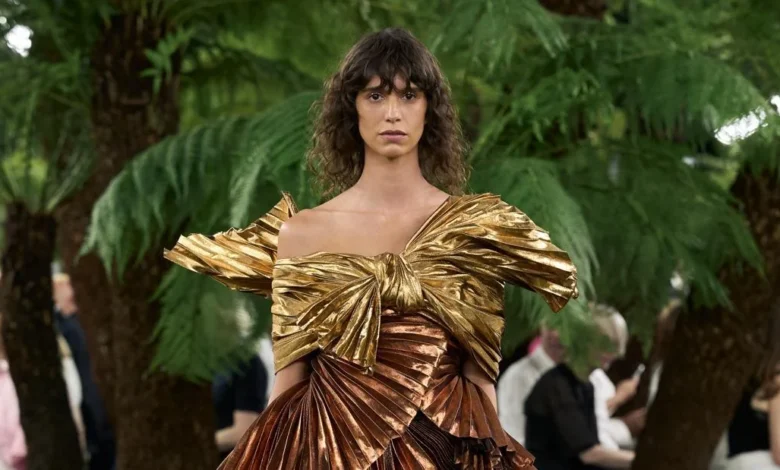
Paris, France – Christian Dior’s latest Haute Couture collection, presented in Paris, has redefined the boundaries between fine art and high fashion, drawing profound inspiration from the groundbreaking sculptural work of American artist Lynda Benglis. Under the visionary direction of Maria Grazia Chiuri, the collection, which debuted during the prestigious Paris Haute Couture Week in early July 2026, served as a powerful dialogue on form, texture, and cross-cultural exchange. It culminated in an immersive exhibition, "Grammar of Forms," at the historic Musée Rodin, running from July 7-12, 2026, further solidifying the symbiotic relationship between fashion and contemporary art.
A Deep Dive into Artistic Collaboration
The genesis of this extraordinary collection lies in Maria Grazia Chiuri’s ongoing exploration of the female gaze in art and her admiration for artists who challenge conventional norms. Lynda Benglis, renowned for her innovative approach to sculpture and her fearless manipulation of materials, became the perfect muse for Dior’s Spring/Summer 2026 Haute Couture offering. Benglis’s artistic practice, characterized by transforming two-dimensional concepts into dynamic three-dimensional forms through techniques like folding, knotting, and casting, provided a rich lexicon for Chiuri and the skilled artisans of the Dior ateliers. This collaboration is not merely an homage but a profound translation of Benglis’s philosophy into the intricate language of haute couture, pushing the very definition of wearable art.
Chiuri’s intention was to mirror Benglis’s ability to imbue inert materials with life and movement. "This collection is a profound dialogue between the sculptural prowess of Lynda Benglis and the timeless artistry of haute couture," Maria Grazia Chiuri stated in a press release following the show. "We sought to explore the very ‘grammar’ of form, transforming two-dimensional concepts into breathtaking three-dimensional realities, while also celebrating the rich, interconnected tapestry of global cultures, particularly India’s profound influence on Benglis’s work and our own heritage."
Lynda Benglis: A Sculptor of Fluidity and Form
Lynda Benglis, born in 1941, emerged as a pivotal figure in the post-minimalist art movement of the late 1960s, challenging the rigid structures of minimalism and patriarchy in art. Her work often involves poured latex, polyurethane foam, wax, and metal, creating organic, often provocative, forms that defy traditional categories of painting and sculpture. Benglis is celebrated for her radical exploration of process, materiality, and the body, often pushing the limits of gravity and perception. Her sculptures are known for their tactile surfaces, vibrant colors, and their seemingly fluid, yet ultimately solidified, presence.
A significant aspect of Benglis’s oeuvre, and a core inspiration for this Dior collection, is her deep and enduring connection to India. Benglis first visited India in the late 1970s, establishing a studio in Ahmedabad, Gujarat, a region renowned for its rich textile traditions and craftsmanship. This experience profoundly influenced her "Peacock" series, which began in the late 1970s and continues to evolve, characterized by intricate, often vibrantly colored, forms that evoke the bird’s majestic plumage. Her time in India also fostered an appreciation for the country’s ancient artistic techniques and materials, which she integrated into her own work, creating a powerful cross-cultural synthesis. Similarly, her life and work in Santa Fe, New Mexico, another landscape rich in distinct cultural and artistic traditions, contributed to her multifaceted perspective on form and environment.
The Collection: A Symphony of Sculptural Silhouettes and Material Innovation
The haute couture collection masterfully translated Benglis’s artistic principles into garments that were both sculptural and exquisitely wearable. Key to this transformation were traditional couture techniques reimagined with a contemporary twist:
- Hand-plissé: This intricate pleating technique was employed to create volume and movement, echoing the way Benglis folds and manipulates her materials. Dresses and skirts unfolded in architectural cascades, their surfaces shifting with every step, giving the illusion of molten fabric solidified in motion. The plissé wasn’t merely decorative; it was structural, shaping the garment into a living sculpture.
- Knotting and Draping: These techniques, fundamental to Benglis’s process of shaping and securing forms, became central to the collection’s narrative. Fabrics were artfully knotted, creating unexpected focal points and organic distortions that added to the three-dimensional quality of the designs. Draping, often asymmetrical and fluid, allowed fabrics to fall in ways that suggested a liquid state, reminiscent of Benglis’s poured sculptures. The result was a series of garments that embraced the body with an almost primordial grace, highlighting the natural contours while simultaneously reshaping them.
A Textile Tapestry: Interpreting Benglis’s Surfaces
The collection’s material palette was as innovative as its silhouettes, directly interpreting the character and surface textures of Benglis’s sculptures. The Dior ateliers, celebrated for their unparalleled craftsmanship, pushed the boundaries of textile artistry:
- Metallic and Iridescent Fabrics: These materials mimicked the reflective and shifting qualities often found in Benglis’s works, particularly her cast and gilded pieces. They caught the light with a subtle gleam, creating an ethereal glow that made the garments appear almost otherworldly. The metallic threads woven into silks and organzas gave the impression of liquid metal, echoing Benglis’s early poured sculptures.
- Embellished Textiles: Intricate embellishments, from shimmering sequins to delicate beadwork, recreated the rich, tactile surfaces of Benglis’s sculptures. These weren’t merely decorative additions but integral elements that contributed to the overall sculptural effect, adding depth and visual complexity.
- Paper-like Effects: Unexpected materials were treated to achieve a crisp, almost crinkled texture, reminiscent of paper or parchment. This played on Benglis’s exploration of unconventional materials and her ability to transform humble substances into high art. These fabrics often featured subtle irregularities that enhanced their organic, hand-crafted feel.
- "Chicken Wire" Illusion: Perhaps one of the most remarkable material innovations was the creation of a soft, silver-colored netting that ingeniously mimicked the appearance of chicken wire. This playful yet sophisticated illusion spoke directly to Benglis’s use of industrial materials and her knack for recontextualizing them within an artistic framework. The delicate nature of the netting contrasted beautifully with the often-heavy connotations of its industrial inspiration, adding a layer of ironic elegance.
The Indian Thread: A Rich Cultural Narrative
The influence of India, particularly Benglis’s deep connection to Ahmedabad, Gujarat, formed another powerful narrative thread within the collection. This cross-cultural dialogue was woven into various aspects of the designs:
- The Peacock Series Reimagined: Benglis’s iconic "Peacock" series found direct translation in the couture pieces. Vibrant, hand-applied floral appliqués, rich in color and texture, adorned several garments, evoking the majestic plumage of the peacock. Intricate beadwork, executed with the precision and artistry characteristic of Indian craft, further enhanced these motifs, adding a dazzling dimension. These details were not merely decorative but symbolic, representing a fusion of Eastern aesthetic and Western sculptural form.
- 18th-Century Indian Textiles: Maria Grazia Chiuri’s research extended to the exquisite textile traditions of 18th-century India, particularly the renowned chintz and indiennes fabrics, known for their hand-painted and block-printed motifs. Dior’s team meticulously sourced rare antique fragments of these textiles from specialized collectors. These precious pieces were then artfully integrated into the collection’s accessories, notably the Petit Dîner and mini Lady Dior bags. This act of incorporating historical fragments into contemporary couture underscored Dior’s commitment to preserving heritage while pushing innovation, and it celebrated the enduring legacy of Indian craftsmanship.
Dual Landscapes: Ahmedabad and Santa Fe
The collection’s visual concept also skillfully bridged the distinct landscapes associated with Lynda Benglis: the vibrant, ancient city of Ahmedabad, India, and the rugged, artistic haven of Santa Fe, New Mexico. This dual influence was subtly yet powerfully reflected in the collection’s overall aesthetic:
- Color Palette: The palette harmoniously blended the earthy, sun-baked tones of the New Mexican desert – ochres, terracottas, and deep blues – with the vivid, jewel-like hues found in Indian textiles and flora – fuchsias, emeralds, and saffron yellows. This created a rich, nuanced spectrum that captured the essence of both environments.
- Floral Motifs: While some floral patterns leaned towards the lush, intricate designs of Indian chintz, others showcased more abstracted, organic forms that might evoke the desert botanicals of Santa Fe, blurring the lines between specific cultural references and universal natural beauty.
Accessories: Wearable Sculptures
The accessories line was an integral extension of the collection’s artistic vision, each piece a miniature sculpture in its own right.
-
Bags: Beyond the historical chintz applications, new bags featured luxurious details like mother-of-pearl inlays, delicate passementerie, and gleaming, iridescent leather that shimmered with every movement. The Dior Anthology series continued to evolve, becoming a canvas for these unique textile fragments.
- A highlight was the collaboration on four specific bag designs with Lynda Benglis herself:
- Dior Cigale: Crafted from metallic plissé, this bag was a direct embodiment of the collection’s sculptural ethos, its accordion-like folds creating a dynamic, ever-changing surface.
- Dior Bow: This design adopted a distinctly sculptural form, with exaggerated, architectural bows that transformed the bag into a piece of art.
- New Lady Dior: While retaining its iconic silhouette, this iteration was reinterpreted with materials and finishes that aligned with Benglis’s textural explorations, offering a fresh perspective on a classic.
- Petit Dîner: This bag featured delicate ribbon details inspired by Benglis’s work, lending a fluid, organic touch to its elegant structure.
- A highlight was the collaboration on four specific bag designs with Lynda Benglis herself:
-
Footwear: The shoes mirrored the collection’s emphasis on texture and sparkle. Satin pumps, featuring an elongated square toe, provided a sleek foundation. Many designs were adorned with micro-sequins, intricate payets, and meticulous beadwork, creating surfaces that shimmered and shifted like Benglis’s molten forms. Floral ornaments and pleated metal ribbons, directly inspired by the "Peacock" series, added a touch of exotic elegance, making each pair a miniature work of art for the feet.
Jewelry: A Confluence of Craftsmanship
The jewelry collection was a testament to global craftsmanship, bringing together artisans from France and India, notably from Jaipur, Rajasthan, a renowned center for Indian jewelry. This collaboration underscored Dior’s commitment to supporting traditional crafts and fostering cultural exchange.
- Precious Materials: A diverse array of materials was utilized, including lustrous mother-of-pearl, translucent rock crystal, vibrant green onyx, deep black onyx, metallic hematite, and warm carnelian. These natural elements were carefully selected for their inherent beauty and their ability to complement the collection’s palette.
- Micromosaic Details: Inspired by antique Indian textile motifs, intricate micromosaic techniques were employed, creating miniature patterns of exquisite detail. This artistry required immense precision and patience, transforming tiny fragments of stone into elaborate designs that echoed the historical chintz.
- Peacock Series Interpretation: The "Peacock" series was directly interpreted in the jewelry through elaborate embroidered elements on delicate sterling silver wire. These pieces, often resembling abstract feather formations, brought Benglis’s iconic motif to life in a new, wearable dimension, blurring the lines between jewelry and miniature sculpture.
"Grammar of Forms" Exhibition: A Dialogue at Musée Rodin
Concurrent with the couture presentation, Dior staged the "Grammar of Forms" exhibition at the prestigious Musée Rodin from July 7-12, 2026. This exhibition was not merely a backdrop but a crucial component of the collection’s narrative, inviting visitors to delve deeper into the artistic dialogue between Benglis and Dior.
- Venue Significance: The Musée Rodin, dedicated to the work of Auguste Rodin, a master of sculptural form, provided an ideal setting for an exhibition exploring the "grammar" of shapes and textures. It created a powerful historical context, allowing Benglis’s contemporary works to converse with the legacy of classical sculpture.
- Exhibition Content: The exhibition showcased a curated selection of the latest haute couture pieces alongside significant archival pieces from Dior’s rich history. Crucially, it featured a range of Lynda Benglis’s sculptures, including several works that had never before been exhibited in France. This direct juxtaposition allowed the audience to draw clear connections between the inspiration and its fashion translation, highlighting how Benglis’s manipulation of material, space, and volume directly informed the couture collection. The exhibition served as a visual glossary, illustrating the shared language of form that united the two distinct artistic disciplines.
Broader Implications and Industry Impact
This Dior Haute Couture collection, deeply rooted in the artistic vision of Lynda Benglis and enriched by profound cultural narratives, carries significant implications for the fashion industry and the broader cultural landscape:
- Reinforcing Art-Fashion Synergy: The collaboration underscores the increasing blurring of lines between high art and high fashion. It positions couture not just as clothing, but as a legitimate artistic medium, capable of engaging with complex conceptual ideas and historical dialogues. This trend is likely to inspire more designers to seek meaningful collaborations with artists, moving beyond superficial tributes to truly integrated creative processes.
- Elevating Craftsmanship and Sustainability: By emphasizing intricate hand-plissé, meticulous beadwork, the integration of historical textiles, and cross-cultural artisan collaborations, Dior highlights the irreplaceable value of traditional craftsmanship. In an era increasingly conscious of sustainability and ethical production, showcasing these labor-intensive techniques champions slow fashion and preserves endangered artisanal skills. The use of antique chintz, for instance, is a testament to the beauty of repurposing and valuing historical artifacts.
- Championing Cultural Exchange: The collection’s deep dive into Indian textile traditions and Benglis’s personal connection to Ahmedabad represents a powerful act of cultural exchange. It brings global narratives to the forefront of Parisian haute couture, fostering appreciation for diverse artistic heritages and challenging the traditional Eurocentric focus of luxury fashion. This nuanced approach to cultural inspiration sets a new standard for respectful and authentic engagement.
- Dior’s Evolving Identity: Under Maria Grazia Chiuri, Dior continues to evolve, maintaining its heritage of elegance while embracing contemporary artistic and feminist perspectives. This collection solidifies Dior’s reputation as a house that not only creates beautiful clothes but also engages in intellectual and cultural discourse, pushing the boundaries of what haute couture can represent in the 21st century. It positions the brand as a thought leader in luxury, blending history with innovation and art with commerce.
- Influencing Future Trends: The collection’s emphasis on sculptural forms, experimental textures, and meaningful artistic collaborations is likely to influence future trends in both haute couture and ready-to-wear. Designers may increasingly explore non-traditional materials, volumetric silhouettes, and narrative-driven collections that draw from a wider array of artistic and cultural inspirations.
In conclusion, Dior’s Spring/Summer 2026 Haute Couture collection is a masterful synthesis of art, fashion, and cultural heritage. It celebrates the enduring power of human creativity, transforming the sculptural philosophy of Lynda Benglis into a collection that is both visually arresting and conceptually rich, a true "grammar of forms" expressed through fabric, thread, and imagination.