Taiwan Braces for Potential Blockade as Chinese Maritime Activity Surges to Record Levels in the Pacific

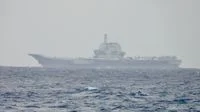
The maritime landscape surrounding Taiwan has entered a period of unprecedented volatility following a sharp escalation in the presence of Chinese government vessels throughout June 2026. This surge, characterized by a significant increase in the deployment of coast guard and research ships, has prompted officials in Taipei to sound the alarm over what they perceive as a deliberate rehearsal for a strategic blockade. According to data released by the Taiwan Coast Guard Administration (CGA), no fewer than 55 Chinese government vessels were detected operating in the waters surrounding the island in June alone. This figure represents a staggering 83% increase from the 30 vessels recorded in May and a 120% jump compared to the 25 vessels observed during the same period in 2025. The intensifying activity is being interpreted by security analysts as a shift in Beijing’s "gray zone" tactics, moving beyond mere intimidation toward testing the logistical feasibility of severing Taiwan’s vital supply lines from its allies in the Pacific.
The Statistical Surge and Strategic Shift
The quantitative jump in vessel activity provides a clear metric for the heightening tensions in the Taiwan Strait and the broader Philippine Sea. Of the 55 vessels identified, a large majority belonged to the China Coast Guard (CCG), supplemented by various "research" vessels which Taipei often identifies as intelligence-gathering platforms. Critically, these figures do not include the near-constant presence of Chinese vessels around Taiwan’s outlying islands, such as Kinmen and Matsu, which sit just kilometers off the Chinese mainland. By focusing the current surge on the main island of Taiwan and its eastern Pacific approaches, Beijing is signaling a capacity to project power far beyond its own coastline.
A senior official from the Taiwan Coast Guard, speaking on the condition of anonymity, noted that the current operational tempo suggests a transition from sporadic incursions to a sustained, high-intensity presence. The official indicated that the frequency and duration of these deployments are designed to exhaust Taiwan’s maritime resources. "If the situation escalates into a blockade, or what is effectively a state of quasi-war, we have comprehensive plans to work in tandem with the Republic of China Navy to jointly protect Taiwan’s vital sea lanes," the official stated. This coordination marks a deepening of the "civil-military" integration within Taiwan’s defense framework, recognizing that the Coast Guard is now the first line of defense against non-kinetic but highly aggressive maneuvers.
Tactical Evolution: The Rise of Maritime Lawfare
Taipei’s assessment of the June surge highlights a sophisticated strategy known as "lawfare." This involves the use of domestic and international legal frameworks—or the unilateral assertion of such frameworks—to justify maritime coercion. By utilizing the Coast Guard rather than the People’s Liberation Army Navy (PLAN) for these incursions, Beijing attempts to frame its actions as "routine law enforcement" within what it considers its sovereign waters. This tactic aims to complicate the response from Taiwan and its international partners, as military intervention against a "civilian" coast guard carries different political and escalatory risks than a direct naval engagement.
Furthermore, the physical makeup of the Chinese fleet has undergone a significant transformation. Taiwanese intelligence reports indicate that many of the CCG vessels currently operating around the island are former naval destroyers and frigates. These ships have been decommissioned from the PLAN, stripped of heavy missile systems, and repainted in CCG livery, yet they retain their high-speed capabilities, structural reinforcement, and advanced radar systems. These "white hulls" are significantly larger and more durable than the majority of Taiwan’s coast guard fleet, allowing them to engage in aggressive "bumping" maneuvers or water cannon attacks with relative impunity.
Testing the Pacific Lifeline
Perhaps the most concerning aspect of the June 2026 data is the increased activity on Taiwan’s eastern flank. Historically, the Pacific side of Taiwan was viewed as a "safe" rear area, providing a gateway for reinforcements and supplies from the United States and Japan. However, the CCG is now frequently operating in pairs outside Taiwan’s Exclusive Economic Zone (EEZ) in the Samudra Pasifik (Pacific Ocean).
This maneuver is seen as a direct challenge to the "First Island Chain" defense strategy. By maintaining a constant presence in the deep waters of the Pacific, China is testing its ability to intercept commercial shipping and military aid before it can reach Taiwanese ports like Kaohsiung or Keelung. A senior Taiwanese security official described this as a form of "expansionism" aimed at unilaterally altering the status quo. "They are trying to create a ‘new normal’ where Chinese jurisdiction is recognized in international waters that are essential for Taiwan’s survival," the official remarked.
The Response from Taipei and the International Community
In response to the surge, the Taiwan Coast Guard has heightened its alert status and increased the frequency of its own patrols. A key component of Taipei’s counter-strategy involves maintaining the flow of information to the commercial sector. Reports have surfaced that Chinese vessels have begun broadcasting radio requests to merchant ships, demanding information on their cargo and destination—an act that mimics sovereign port authority.
Taiwanese authorities have countered this by issuing continuous radio broadcasts to all commercial vessels in the area, advising them to ignore Chinese instructions and maintain their scheduled routes. "They know they currently lack the legal jurisdiction to stop these ships, so they are attempting to create authority out of thin air through intimidation," a government spokesperson said. So far, no commercial shipping companies have reported altering their routes due to these Chinese demands, but the psychological pressure on global trade remains a significant concern.
The international community, particularly the United States and its regional allies, has watched the June developments with increasing apprehension. While the U.S. State Department has not issued a specific statement on the June figures, it has consistently reiterated that any attempt to determine the future of Taiwan by other than peaceful means would be a matter of "grave concern" to the United States. Analysts suggest that the increased Chinese presence is also a response to deepening security cooperation between Taiwan, the U.S., Japan, and the Philippines.
Historical Context and the Path to 2026
To understand the gravity of the June 2026 surge, one must look at the trajectory of cross-strait relations over the past several years. Tensions began to escalate sharply following the August 2022 visit of then-U.S. House Speaker Nancy Pelosi to Taipei, which prompted China to launch large-scale military exercises that effectively encircled the island. Since then, Beijing has steadily increased the frequency of its "Combat Readiness Patrols."
The inauguration of President Lai Ching-te in May 2024 served as another flashpoint. Beijing, which views Lai as a "dangerous separatist," responded with "Joint Sword-2024A" exercises, which explicitly simulated a blockade scenario. The activity observed in June 2026 appears to be a refinement of those exercises—moving from short-term, high-visibility drills to a permanent, grinding presence. This "constriction" strategy is designed to prove that Beijing can control access to Taiwan at any time of its choosing.
Economic and Strategic Implications
Taiwan’s role as the world’s primary hub for advanced semiconductor manufacturing makes any threat of a blockade a global economic issue. A disruption in the shipping lanes surrounding the island would not only affect Taiwan’s 23 million residents but would also paralyze global supply chains for everything from smartphones to automotive components and medical devices.
Furthermore, Taiwan is almost entirely dependent on energy imports. Approximately 98% of its energy needs are met through imported oil and Liquefied Natural Gas (LNG). A successful maritime blockade would exhaust Taiwan’s energy reserves within weeks, forcing the government to make impossible choices between maintaining civilian power and fueling defense operations.
The June surge also carries implications for regional security in the South China Sea. Many of the tactics being deployed against Taiwan—such as the use of "maritime militia" and aggressive coast guard maneuvers—mirror those used by China against the Philippines at Second Thomas Shoal. This suggests a unified maritime strategy by Beijing to assert dominance over the entire region, stretching from the Taiwan Strait to the Spratly Islands.
Conclusion: A Precarious Future
As of late July 2027, the Chinese Ministry of National Defense and the Taiwan Affairs Office (TAO) have remained silent regarding the specific data released by Taipei for the June 2026 period. Beijing continues to maintain its standard position that Taiwan is an inalienable part of China and that all maritime activities in the region are lawful and necessary to protect national sovereignty.
Conversely, the government in Taipei remains steadfast in its assertion that only the people of Taiwan have the right to determine their future. The CGA’s disclosure of the 55-vessel surge is part of a broader "transparency" strategy, intended to alert the world to the changing nature of the threat. By publicizing these numbers, Taipei hopes to garner international support and deter Beijing from moving from "gray zone" harassment to a full-scale kinetic blockade.
The events of June 2026 underscore a fundamental shift in the cross-strait dynamic. The "status quo" that once defined the Taiwan Strait is being eroded by a persistent and growing Chinese maritime presence. For Taiwan, the challenge is no longer just preparing for a hypothetical invasion, but managing a daily reality of maritime encirclement that threatens its economic viability and sovereign autonomy. The coming months will be critical as Taiwan and its allies calibrate their response to a China that is increasingly willing to use its "white hulls" to redraw the map of the Pacific.