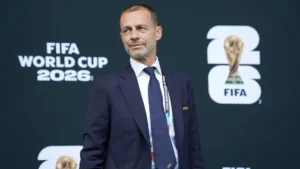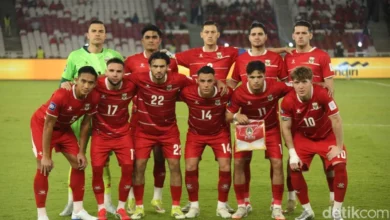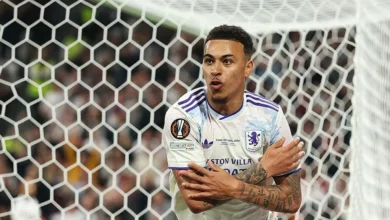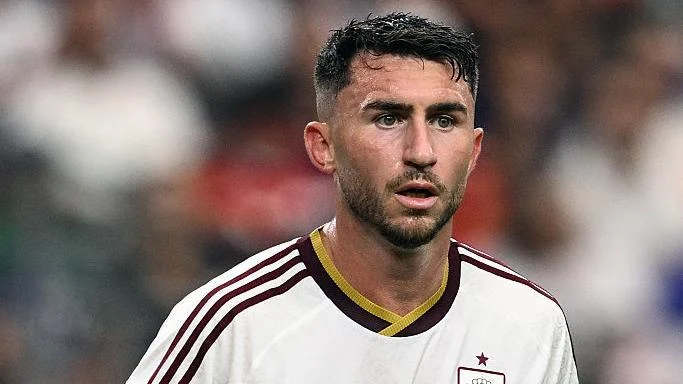
The stage is set for a historic confrontation at the New York New Jersey Stadium as Spain and Argentina prepare to battle for the 2026 FIFA World Cup trophy. However, the build-up to the final has been dominated less by tactical analysis and more by a brewing storm regarding officiating standards and the perceived physical aggression of the Argentine national team. Spain’s veteran center-back, Aymeric Laporte, has broken the pre-match silence to voice significant concerns, calling on the officiating crew to ensure the match does not descend into "chaos" due to unchecked physicality.
As the first 48-team World Cup reaches its climax, the narrative surrounding Argentina’s journey to the final has been polarizing. While Lionel Scaloni’s side has demonstrated the resilience of a defending champion, a trail of frustrated opponents has accused the South American giants of employing "dark arts" and benefiting from a lack of disciplinary action. Laporte’s comments reflect a growing sentiment within the Spanish camp that the final’s integrity depends entirely on the firm hand of the appointed referee, Slavko Vincic.
A Pattern of Disciplinary Immunity
Throughout the 2026 tournament, Argentina has maintained a remarkably clean disciplinary record on paper, despite numerous high-friction encounters. Statistics show that the "Albiceleste" have received only nine yellow cards across six matches and have not seen a single red card. For many observers and former opponents, these numbers do not accurately reflect the intensity and often borderline nature of Argentina’s defensive approach.
From the group stages through to the knockout rounds, teams including Algeria, Egypt, and Switzerland have all lodged informal complaints or made public statements regarding the officiating in their respective matches against Argentina. The common thread in these grievances is the allegation that Argentine players are permitted a level of physical contact that would result in immediate bookings for other teams.
The controversy reached a fever pitch during the semi-final clash against England on July 16. In that match, which Argentina won 2-1, two specific incidents sparked international debate. Just three minutes into the game, midfielder Enzo Fernandez was captured on camera appearing to strike England’s Elliot Anderson in the back of the neck. Despite the proximity of the incident to the play, no card was issued, and VAR did not recommend an on-field review for a potential red card.
Furthermore, Argentina’s decisive second goal remains a point of contention. Fan-captured footage and broadcast replays suggested that Lionel Messi may have committed a foul on Djed Spence to regain possession just seconds before delivering the cross that led to Lautaro Martinez’s goal. Despite the protests from the English bench and the availability of multiple camera angles, the goal stood without a formal VAR intervention, leading to accusations of "preferential treatment" for the tournament’s biggest stars.
Laporte’s Call for Order
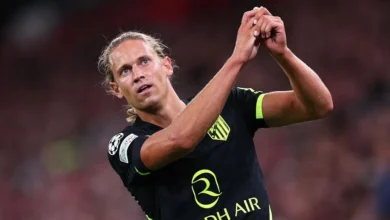
Speaking to the Spanish outlet Marca and later quoted by the BBC, Aymeric Laporte was candid about the challenges Spain expects to face in the final. The Al-Nassr defender emphasized that the responsibility for a fair game lies squarely with the officials.
"It is the referee’s job to control these things so that the situation does not get out of hand," Laporte stated. "If one or two players are allowed to act like that, the match will turn into chaos. I am not at all worried about aggression in a football context. If it is within the rules and the referee does his job, I have no problem with it. However, it is true that in recent matches we have seen things that have really surprised us—actions that were allowed to go unpunished."
Laporte specifically highlighted Argentina’s reputation for intimidating opponents through physical presence. "Especially with Argentina, they are a team that likes to leave a mark on their opponents. That kind of thing should not be allowed in football—especially in major competitions—because it can make you nervous and angry," he added.
His comments are seen by analysts as a strategic move to place the officiating crew under the spotlight before the first whistle. By vocalizing these concerns, Spain hopes to ensure that the referee, Slavko Vincic, is hyper-aware of any off-the-ball incidents or tactical fouls that have characterized Argentina’s defensive transitions in previous rounds.

Chronology of Controversies in the 2026 Campaign
To understand the weight of Laporte’s concerns, one must look at the timeline of incidents involving Argentina during this tournament:
- Group J vs. Algeria (June 16): A pivotal moment occurred when Lionel Messi tackled Aissa Mandi from behind. While the tackle halted a promising Algerian counter-attack, the referee opted for a verbal warning rather than a booking. Algerian media later described the lack of a card as "inexplicable."
- Round of 16 vs. Egypt: Following a narrow Argentine victory, the Egyptian coaching staff pointed to a VAR inconsistency. In their match, a play was reviewed two minutes after it occurred to penalize an Egyptian player, yet similar checks were reportedly bypassed when Argentine defenders engaged in heavy contact inside their own box.
- Quarter-final vs. Switzerland: The Swiss side voiced frustration over "persistent infringement," noting that several Argentine players committed multiple fouls without receiving the cumulative yellow cards typically seen in FIFA-sanctioned matches.
- Semi-final vs. England (July 16): The Enzo Fernandez incident and the Spence-Messi foul became the most high-profile examples of the "immunity" narrative, leading to a surge of social media criticism and calls for transparency in VAR communications.
The Official at the Center: Slavko Vincic
The man tasked with managing the high-pressure final is Slovenia’s Slavko Vincic. An experienced UEFA Elite category referee, Vincic is no stranger to high-stakes matches, having officiated the 2024 UEFA Champions League Final. However, the New York New Jersey Stadium will present a unique challenge.
The "New York New Jersey Stadium" (MetLife Stadium) is expected to be a cauldron of noise, with a significant Argentine contingent likely to create a hostile atmosphere for the officials. Vincic’s history suggests he is a referee who prefers to let the game flow, but in the context of Laporte’s warnings, his threshold for physical contact will be scrutinized from the opening minute.
FIFA’s refereeing committee has reportedly held briefings to address the consistency of VAR interventions following the semi-final controversies. While FIFA officially maintains total confidence in its officials, the public outcry following the England-Argentina match has made the final a litmus test for the technology’s effectiveness in the 48-team era.
Tactical and Psychological Implications
Beyond the officiating, the final represents a clash of two distinct footballing philosophies. Luis de la Fuente’s Spain has reached the final by playing a modernized version of "Tiki-Taka," prioritizing ball retention, wide play through young stars, and technical precision. Argentina, conversely, has blended Messi’s creative genius with a gritty, combative midfield designed to disrupt the opponent’s rhythm.
If Laporte’s fears come true and the referee allows a high level of physical aggression, Spain’s technical players could find it difficult to establish their passing game. On the other hand, if Vincic adheres to a strict interpretation of the rules, Argentina may find several of their key enforcers—such as Rodrigo De Paul or Cristian Romero—in early disciplinary trouble, which would drastically alter their defensive structure.
Psychologically, Laporte’s comments serve a dual purpose. They act as a warning to the referee, but they also serve to steady the nerves of his own teammates. By acknowledging the "provocations" early, Spain is mentally preparing for a battle of attrition.
A Landmark Tournament Conclusion
The 2026 World Cup Final marks the conclusion of the most expansive tournament in football history. With 48 teams and matches spread across three nations, the event has been a commercial juggernaut. However, the "fair play" narrative remains the most critical component for FIFA’s brand.
The match is scheduled to kick off on Monday, July 20, at 02:00 WIB (Sunday evening local time in New Jersey). As billions tune in, the eyes of the world will be on Lionel Messi as he seeks a fairy-tale second consecutive title, and on a Spanish side looking to reclaim the throne they last held in 2010.
Ultimately, the result may hinge on whether the game is decided by a moment of individual brilliance or a controversial whistle. For Aymeric Laporte and the Spanish national team, the hope is that when the dust settles in New Jersey, the headlines will be about the football, and not the "chaos" they so desperately wish to avoid.