Fadil Wijaya Secures Class F3 Victory and Top 20 Overall Finish at the 2026 National Sprint Rally Championship Opening Round in Deli Serdang

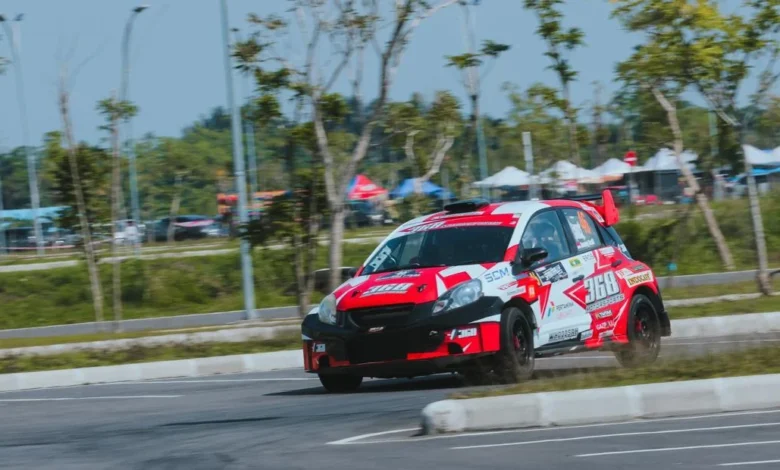
The opening round of the 2026 National Sprint Rally Championship, held at the Sport Center Sumut in Deli Serdang, North Sumatra, delivered a narrative of technical precision and underdog triumph as Fadil Wijaya steered a modified Honda Brio to a dominant class victory. Competing against a field largely populated by high-performance four-wheel-drive (4WD) vehicles and FIA-homologated rally cars, Wijaya and his co-driver, Awang Dedy, managed to break into the overall top 20, a feat that has sparked significant discussion within the Indonesian motorsport community. Representing East Kalimantan, the duo demonstrated that strategic mechanical optimization and consistent stage times could bridge the gap between grassroots-based city cars and purpose-built racing machinery.
The Deli Serdang circuit, known for its challenging terrain and technical corners, served as the ultimate proving ground for the first series of the 2026 season. Among the 51 entrants who took to the dirt and gravel, Wijaya’s Honda Brio stood out not for its size, but for its agility and surprising pace. While the upper echelons of the leaderboard are typically reserved for Mitsubishi Evos, Subaru Imprezas, and the modern Rally2 or AP4 category cars, Wijaya’s performance proved that a well-tuned front-wheel-drive (FWD) platform remains a formidable contender in the right hands.
Technical Specifications and Mechanical Strategy
The success of the Wijaya-Dedy pairing was rooted in a meticulously planned mechanical setup that prioritized reliability and handling over raw horsepower. The Honda Brio, originally designed as an urban city car, underwent extensive modifications to meet the rigorous demands of the National Sprint Rally regulations. Central to this transformation was the heart of the vehicle: the original engine was replaced with a 1.5-liter powerplant sourced from a Honda Jazz. This engine choice is a popular modification in the Indonesian touring and rally scenes due to its high tuning potential, favorable power-to-weight ratio, and compatibility with the Brio’s engine bay.
Beyond the engine, the vehicle’s ability to navigate the uneven surfaces of the Sport Center Sumut track was attributed to its sophisticated suspension system. The team utilized Aragosta suspension components, which were specifically calibrated for the Deli Serdang terrain by Whooosah Tuning in collaboration with renowned specialist Arce Meyer. This setup allowed the Brio to maintain maximum tire contact with the ground during high-speed transitions and heavy braking zones, a critical factor in a sport where seconds are lost in the dust of a poorly handled corner.
Fadil Wijaya noted that the vehicle’s current configuration was an evolution of the previous year’s efforts. Rather than pursuing radical new technologies, the team focused on refining a proven setup. According to Wijaya, the engine and suspension settings remained largely consistent with the 2025 season, as evaluations showed the setup had reached an optimal balance of speed and durability. This "if it isn’t broken, don’t fix it" philosophy allowed the driver to focus entirely on his line and timing rather than adjusting to new mechanical temperaments.
Chronology of the Race: A Study in Consistency
The 2026 National Sprint Rally opening round was divided into four Special Stages (SS), spanning two legs of competition. Wijaya’s path to the Class F.3 (2WD) title was marked by remarkable consistency, a trait often more valuable in rally than occasional bursts of extreme speed.
In Special Stage 1 (SS1), Wijaya clocked a time of 5 minutes and 28.8 seconds. This initial run served as a reconnaissance of the track’s evolving conditions, allowing the team to gauge the grip levels of the North Sumatran soil. By Special Stage 2 (SS2), the duo found their rhythm, shaving nearly five seconds off their previous time to record a 5 minute and 24.1 second run. This improvement was crucial in solidifying their position within the top 20 of the overall standings.
As the competition progressed into the second leg, the track surface began to degrade, a common occurrence in sprint rallies as dozens of cars churn up the dirt. Despite the worsening conditions, Wijaya maintained a steady pace. In Special Stage 3 (SS3), he recorded a time of 5 minutes and 25.2 seconds, followed by a final run in Special Stage 4 (SS4) of 5 minutes and 27.5 seconds.
The cumulative time across all four stages totaled 21 minutes and 45.6 seconds. This performance secured Wijaya and Dedy the 18th position out of 51 total participants. More importantly, it placed them at the top of Class F.3, a category specifically for two-wheel-drive vehicles with engine capacities ranging from 1,601cc to 2,500cc, or 1,400cc turbocharged engines. Although the Brio’s 1.5-liter engine put it at a theoretical displacement disadvantage within the class limits, its lightweight chassis and superior suspension tuning more than compensated for the deficit.
The Competitive Landscape of Class F.3
The Class F.3 victory is particularly significant for Fadil Wijaya, marking his first time standing on the highest step of the podium. While he has been a frequent podium finisher in previous seasons, the top spot had remained elusive until the Deli Serdang event. The victory serves as a validation of his career trajectory and his team’s technical expertise.
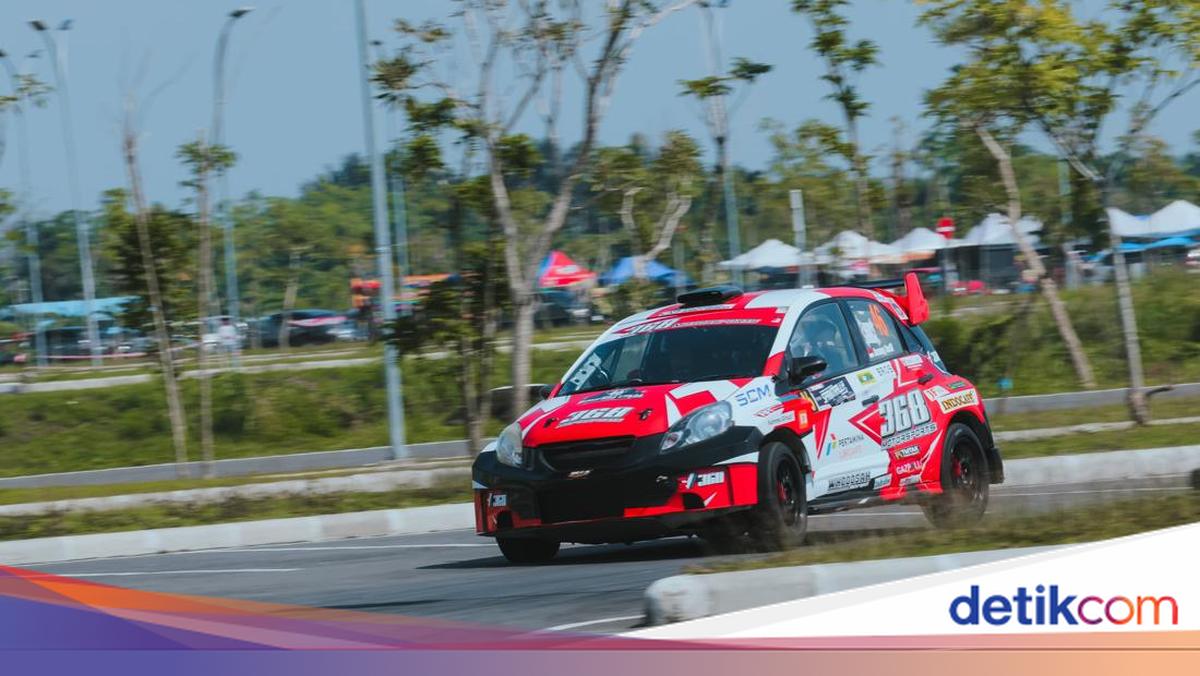
The competition in the F-series (Front-wheel drive/Two-wheel drive) is often considered the most "pure" form of rallying by enthusiasts, as drivers cannot rely on the sophisticated differentials and power delivery of 4WD systems to correct mid-corner mistakes. In Class F.3, drivers must manage torque steer and front-end grip with extreme precision. Wijaya’s ability to outpace drivers in more powerful machinery highlighted his growth as a technical driver who understands how to "carry speed" through corners—a necessity when competing against cars that can accelerate out of turns with four-wheel traction.
The 2026 field was particularly dense with talent, featuring several FIA-homologated RC cars. These vehicles are built to international standards and often represent a much higher financial investment than the modified production cars like Wijaya’s Brio. By finishing 18th overall, Wijaya effectively beat several 4WD and homologated cars, earning him the "giant killer" reputation for the weekend.
Strategic Objectives and Driver Reflection
Following the conclusion of the event, Fadil Wijaya expressed satisfaction with the results, citing that his pre-race goals had been met. "Looking at the total of 51 participants, I had a target to break into the top 20," Wijaya stated. This goal was not based on mere optimism but on data gathered during practice sessions. Wijaya observed that his practice times were consistently fast and, more importantly, repeatable.
The driver’s strategy focused on "maintaining" rather than "over-driving." In rally, over-driving—pushing a car beyond its physical limits—often leads to mechanical failure or crashes. By trusting the setup provided by Whooosah Tuning and Arce Meyer, Wijaya was able to drive at 95% of the car’s limit consistently, which ultimately proved faster than rivals who were erratic in their pursuit of speed.
Co-driver Awang Dedy also played a pivotal role. In the tight and technical sections of the Sport Center Sumut track, the synchronization between driver and co-driver is paramount. Accurate pace notes allowed Wijaya to commit to blind corners and high-speed sections with the confidence that the Brio would remain on the racing line.
Broader Implications for Indonesian Motorsport
The 2026 National Sprint Rally Championship in Deli Serdang is a cornerstone of the Indonesian Motor Association’s (IMI) efforts to revitalize regional motorsport. North Sumatra has a storied history with rallying, having hosted rounds of the World Rally Championship (WRC) in the 1990s. Returning to this region for the national opener signals a desire to tap into that local passion and provide a challenging environment for the nation’s best drivers.
Wijaya’s success in a Honda Brio also carries an economic and developmental message for the sport. It demonstrates that the barrier to entry for competitive rallying does not necessarily require the purchase of a multi-billion rupiah Rally2 car. With the right choice of base vehicle, such as a widely available hatchback, and the application of expert tuning in areas like suspension and engine swaps, local drivers can be competitive at a national level. This "grassroots-to-pro" pipeline is essential for the sustainability of the sport in Indonesia.
Furthermore, the involvement of local tuning houses like Whooosah Tuning showcases the maturity of the Indonesian automotive aftermarket industry. The ability to take a city car and engineer it to survive the brutal impacts and high-RPM demands of a sprint rally speaks to a high level of domestic technical capability.
Looking Ahead to the 2026 Season
As the championship moves forward from the red soil of Deli Serdang to future rounds across the archipelago, Fadil Wijaya and Awang Dedy have established themselves as the pair to beat in the 2WD categories. Their performance has set a benchmark for consistency that other teams will now have to chase.
For the organizers, the success of the opening round in North Sumatra provides a positive outlook for the rest of the 2026 calendar. The high participation rate and the variety of vehicles—from modified city cars to top-tier rally machines—indicate a healthy and diverse ecosystem.
As for Wijaya, the focus now shifts to maintaining this momentum. With the F.3 class trophy in hand and a top 20 overall finish on his resume, the challenge will be to adapt his Honda Brio to the different terrains of upcoming rounds, whether they be the fast plantations of South Sumatra or the technical hills of West Java. If the Deli Serdang opener is any indication, the "crazy" Honda Brio and its disciplined crew are ready to continue their giant-killing streak throughout the 2026 season.