Timnas Indonesia Shows Early Aggression Under John Herdman as Strategic Efficiency Redefines the Garuda Squad Ahead of 2026 AFF Cup


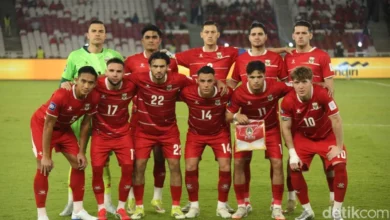
The Indonesian national football team, affectionately known as the Garuda squad, has undergone a significant tactical metamorphosis since the appointment of John Herdman as head coach. Statistical analysis of the team’s recent performances reveals a striking trend: a high-intensity offensive strategy that yields immediate results in the opening stages of the match. Under Herdman’s stewardship, Indonesia has developed into a formidable force in the first half, characterized by a "blitzkrieg" approach that often leaves opponents struggling to find their footing. This newfound aggression has not only boosted the team’s goal-scoring output but has also shifted the psychological dynamics of their fixtures, establishing the Merah Putih as a proactive side that dictates the tempo from the opening whistle.
Since Herdman took the helm, Indonesia has participated in four international fixtures, recording a total of eight goals while failing to score on only one occasion. This productivity is rooted in a structured attacking philosophy that prioritizes early pressure and vertical transitions. The results speak for themselves: dominant victories over Saint Kitts & Nevis (4-0) and Oman (3-0), a disciplined narrow win against Mozambique (1-0), and a solitary, hard-fought loss to Bulgaria (0-1). These outcomes reflect a team that is becoming increasingly comfortable against diverse styles of play, ranging from the physical presence of European sides to the technical agility of Middle Eastern and African opponents.
The Statistical Breakdown: The Golden First Half
A granular look at the timing of Indonesia’s goals under John Herdman illustrates a clear preference for early dominance. Out of the eight goals scored during this period, five were converted before the halftime whistle. This suggests that the technical staff places a heavy emphasis on pre-match preparation and tactical scouting, allowing the players to exploit specific defensive weaknesses in the opposition immediately after kickoff.
The first 15 minutes of play have proven to be the most fruitful for the Garuda squad. Three goals were scored within this window, representing 37.5% of their total output. This "fast start" mentality is a hallmark of Herdman’s coaching style, which encourages high-pressing and rapid ball circulation to catch defenders off-guard. The momentum typically carries through the first half-hour, with an additional two goals scored between the 16th and 30th minutes. Interestingly, the data shows a lull in the final 15 minutes of the first half (31-45 minutes), where the team has yet to find the back of the net. This could be attributed to a tactical consolidation phase where the team focuses on maintaining their lead and managing energy levels before the interval.
The second half performance remains respectable but shows a slight dip in frequency. Two goals were scored between the 46th and 60th minutes, often the result of halftime adjustments and fresh tactical instructions. Only one goal was recorded in the 61st to 75th-minute bracket, and the team has yet to score in the final 15 minutes of regulation time (76-90 minutes). While the early-game efficiency is a major asset, the lack of late-game goals may become a point of analysis for the coaching staff as they look to ensure the team can close out matches with insurance goals or mount late comebacks if necessary.
The Rise of Ole Romeny and the Naturalization Strategy
A pivotal element of Indonesia’s recent offensive success is the integration of high-caliber talent, most notably Ole Romeny. The striker has emerged as the most prolific player under Herdman’s tenure, accounting for three of the team’s eight goals. Romeny’s presence in the final third provides Indonesia with a clinical edge that has historically been a missing piece of the puzzle. His ability to find space in crowded penalty areas and his composure in front of goal have made him the focal point of the Garuda’s attacking transitions.
The success of Romeny also highlights the effectiveness of the Football Association of Indonesia’s (PSSI) ongoing strategy to recruit players of Indonesian descent playing in professional leagues abroad. By blending the tactical discipline and physical conditioning of European-trained players with the flair and passion of domestic talents, Herdman has managed to create a cohesive unit that operates with a higher level of tactical maturity. The synergy between the "naturalized" players and the local mainstays has been seamless, fostering a competitive environment where every position is earned through performance.
Chronology of the John Herdman Era: Four Matches of Growth
The journey under John Herdman began with a challenging encounter against Bulgaria. Although the match ended in a 0-1 defeat, it served as a vital litmus test for the squad. Facing a European opponent known for defensive organization, Indonesia showed glimpses of the high-press system Herdman desired. Despite the loss, the coaching staff identified the need for more clinical finishing and quicker decision-making in the final third—lessons that would be applied in subsequent matches.
The turning point came during the fixture against Saint Kitts & Nevis. Indonesia unleashed a relentless offensive display, securing a 4-0 victory. This match showcased the "quick goal" philosophy, with the team breaking the deadlock early and never looking back. It was here that the statistical trend of early-match dominance began to solidify.
Following the success in the Caribbean, Indonesia faced a significant challenge against Oman, a team traditionally ranked higher in the FIFA standings. In what many analysts consider the most impressive performance of the Herdman era to date, Indonesia secured a 3-0 win. The victory was a testament to the team’s defensive solidity and their ability to punish the opposition on the counter-attack. The final match in this four-game sequence was a 1-0 victory over Mozambique, a gritty performance that proved the team could also win tight, low-scoring affairs through disciplined game management.
Tactical Implications and the Herdman Philosophy
John Herdman, known for his transformative work with the Canadian national team, has brought a modern, data-driven approach to Indonesian football. His philosophy centers on "total engagement," where every player on the pitch has specific defensive and offensive responsibilities regardless of their nominal position. This fluidity makes Indonesia difficult to mark, as full-backs often overlap to become wingers, and midfielders drop deep to initiate play.
The emphasis on the first 15 minutes is a psychological tactic as much as a physical one. By scoring early, Indonesia forces the opposition to abandon their original game plan. Opponents who intended to sit deep and defend are suddenly forced to push forward in search of an equalizer, leaving gaps in their defense that Indonesia’s pacey attackers, like Romeny, can exploit. However, the drop-off in the final stages of the match suggests that the high-intensity press is physically demanding. Maintaining this level of output for a full 90 minutes remains the primary challenge for the conditioning coaches.
Preparation for the 2026 AFF Cup: The Road to Pakansari
The statistical trends and tactical evolutions observed in these four matches serve as the backdrop for Indonesia’s upcoming campaign in the 2026 AFF Cup. Placed in Group A, the Garuda squad is set to face Cambodia in their opening fixture at the Pakansari Stadium in Bogor, West Java. Scheduled for Monday, July 27, 2026, at 20:30 WIB, the match is a crucial opportunity for Indonesia to assert its dominance in the Southeast Asian region.
The choice of Pakansari Stadium is significant. Known for its passionate atmosphere and modern facilities, the venue has been a fortress for the national team in the past. Playing in front of a home crowd will likely amplify the team’s "early start" tendencies. The Indonesian public, buoyed by the recent string of positive results, expects nothing less than a commanding performance.
Observers are keen to see if Herdman will stick to his aggressive early-game blueprint against Cambodia. While Cambodia has shown improvement in recent years, Indonesia enters the match as the clear favorite. A quick goal in the opening minutes would not only settle the nerves of the home supporters but would also send a clear message to other contenders in the tournament, such as Thailand and Vietnam, that the Garuda squad is ready to reclaim its status as a regional powerhouse.
Broader Impact and Future Outlook
The "Herdman Effect" extends beyond the scoreline. There is a palpable sense of optimism surrounding Indonesian football that has not been seen in decades. The professionalization of the national team’s setup, the strategic recruitment of diaspora players, and the implementation of a clear tactical identity have contributed to a rise in the FIFA rankings and increased interest from international scouts.
The implications of this early-scoring trend are profound for the long-term development of the squad. It demonstrates a level of tactical discipline and mental focus that is often the difference between mid-tier teams and elite contenders. If Indonesia can maintain its first-half lethality while improving its late-game stamina and scoring consistency, the team will be well-positioned not just for the AFF Cup, but for the more grueling stages of World Cup qualification.
As the match against Cambodia approaches, the focus remains on the "Menit-menit Gol" (Goal Minutes). The data is clear: Indonesia is at its most dangerous when the whistle first blows. Whether they can sustain this momentum and translate these statistics into silverware remains the ultimate test for John Herdman and his players. For now, the Garuda flies high, powered by a philosophy of speed, precision, and an unrelenting desire to strike first.