Timnas Indonesia Secures Decisive 3-0 Victory Over Bali United as Coach John Herdman Refines Tactical Identity Ahead of 2026 ASEAN Cup

The Indonesian National Team concluded its intensive training camp on a high note, registering a convincing 3-0 victory against local giants Bali United in a closed-door friendly match. The fixture, which served as the final litmus test for the squad before the upcoming 2026 ASEAN Cup, provided head coach John Herdman with crucial insights into the team’s tactical progression and physical readiness. Played at the state-of-the-art Bali United Training Center in Gianyar on Tuesday, July 21, 2026, the match showcased a dominant performance by the "Garuda" squad, with goals coming from a mix of veteran leadership and emerging talent.
The scoring was opened by seasoned midfielder Marc Klok, whose experience proved vital in controlling the tempo of the game. The lead was later doubled by the agile Dony Tri Pamungkas, before Mitchell Baker sealed the victory with a clinical third goal. While the scoreline reflected Indonesia’s superiority on the pitch, Herdman emphasized that the primary objective of the encounter was not merely the result, but the implementation of a specific tactical blueprint and the distribution of playing time across the entire roster.
Tactical Evolution and Herdman’s Vision
Since taking the reins of the Indonesian National Team, John Herdman has been vocal about establishing a distinct "footballing identity" for the Southeast Asian nation. The English tactician, known for his success with the Canadian national team, has focused on a high-intensity, transitional style of play that leverages the speed and technical proficiency of Indonesian players.
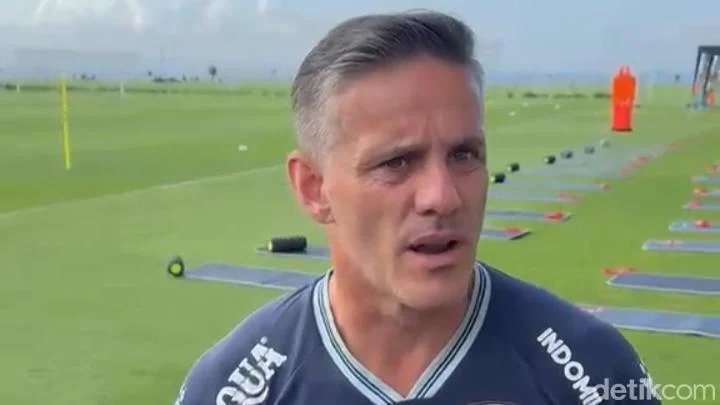
Speaking after the match, Herdman expressed profound satisfaction with how the players translated training ground drills into a competitive environment. "Today was a very strong performance from the group," Herdman stated in an official release shared by the Football Association of Indonesia (PSSI). "One of our primary goals for this friendly was to ensure that every player received valuable minutes on the pitch. Managing fatigue and ensuring match fitness across the 26-man squad is essential when heading into a tournament as demanding as the ASEAN Cup."
Herdman noted that the "tactical identity" he has been preaching is finally beginning to manifest. Throughout the 90 minutes, Indonesia demonstrated a disciplined defensive structure coupled with rapid counter-attacking movements. The integration of Mitchell Baker into the attacking line has added a new dimension to the team’s offensive output, providing a physical presence that complements the flair of domestic-based stars like Dony Tri Pamungkas.
Chronology of the Training Camp and Match Dynamics
The friendly against Bali United was the culmination of a two-week training intensive held in the cooler climates of Bali. This period was designed to build chemistry among the players, many of whom have been balancing club commitments in various international and domestic leagues.
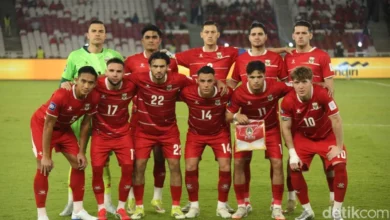
The match itself was structured to allow Herdman to experiment with different personnel groupings. In the first half, Indonesia fielded what many observers believe to be the "core" starting eleven. Marc Klok’s opening goal was the result of a sustained period of pressure, highlighting the team’s improved ability to break down organized defensive blocks—a common challenge Indonesia faces in regional competitions.
In the second half, Herdman made wholesale changes, introducing younger prospects and testing the squad’s depth. Dony Tri Pamungkas, representing the next generation of Indonesian football, showcased his growth by finding the back of the net through a well-timed run into the box. The final goal by Mitchell Baker served as a testament to the team’s relentless pursuit of excellence, even in the closing stages of a friendly match.
The choice of Bali United as an opponent was strategic. As one of the most successful clubs in Liga 1, Bali United provided a physical and tactical challenge that mimicked the intensity of international football. The use of their private training facility in Gianyar also ensured that the national team could work in a controlled, professional environment away from the distractions of the capital.
Player Performance and Squad Depth
The 3-0 victory highlighted the current health of the Indonesian squad. Marc Klok remains the heartbeat of the midfield, providing a bridge between the defense and the attack. His leadership is particularly valued by Herdman, who relies on senior figures to mentor the younger players during the high-pressure environment of international tournaments.
Dony Tri Pamungkas’s development continues to be a focal point for the national team. Having risen through the youth ranks, his ability to compete at the senior level provides Indonesia with versatility on the flanks. Meanwhile, the inclusion of Mitchell Baker represents PSSI’s ongoing strategy of integrating players with international experience to elevate the overall standard of the team. Baker’s physicality and clinical finishing are seen as the "missing pieces" in an Indonesian side that has historically struggled with conversion rates in the final third.
Herdman’s comments regarding "tactical identity" also suggest a shift toward a more proactive style of play. Rather than sitting deep and waiting for mistakes, the 2026 iteration of the Garuda squad appears more comfortable in possession and more aggressive in their pressing triggers.
Historical Context: The Quest for the ASEAN Cup
The 2026 ASEAN Cup, officially known as the ASEAN Hyundai Cup for sponsorship reasons, represents a significant opportunity for Indonesia to break its long-standing title drought. Despite being one of the most passionate footballing nations in the region, Indonesia has famously finished as runners-up on multiple occasions but has yet to lift the trophy.
The 2026 edition is viewed by PSSI and the Indonesian public as a "must-win" tournament. Under Herdman’s guidance, the team has seen a steady rise in the FIFA World Rankings and has performed admirably in World Cup Qualifiers. The friendly win over Bali United serves as a confidence booster, signaling that the team is peaking at the right time.
The tournament schedule will see Indonesia start their campaign at home. They are scheduled to host Cambodia at the Pakansari Stadium in Bogor on July 27. Pakansari has long been a fortress for the national team, and a capacity crowd is expected to cheer on the Garuda as they begin their quest for regional glory.
Infrastructure and Preparation Standards
The success of the current training camp is also a reflection of the improved infrastructure available to the national team. The Bali United Training Center, located on the shores of Gianyar, features multiple FIFA-standard pitches and recovery facilities. Herdman has previously praised the quality of the pitches, noting that they allow for the high-speed passing game he demands.
PSSI’s decision to localize the final phase of preparation in Bali allowed the team to avoid the logistical hurdles of international travel, ensuring the players remained fresh. The five-day window following the Bali United match will be used for tactical "fine-tuning" and set-piece analysis. Herdman emphasized that while the foundations are solid, there are still minor adjustments needed to ensure the team is "tournament-ready."
"We still have five days of work ahead of us," Herdman added. "This time will be used to sharpen our execution and ensure that every player understands their specific role in various game scenarios. The growth we saw today is encouraging, but the real test begins in Bogor."
Analysis of Implications and Future Outlook
The 3-0 win provides more than just a morale boost; it provides data. Herdman and his coaching staff utilize advanced GPS tracking and video analysis to monitor player movements and tactical adherence. The data from the Bali United match will likely dictate the final starting lineup for the opening match against Cambodia.
From a strategic standpoint, Indonesia’s depth is perhaps at an all-time high. The ability to field two distinct lineups without a significant drop in quality is a luxury that previous Indonesian coaches rarely enjoyed. This depth will be vital in a tournament format where matches are played every few days, requiring heavy rotation to maintain intensity.
Furthermore, the public perception of the national team is at a fever pitch. The "Herdman Era" has brought a sense of professionalism and tactical sophistication that has resonated with fans. A convincing win in a friendly, even one played behind closed doors, helps maintain the positive momentum that has been building over the last year.
As the team departs Bali for West Java, the focus shifts entirely to the ASEAN Hyundai Cup. The match against Cambodia is viewed as a vital "three points" to set the tone for the group stages. With a refined tactical identity, a fit squad, and a clear vision from the coaching staff, Timnas Indonesia appears better prepared than ever to challenge the regional status quo and finally claim the elusive ASEAN title.
The journey beginning on July 27 at Pakansari Stadium will be the true measure of Herdman’s work. For now, the 3-0 victory over Bali United stands as a testament to a team that is disciplined, hungry, and tactically evolving—a side that finally seems to know exactly who they are on the pitch.