Morgan Rogers Finalizes Record Breaking Move to Chelsea and Expresses Enthusiasm for Iconic Goal Celebration Partnership with Cole Palmer

The landscape of the Premier League has been reshaped once again as Chelsea Football Club officially announced the marquee signing of Morgan Rogers from Aston Villa for a staggering transfer fee of £117 million. The move, which represents one of the most significant financial outlays in the history of the London club, sees Rogers transition to Stamford Bridge on a long-term contract. Upon his arrival, the highly-rated forward was handed the number 17 jersey, a move that signals his intended importance to the starting lineup. The transfer has ignited a wave of excitement among the Chelsea faithful, not only for Rogers’ tactical prowess on the pitch but also for the prospect of a burgeoning partnership with his long-time friend and former teammate, Cole Palmer.
While the signing has been finalized, supporters will have to wait a brief period before seeing the two stars share the pitch. Rogers has been granted an extended period of leave by the Chelsea coaching staff following his rigorous summer schedule with the England national team during the 2026 FIFA World Cup. In contrast, Cole Palmer is set to join the squad immediately for Chelsea’s highly anticipated pre-season tour of Asia, which includes a high-profile fixture in Jakarta next month. Despite the temporary separation, the narrative surrounding the duo has centered on their shared identity—specifically, their identical "shiver" goal celebration, which has become a viral sensation across global football media.
The Evolution of a Shared Identity: The Cold Celebration
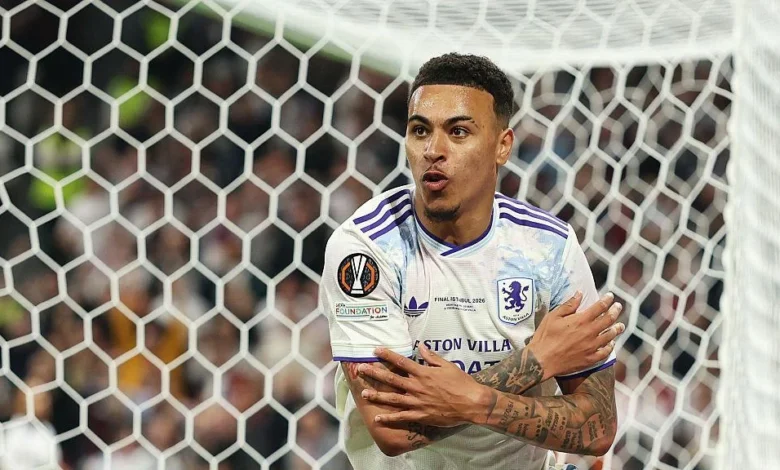
The "Cold" or "shiver" celebration, characterized by a player rubbing their arms as if enduring freezing temperatures, was originally popularized by Cole Palmer during his breakout seasons at Chelsea. However, Morgan Rogers has frequently utilized the same gesture during his prolific tenure at Aston Villa. The similarity is no coincidence; both players rose through the ranks of the Manchester City academy together, developing a close bond that transcends club rivalries.
In his first official interview with Chelsea TV, Rogers addressed the lighthearted controversy surrounding the celebration. "We haven’t spoken about the celebration yet, but it’s actually funny. I’m sure it will be discussed in the future," Rogers remarked with a smile. "Hopefully, we can both score a lot of goals so that we both have the opportunity to do it together—I can’t wait!" This statement has fueled speculation that the duo may debut a synchronized version of the celebration once Rogers joins the squad for the start of the 2026-2027 Premier League campaign.
The cultural impact of the celebration has been significant. Marketing experts suggest that the "Cold" brand could be a lucrative asset for Chelsea, as both players are seen as icons of the next generation of English football. By bringing Rogers to West London, Chelsea has effectively cornered the market on this specific brand of charisma, further cementing their status as a club that prioritizes both elite talent and marketable personality.
Strategic Tactical Integration at Stamford Bridge
From a tactical perspective, the acquisition of Morgan Rogers for £117 million is a calculated move to bolster Chelsea’s offensive versatility. Under the current managerial regime, Chelsea has shifted toward a high-pressing, fluid attacking system that requires forwards to be adept at both central and wide roles. Rogers, who excelled at Aston Villa as a dynamic playmaker and clinical finisher, fits this profile perfectly.
During the 2025-2026 season, Rogers recorded 18 goals and 12 assists in all competitions, making him one of the most productive players in Europe. His ability to drive forward from midfield and his spatial awareness in the final third complement Cole Palmer’s vision and passing range. Analysts suggest that Rogers’ presence will alleviate the defensive pressure often concentrated on Palmer, as opposing teams will now have to contend with two elite creators who share an almost telepathic understanding of each other’s movement.
The inclusion of Rogers into the squad also provides Chelsea with a physical edge. Standing at over 6 feet tall, Rogers possesses the strength to hold off defenders in the Premier League, a trait that allowed him to dominate transitions while at Villa Park. His integration into the Chelsea system is expected to focus on a "fluid front three" where he, Palmer, and a central striker can rotate positions to exploit gaps in the opposition’s defensive line.
Financial Implications and the £117 Million Benchmark
The £117 million fee paid to Aston Villa marks a historic moment for both clubs. For Aston Villa, the sale represents a massive return on investment, showcasing their ability to develop top-tier talent and negotiate from a position of strength. For Chelsea, the move is a bold statement of intent following a period of mixed results in domestic competitions.
The financial structure of the deal is reportedly spread over several years to comply with Profit and Sustainability Rules (PSR), yet the sheer scale of the figure highlights Chelsea’s commitment to securing the best English talent available. The deal also includes various performance-related add-ons that could see the total value rise even further if Rogers achieves specific milestones, such as winning the Premier League or the UEFA Champions League.

Industry insiders note that the "English premium" played a role in the valuation. With the 2026 World Cup having recently concluded, the value of England’s core players has reached an all-time high. Rogers’ performances on the world stage—where he was instrumental in England’s deep run—solidified his status as a "must-have" asset for a club with Chelsea’s ambitions.
The Road to Jakarta: Pre-Season and Global Branding
While Rogers recovers from his international exploits, the focus shifts to Chelsea’s pre-season tour in Jakarta, Indonesia. The tour is a cornerstone of Chelsea’s strategy to expand its footprint in the Southeast Asian market, a region where the club enjoys immense popularity. Cole Palmer is expected to be the face of the tour, with fans in Jakarta eager to see the "Cold" celebration in person.
The absence of Rogers from the Jakarta leg of the tour is a strategic decision to ensure his long-term fitness. After a grueling season and a high-stakes World Cup, the medical staff at Cobham insisted on a mandatory rest period. However, Rogers is expected to join the team for the final stages of the pre-season in the United States before the Premier League season opener.
The tour in Jakarta serves as more than just a fitness exercise; it is a vital commercial venture. Chelsea’s presence in Indonesia is expected to generate significant revenue through merchandising and local sponsorships. The hype surrounding the Rogers signing will undoubtedly boost interest in the tour, even if the player himself is not physically present in Jakarta. Fans in the region have already begun purchasing the new home kit with "Rogers 17" emblazoned on the back, signaling a successful start to his commercial life at the club.
Chronology of the Transfer: From Villa Park to Stamford Bridge
The journey of Morgan Rogers to Chelsea has been a months-long saga that began in the winter transfer window of 2025. Initially, Aston Villa was reluctant to part with their star asset, rejecting several opening bids from various European giants. However, as Rogers’ form continued to skyrocket, the inevitability of a move to a "Big Six" club became apparent.
- January 2026: Initial inquiries were made by Chelsea, but Villa maintained a "not for sale" stance during their own push for Champions League qualification.
- May 2026: Rogers finishes the season as Villa’s top contributor, leading the club to a top-four finish.
- June 2026: Rogers stars for England in the 2026 World Cup, scoring crucial goals in the knockout stages. His market value surges.
- July 2026 (Early): Chelsea opens formal negotiations with a record-breaking bid. Personal terms are quickly agreed upon, given Rogers’ desire to reunite with Palmer.
- July 2026 (Mid): The medical is completed in secret while Rogers is on post-tournament leave.
- Today: Official announcement of the £117 million transfer and the unveiling of the number 17 shirt.
Reactions from the Footballing Community
The reaction to the transfer has been overwhelmingly positive from Chelsea legends and pundits alike. Former Chelsea captain John Terry took to social media to praise the signing, stating, "Morgan Rogers is a winner. He has the hunger and the technical ability to thrive at Stamford Bridge. Pairing him with Palmer is a masterstroke."
Conversely, Aston Villa supporters have expressed a mix of pride and disappointment. While the club has secured a monumental fee that will allow for significant squad reinvestment, the loss of a player of Rogers’ caliber is a blow to their aspirations of challenging for the title. Villa manager Unai Emery thanked Rogers for his service, noting that the player’s professional conduct during the negotiations was exemplary.
Within the Chelsea dressing room, the mood is one of anticipation. Club captain Reece James noted in a recent press conference, "We all know what Morgan can do. We’ve played against him, and he’s a nightmare to defend. Having him on our side is a massive boost for the whole squad."
Future Outlook: The 2026-2027 Campaign
As the 2026-2027 season approaches, all eyes will be on how quickly Rogers can adapt to his new surroundings. The pressure of a £117 million price tag is immense, but Rogers has consistently shown the temperament to handle high-stakes environments. His partnership with Cole Palmer is not just a tactical advantage; it is a symbol of Chelsea’s new era—one built on youthful exuberance, technical excellence, and a distinct, modern identity.
The prospect of the "double shiver" celebration at Stamford Bridge is more than just a social media trend; it represents a synergy that could propel Chelsea back to the pinnacle of English and European football. For now, Rogers will enjoy his well-earned rest, while Palmer carries the torch in Jakarta, both preparing for a season that promises to be one of the most exciting in recent memory for the Blues.