Villa Vie Odyssey Residential Cruise Ship Faces Legal Impasse and Asset Seizure in Singapore Port

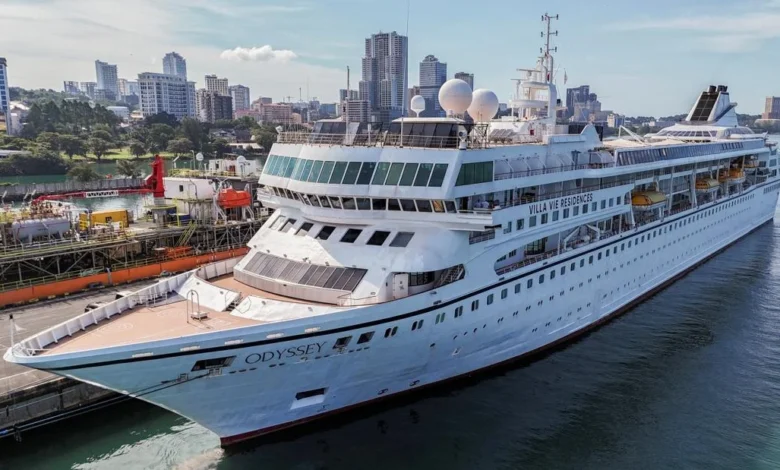
The ambitious dream of permanent life at sea has hit a hard, legal wall in the waters of Singapore. Villa Vie Odyssey, the residential cruise ship marketed as a revolutionary home for global travelers, has been officially detained by local authorities following a court order. This development marks the latest, and perhaps most critical, chapter in a series of financial and operational crises that have plagued the venture since it ceased operations in Cambodia in late October. The vessel, once hailed as a gateway to nomadic luxury, now sits idle at the Changi General Purpose Anchorage, its future uncertain as creditors move to recover substantial debts.
The Legal Siege at Changi Anchorage
The Maritime and Port Authority of Singapore (MPA) confirmed that the vessel arrived in Singaporean waters on November 8, 2024. Within hours of its arrival, the ship was served with an arrest warrant. According to records from the Singaporean judiciary, the arrest was initiated at 10:34 a.m. local time on behalf of the law firm Helmsman LLC. In maritime law, the arrest of a vessel is a standard procedure under admiralty proceedings, typically employed by claimants—often suppliers or creditors—to secure a maritime lien against a ship to guarantee payment for services rendered or goods supplied.
While the specific identity of the claimant remains officially undisclosed due to the nature of the court filings, industry insiders and reporting from CBS News suggest the move was likely triggered by a fuel supplier. Villa Vie Residences reportedly carries an outstanding debt of approximately USD 500,000 to local vendors. As of now, Helmsman LLC has not issued a public statement, and the vessel remains under the custody of the court-appointed Sheriff of Singapore.
Chronology of a Failed Voyage
The current immobilization of the Odyssey is the culmination of a deteriorating operational environment that began to manifest in late 2024. The following timeline outlines the rapid decline of the venture:
- October 2023: Villa Vie Residences acquires the vessel, formerly known as the Braemar, a ship constructed in 1993 with a long history in the cruise industry.
- Late 2024: The company initiates its residential cruise model, promising long-term residents a life of perpetual travel.
- October 27, 2024: Villa Vie Odyssey abruptly terminates its voyage while docked in Sihanoukville, Cambodia. Management cites unsustainable spikes in fuel costs as the primary catalyst.
- October 28–November 7, 2024: The ship departs Cambodia with approximately 50 crew members on board, leaving behind 203 passengers who had been ordered to disembark with only eight hours of notice.
- November 8, 2024: The vessel arrives in Singapore and is promptly detained by the High Court of Singapore following an application by Helmsman LLC.
Economic Pressures and the Fuel Crisis
The collapse of the Odyssey’s operational viability is largely attributed to a volatile geopolitical landscape. According to statements from Villa Vie leadership, the cost of fuel per cabin per month in certain Asian maritime corridors skyrocketed from an average of USD 1,800 to between USD 6,000 and USD 8,000. The company explicitly linked this surge to regional instability, specifically the conflict involving Iran, which has significantly disrupted shipping routes and energy pricing.
For a business model predicated on fixed-fee residential living, such a massive deviation in operating expenses creates an insurmountable deficit. The company’s inability to absorb these costs led to a cascading series of service cutbacks, erratic itinerary adjustments, and frequent demands for supplemental payments from the residents—the very people who had invested their life savings into the venture.
The Human Toll: Residents Left Adrift
The impact on the passengers has been profound. Many of the 203 residents who were forced off the ship in Cambodia had sold their primary residences and liquidated assets to secure their cabins on the Odyssey. Interviews with former passengers reveal a pattern of mounting frustration during the final months of the voyage, characterized by a lack of transparency from management and a rapid decline in the quality of life on board.
The sudden eviction notice, providing only an eight-hour window to vacate, left many individuals stranded in Cambodia without a clear plan for repatriation or financial restitution. Reports indicate that many passengers left behind personal belongings and essential documents, which remain on the vessel as it sits under court arrest. An attempt by a group of residents to collectively purchase the ship to maintain its operations ultimately failed, leaving them with little recourse as the legal proceedings in Singapore move forward.
Legal and Financial Implications
The detention of the Villa Vie Odyssey under Singaporean law places the vessel in a precarious position. Under the rules of the Admiralty Court, the Sheriff of Singapore is empowered to maintain the vessel, but the costs associated with the detention—including berthing fees, security, and the maintenance of the crew—are mounting daily.
If the owners of Villa Vie Residences are unable to secure a bond or satisfy the claims of the creditors, the legal process will likely move toward a court-ordered auction. In such a scenario, the court would commission an independent appraisal of the 31-year-old vessel. The proceeds from the sale would be prioritized to cover the court costs, followed by the claims of the creditors. Only after these primary obligations are met would any remaining funds be available for other stakeholders, including the passengers who hold claims against the company for unfulfilled contracts.
Corporate Restructuring and Future Uncertainty
In a recent communication, Villa Vie’s founder, Mikael Petterson, indicated that the company is exploring a 60-day window to restructure its financial obligations and seek new capital infusions. The prospect of filing for Chapter 11 bankruptcy protection in the United States remains a distinct possibility. Chapter 11 would allow the company to reorganize its debts while potentially shielding its remaining assets from immediate liquidation.
However, the maritime industry remains skeptical. The Braemar, as the ship was originally known, has been repurposed multiple times, and its age necessitates significant maintenance and regulatory compliance costs. The combination of an aging vessel and a debt-laden operating company presents a difficult challenge for any potential investor or white-knight purchaser.
Broader Industry Context
The case of the Villa Vie Odyssey serves as a cautionary tale for the burgeoning "residential cruise" market. While the concept of high-end, long-term maritime living has gained popularity as a lifestyle choice for retirees and digital nomads, the operational realities are often overlooked by consumers. Unlike traditional cruise lines that operate on short-term, predictable routes with massive corporate backing, residential cruise ventures often operate on thinner margins and are highly susceptible to global energy shocks.
Furthermore, the legal complexity of maritime law means that passengers, who are technically customers rather than owners, often find themselves at the bottom of the creditor hierarchy in the event of insolvency. As the Odyssey remains under lock and key in Singapore, it stands as a stark reminder of the risks inherent in the intersection of speculative business models and the unforgiving nature of international maritime commerce.
For the moment, the 50 crew members remain on board, their welfare currently managed by the creditors under strict maritime labor regulations. As the legal gears turn in Singapore, the world watches to see if this "dream of living at sea" can be salvaged or if the Odyssey will be relegated to the scrap heap of maritime history. The outcome of the next 60 days will not only determine the fate of the ship but also set a precedent for the viability of residential cruising in an era of global economic uncertainty.
Related posts: