Spain Secures Second FIFA World Cup Title with Extra-Time Victory Over Ten-Man Argentina

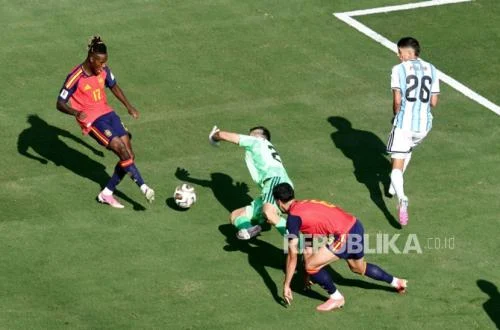
The Spanish national football team etched its name into the annals of history, clinching their second FIFA World Cup title with a dramatic 1-0 extra-time victory over a resilient ten-man Argentina. The highly anticipated final, held at the state-of-the-art New York New Jersey Stadium on Monday, July 20, 2026, saw substitute Ferran Torres emerge as the hero, scoring the decisive goal in the 106th minute. This triumph marks Spain’s first World Cup win in 16 years, following their maiden success in South Africa in 2010, and solidifies their status at the pinnacle of international football.
For Argentina, the defeat was a bitter pill to swallow, particularly for captain Lionel Messi, who, despite a valiant effort throughout the tournament, was unable to add a World Cup Golden Boot to his illustrious collection. Messi concluded the tournament with eight goals, falling short of Kylian Mbappé’s remarkable tally of ten goals, which saw the French forward claim the coveted Adidas Golden Boot award. The final, a pulsating encounter between two of football’s titans, delivered on its promise of high drama and tactical intrigue, ultimately culminating in a moment of Spanish jubilation.
The Road to the Final: A Tale of Two Journeys
Spain’s journey to the 2026 World Cup final was characterized by tactical brilliance, fluid attacking football, and a deep squad spearheaded by a blend of experienced veterans and prodigious young talents. Under the astute guidance of head coach Luis de la Fuente, La Roja navigated a challenging path, showcasing their signature possession-based game while also demonstrating a newfound defensive solidity. Their group stage saw them top their quartet with dominant performances, setting the tone for their knockout phase. Victories over formidable opponents in the Round of 16, quarter-finals, and semi-finals, often decided by moments of individual brilliance from players like Dani Olmo, Lamine Yamal, and Rodri, underscored their consistent form and unwavering belief. The team’s ability to control the midfield and generate numerous scoring opportunities had been a recurring theme throughout the tournament, culminating in their appearance in the final.
Argentina, on the other hand, arrived in New Jersey with the weight of expectation firmly on their shoulders, particularly after their triumph in the 2022 edition. Led by their inspirational captain Lionel Messi, who, at 39, was widely participating in his final World Cup, La Albiceleste had demonstrated immense character and a never-say-die attitude. Their path to the final was marked by gritty performances, often relying on moments of magic from Messi and the defensive resilience marshaled by figures like Emiliano Martínez and Lisandro Martínez. Despite facing strong opposition, Argentina’s collective spirit and tactical discipline, combined with their ability to absorb pressure and launch incisive counter-attacks, had seen them overcome every hurdle. Their semi-final victory, a testament to their mental fortitude, set up a mouth-watering clash with the Spaniards, a rematch of sorts from previous high-stakes encounters.
A Tense First Half: Spanish Dominance Unrewarded
From the opening whistle, Spain immediately asserted their dominance, taking control of possession and dictating the tempo of the game. Their characteristic ‘tiki-taka’ style, evolved with a more direct attacking thrust, put Argentina under immense pressure from the outset. In just the fifth minute, a weaving run from Dani Olmo on the left flank culminated in a perfectly weighted cut-back to the electrifying Lamine Yamal. Yamal, finding space inside the penalty area, unleashed a powerful shot, but Argentina’s defensive stalwart Lisandro Martínez reacted swiftly, throwing himself in front of the ball to block the effort before it could test Emiliano Martínez. The rebound was then gathered by the Argentine goalkeeper, averting an early scare.
The initial wave of Spanish attacks continued unabated. Midfield maestro Rodri, orchestrating play from deep, consistently fed dangerous balls into the final third. Spain’s high press prevented Argentina from building any meaningful rhythm, forcing them into defensive postures and long clearances. By the 15-minute mark, Spain commanded an impressive 63% of possession, a statistic that starkly highlighted their stranglehold on the midfield. Argentina found it exceedingly difficult to even venture beyond the halfway line, let alone threaten the Spanish goal. Their tactical approach under coach Lionel Scaloni seemed geared towards absorbing pressure and hoping to capitalize on a counter-attack or a set-piece, a strategy that was being severely tested by Spain’s relentless offensive.
As the first half wore on, Spain continued to probe. In the 39th minute, Mikel Oyarzabal, cutting in from the left wing, unleashed a venomous strike from outside the box. Emiliano Martínez, however, proved his class once again, making a sharp save to palm the ball away. Just four minutes later, left-back Marc Cucurella, surging forward, struck a fierce shot that narrowly sailed wide of the post. Despite their overwhelming territorial advantage and numerous attempts, Spain could not find the breakthrough. The score remained 0-0 at the end of the four minutes of added time in the first half, a testament to Argentina’s disciplined defending and Emiliano Martínez’s heroics under immense pressure. Spain registered 8 shots on target to Argentina’s 0 in the first 45 minutes, underscoring their offensive struggle against a well-drilled defense.
Second Half Drama: Red Card and Missed Chances
The second half commenced with Spain maintaining their relentless pursuit of an opening goal. The pattern of play remained largely unchanged, with La Roja dictating possession and creating the clearer opportunities. In the 64th minute, Dani Olmo, finding a pocket of space at the edge of the penalty area, struck a low, bouncing shot that seemed destined for the bottom corner. However, Emiliano Martínez, showcasing incredible reflexes, managed to get down quickly and push the ball wide, denying Spain once more.
The match took a dramatic turn just three minutes later. In the 67th minute, Argentina’s defensive midfielder, Leandro Paredes, received his second yellow card of the match for a cynical foul on Pedri, who had entered the game as a substitute. Paredes, already booked in the first half for a challenge on Rodri, lunged late into Pedri as the Spanish midfielder looked to launch a quick counter-attack. The referee, after a moment’s hesitation, brandished the second yellow, followed by the inevitable red card, sending Paredes off and reducing Argentina to ten men. The decision, though controversial to some Argentine fans, appeared justified given the accumulation of fouls and the nature of the challenge.
The numerical disadvantage further emboldened Spain. In the 70th minute, a sublime cross from Lamine Yamal found the head of the recently introduced Pedri, whose powerful header was once again brilliantly saved by Martínez. The Argentine goalkeeper was proving to be an impenetrable wall, single-handedly keeping his team in the contest. Despite being a man down, Argentina, spurred on by Messi, showed incredible resilience, tightening their defensive lines and frustrating the Spanish attack. They managed to create a couple of half-chances on the counter, with Messi attempting to weave his magic, but the Spanish defense, marshaled by Aymeric Laporte and Rodri, held firm. As the clock ticked towards the 90th minute, the tension in the stadium was palpable. Spain continued to press, but Argentina’s ten men defended with their lives, forcing the game into extra time.
Extra Time Heroics: Torres Secures Glory
The first period of extra time saw Spain intensify their pressure, determined to capitalize on their numerical advantage. Argentina, visibly fatigued but unwavering in their resolve, continued to defend deep, hoping to reach a penalty shootout. The Spanish coaching staff, seeking fresh impetus, introduced Ferran Torres for Mikel Oyarzabal in the 100th minute, a decision that would prove inspired.
The breakthrough finally arrived in the 106th minute, a moment that sent the Spanish contingent into raptures. A flowing Spanish move saw Dani Olmo drive into the heart of the Argentine defense, drawing defenders towards him. With a deft touch, he laid the ball off to Ferran Torres, who had positioned himself perfectly at the edge of the penalty area. Torres, with his first meaningful touch, unleashed a powerful, low shot that arrowed through a forest of legs and nestled precisely into the bottom left corner of the net, leaving Emiliano Martínez with no chance. The stadium erupted as the Spanish players mobbed Torres in celebration, the sheer relief and joy evident on their faces. It was a goal born out of sustained pressure, tactical patience, and the clinical finishing that had, until then, eluded them.
The remaining minutes of extra time saw Argentina, despite their exhaustion and numerical disadvantage, attempt a late surge. Messi, with a look of determination, tried to conjure one last piece of magic, but the Spanish defense, buoyed by their lead, remained resolute. Spain expertly managed the game, maintaining possession and denying Argentina any clear-cut opportunities. When the final whistle blew, signifying the end of 120 minutes of intense football, the Spanish players, coaching staff, and fans erupted in a cacophony of celebration.
Tactical Masterclass and Resilient Defense
Spain’s victory was a testament to their tactical discipline and their unwavering commitment to their playing philosophy. Under Luis de la Fuente, the team showcased a refined version of their renowned possession-based football, characterized by quick passing, intelligent movement, and relentless pressing. Midfield general Rodri was instrumental, controlling the tempo, breaking up Argentine attacks, and initiating countless Spanish forays forward. The energy and creativity of young talents like Lamine Yamal and Pedri, combined with the experience of Dani Olmo and Nico Williams (who had an early attempt on goal that was blocked), provided a constant threat. Defensively, Spain was equally impressive, conceding very few clear chances throughout the 120 minutes, even before Argentina was reduced to ten men. The central defensive pairing and the full-backs maintained a high line, stifling Argentina’s attempts to counter.
Argentina’s Valiant Stand and Messi’s Farewell?
For Argentina, the defeat was heartbreaking, particularly given their courageous performance with ten men. Emiliano Martínez delivered a truly heroic display, making a string of world-class saves that kept his team in contention for so long. Lisandro Martínez also stood out for his robust defending. However, the sending off of Leandro Paredes proved to be a critical turning point, significantly hampering their ability to transition from defense to attack and placing an even greater burden on their already stretched defense. Lionel Messi, despite his age, continued to be Argentina’s primary creative force, attempting to orchestrate attacks and find openings, but he was ultimately unable to replicate his past heroics in the final moments. This final appearance for Messi will undoubtedly spark widespread speculation about his international future, potentially marking the emotional end of an unparalleled World Cup journey for one of football’s greatest ever players.
Post-Match Reactions and Celebrations
The scenes after the final whistle were a stark contrast of emotions. Spanish players embraced each other, tears of joy streaming down their faces as they celebrated their monumental achievement. Captain Rodri, hoisting the iconic FIFA World Cup trophy, reflected the sentiments of the entire squad. "This is for all of Spain," he stated in a post-match interview, his voice hoarse with emotion. "We worked incredibly hard for this, sacrificed so much. To bring the World Cup home again after 16 years, it’s an indescribable feeling. This team showed character, resilience, and the belief that we could do it." Goal-scorer Ferran Torres added, "It’s the most important goal of my life. To contribute to this historic moment for my country, it’s a dream come true. Argentina fought bravely, but we never gave up."
On the Argentine side, there was profound disappointment, yet also a sense of pride in their team’s fight. Lionel Messi, visibly emotional, embraced his teammates, offering words of comfort. Coach Lionel Scaloni acknowledged the difficulty. "It’s tough to lose in a final, especially after such a battle," Scaloni commented. "Playing with ten men for so long against a team of Spain’s quality is incredibly challenging. My players gave everything, absolutely everything. I am immensely proud of their spirit and commitment. We fought until the very end."
A Legacy Cemented: Spain’s New Golden Era
This second World Cup title firmly entrenches Spain’s status among football’s elite nations. It signifies not just a triumph, but also the emergence of a new golden generation for Spanish football, seamlessly blending the tactical acumen of their predecessors with a fresh dynamism and youthful exuberance. The success is a testament to the long-term investment in youth development within Spanish clubs and the national team setup. This victory will undoubtedly inspire a new wave of talent and further cement the legacy of players like Rodri, Dani Olmo, and the burgeoning stars like Lamine Yamal and Pedri. The future appears exceptionally bright for La Roja, with a solid foundation laid for continued success on the international stage.
Looking Ahead: Argentina’s Future Beyond Messi
For Argentina, the defeat marks the end of an era defined by the unparalleled brilliance of Lionel Messi. While the team showcased immense depth and character throughout the tournament, the question of succession for their legendary captain will now become paramount. The task of rebuilding and reorienting the squad for a post-Messi era will be a significant challenge for the Argentine Football Association and its coaching staff. However, the resilience shown in the final, particularly when playing with ten men, offers a glimpse into the fighting spirit that will continue to define Argentine football. The experience gained by younger players in this tournament will be invaluable as they look to forge their own path in the coming years.
Tournament Highlights and Key Performers
The 2026 FIFA World Cup delivered a spectacle of world-class football, punctuated by memorable matches, stunning goals, and unexpected twists. Kylian Mbappé’s Golden Boot-winning performance, with his ten goals spread across various crucial matches for France, was a particular highlight, solidifying his position as one of the game’s most prolific forwards. The tournament also saw stellar individual displays from numerous players, including Spain’s Rodri, Argentina’s Emiliano Martínez, and several others who lit up the pitches across the host cities. The overall quality of football was exceptionally high, showcasing the global growth and competitiveness of the sport.
Host Nation’s Success and Global Impact
The United States, as the primary host nation alongside Canada and Mexico, delivered a hugely successful tournament. The New York New Jersey Stadium, with its state-of-the-art facilities and electric atmosphere, proved to be a fitting venue for the grand finale. The event broke viewership records globally, further cementing football’s status as the world’s most popular sport. The tournament’s smooth organization, vibrant fan zones, and overall celebratory atmosphere contributed significantly to its success, leaving a lasting legacy for football in North America and around the world. The 2026 FIFA World Cup will be remembered not only for Spain’s historic triumph but also for its broader impact on the sport and its global community.