New Wuling Almaz Hybrid 2026 Officially Enters the Indonesian SUV Market to Challenge Competitors with Enhanced Electrification Technology

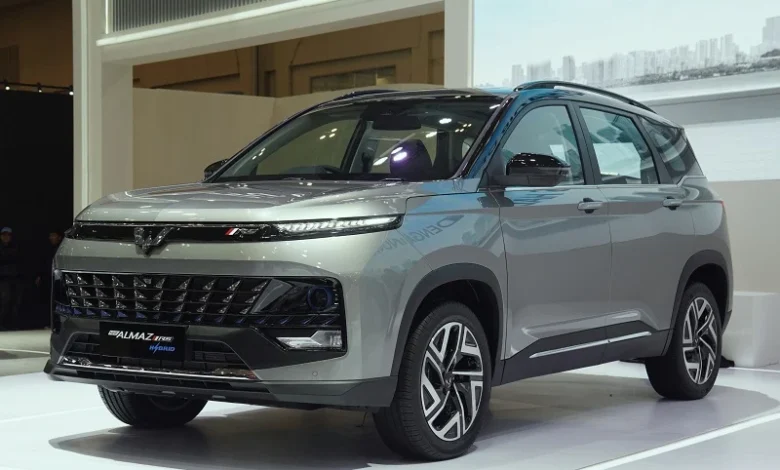
The Indonesian automotive landscape is undergoing a significant shift as Wuling Motors officially introduces the New Wuling Almaz Hybrid 2026, a strategic move aimed at capturing a larger share of the burgeoning electrified vehicle segment. By combining a 2.0L Atkinson Cycle gasoline engine with a Permanent Magnet Synchronous Motor (PMSM), the manufacturer seeks to balance the growing consumer demand for fuel efficiency with the traditional requirement for robust performance in a seven-passenger family SUV. This launch marks a critical point in Wuling’s long-term roadmap to establish itself as a leader in affordable yet technologically advanced hybrid mobility in Southeast Asia’s largest economy.
The Evolution of the Almaz Lineage
Since its initial debut in Indonesia, the Almaz has functioned as the cornerstone of Wuling’s SUV strategy. Originally introduced as a value-oriented gasoline-powered vehicle, the brand has progressively transitioned the model into a platform for its more sophisticated technologies, including the Wuling Indonesian Command (WIND) and the Advanced Driver Assistance Systems (ADAS).
The 2026 iteration represents the second major overhaul of the hybrid powertrain system. While the first-generation hybrid variant established the proof of concept for the Chinese manufacturer, the 2026 model arrives with refined power management software and improved thermal efficiency. The transition from the internal combustion engine (ICE) to the hybrid architecture reflects broader industry trends, where global automakers are increasingly utilizing hybrid technology as a bridge to full electrification, particularly in markets where charging infrastructure remains a work in progress.
Engineering and Powertrain Specifications
At the heart of the New Wuling Almaz Hybrid 2026 lies a sophisticated propulsion system designed to maximize energy output while minimizing fossil fuel consumption. The 2.0L Atkinson Cycle engine is specifically engineered for high thermal efficiency, operating in tandem with the PMSM electric motor. This pairing allows the vehicle to utilize its energy more effectively during low-speed urban commuting, where standard combustion engines are typically at their least efficient.
A key highlight of this model is its tri-modal driving capability, which allows the vehicle to operate in three distinct configurations:
- EV Mode: The vehicle relies entirely on the battery and electric motor, suitable for silent, emission-free travel at lower speeds.
- Series Hybrid: The gasoline engine acts primarily as a generator to charge the battery, which then powers the electric motor to drive the wheels.
- Hybrid Parallel: Both the engine and the electric motor work in unison to provide maximum power, ideal for overtaking or navigating steep gradients.
The transition between these modes is managed by an Intelligent Multi-Mode Hybrid Transmission, which is designed to be seamless, ensuring that the driver does not experience the lag often associated with traditional planetary gear sets or older CVT systems.
Design Language and Exterior Enhancements
The 2026 model features a subtle but distinct evolution in aesthetics. Recognizing that the modern consumer prioritizes a "premium" feel, Wuling has implemented a more aggressive front fascia, characterized by a refined grille and sharper LED daytime running light signatures. The vehicle retains its signature seven-passenger configuration, maintaining its position as a practical choice for families who need both space and lower operational costs.
Engineers have focused on aerodynamic optimization to complement the new powertrain. Subtle changes to the underbody panels and the addition of air curtains in the front bumper are designed to reduce drag coefficients, thereby contributing to the overall improvement in fuel economy figures. Inside the cabin, the material quality has been elevated, with soft-touch surfaces and updated digital displays that integrate more closely with the vehicle’s energy management systems.
Market Context and Industry Impact
The launch of the New Wuling Almaz Hybrid 2026 occurs against a backdrop of increasing environmental regulations and fiscal incentives from the Indonesian government. The administration has been actively encouraging the adoption of Low Carbon Emission Vehicles (LCEV) through tax breaks and various supporting policies.
Data from the Association of Indonesia Automotive Industries (GAIKINDO) indicates that while Battery Electric Vehicles (BEVs) are gaining traction, hybrid electric vehicles (HEVs) currently command a more significant portion of the electrified market due to their ease of use—not requiring external charging infrastructure. Wuling’s strategy to position the Almaz Hybrid within the mid-to-high SUV segment places it in direct competition with established Japanese brands, which have dominated the local market for decades.
Industry analysts suggest that the competitive pricing strategy often employed by Wuling could force incumbents to revisit their own hybrid pricing structures. By offering a high-tech, seven-passenger hybrid at a price point that undercuts many of its competitors, Wuling is effectively lowering the barrier to entry for consumers looking to transition away from pure ICE vehicles.
Official Perspectives and Strategic Positioning
While specific executive statements regarding the 2026 model emphasize the importance of "customer-centric innovation," the internal messaging from Wuling Motors Indonesia consistently highlights the "Total Cost of Ownership" (TCO) advantage. For the average Indonesian family, the cost of fuel is a significant portion of the monthly household budget. By integrating hybrid technology that can yield a marked improvement in fuel consumption compared to its non-hybrid predecessor, Wuling is framing the Almaz Hybrid 2026 as a rational, long-term financial investment rather than a luxury purchase.
The inclusion of the ADAS suite—which includes adaptive cruise control, lane-keeping assistance, and automatic emergency braking—further reinforces the vehicle’s value proposition. These features, once reserved for luxury European imports, are now becoming standard expectations in the mid-size SUV segment, and Wuling’s ability to bundle these with a hybrid powertrain is a significant differentiator.
The Broader Implications of the 2026 Model
The introduction of the New Wuling Almaz Hybrid 2026 signifies a maturation of the brand’s Indonesian operations. It is no longer merely introducing budget-friendly city cars; it is now positioning itself as a provider of sophisticated automotive engineering.
Furthermore, the 2026 model rollout suggests that Wuling is committed to localizing its supply chain. By assembling these complex hybrid systems within Indonesia, the company is contributing to the development of a local ecosystem for automotive electronics and battery management systems. This has broader implications for the national economy, as it creates high-skilled jobs and encourages secondary industries to upgrade their capabilities to meet the stringent quality standards required for hybrid components.
Looking ahead, the success of the Almaz Hybrid 2026 will likely dictate the pace at which Wuling introduces further electrified variants in the region. If the market reception matches the technical performance projections, it is highly probable that Wuling will expand its hybrid offerings to include smaller crossovers or even MPVs, further solidifying its grip on the Indonesian automotive market.
Challenges and Future Outlook
Despite the positive outlook, the road ahead is not without challenges. The primary obstacle remains the education of the public regarding the maintenance of hybrid systems. While the mechanical components of the 2026 Almaz are designed for durability, the long-term viability of the battery packs in Indonesia’s tropical, high-humidity climate remains a point of interest for prospective buyers. Wuling’s success will largely depend on the strength of its after-sales service network and its ability to provide clear, transparent data regarding battery longevity and replacement costs.
Additionally, as competitors begin to introduce their own hybrid offerings, the differentiation between brands will move away from simple "hybrid vs. ICE" comparisons toward "hybrid system efficiency" and "integrated software experience." The Almaz Hybrid 2026, with its current feature set, is well-equipped to compete in the short term, but continued software updates and incremental hardware improvements will be necessary to stay ahead of the curve.
In conclusion, the New Wuling Almaz Hybrid 2026 is more than just a new model year; it is a declaration of intent. By refining its hybrid powertrain, enhancing its safety features, and maintaining a competitive price point, Wuling is signaling that it intends to be a permanent fixture in the premium-leaning SUV market. For the Indonesian consumer, this represents a significant expansion of choice in a segment that is rapidly becoming the new standard for modern, responsible family transportation. As the automotive industry continues its pivot toward electrification, the Almaz Hybrid 2026 stands as a clear indicator of how technology and practicality can be synthesized to meet the evolving needs of a diverse and growing market.