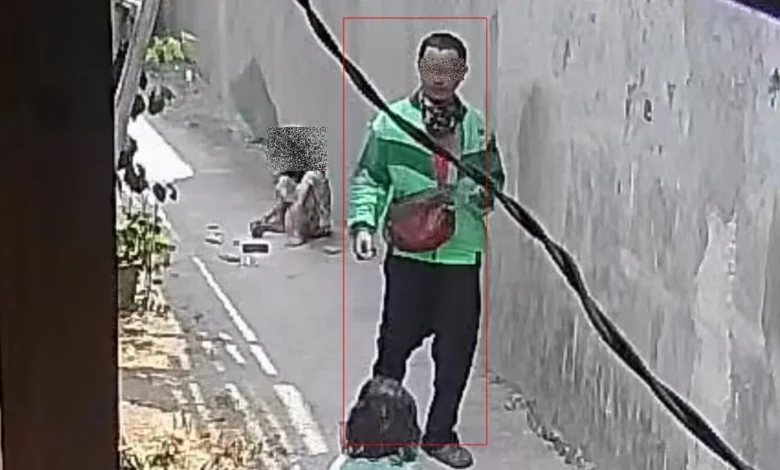
The Bekasi Metro Police have officially apprehended a male suspect, identified by the initials DB, following a harrowing incident of child molestation that occurred in the Jatimulya neighborhood of Tambun Selatan, Bekasi Regency, West Java. The suspect, who was captured on camera and witnessed wearing an online motorcycle taxi (ojol) uniform, is alleged to have targeted an eight-year-old girl, sparking outrage within the local community and renewing urgent discussions regarding child safety in public spaces.
The arrest follows a swift investigation by the Criminal Investigation Unit (Satreskrim) of the Bekasi Metro Police. According to official reports released on Tuesday, September 15, 2026, the authorities moved quickly to identify and locate the perpetrator after receiving a formal complaint from the victim’s family. The case has been classified as a serious violation of Indonesia’s Law on Child Protection, prompting a thorough investigation into the suspect’s background and motives.
Chronology of the Incident
The sequence of events began on Friday, September 11, 2026, a day that started as a routine afternoon for the young victim. According to the statement provided by the Bekasi Metro Police Public Relations Section Chief, AKP Aliyah, the victim was playing with her peers in the vicinity of her residence in Jatimulya, Tambun Selatan.
Preliminary findings indicate that the suspect, DB, was patrolling the area while wearing an ojol uniform—a tactic that may have been employed to lower the victim’s guard or blend into the dense urban environment of the residential neighborhood. At approximately mid-afternoon, DB reportedly approached the child under the guise of an interaction, eventually coercing her into a secluded, narrow alleyway nearby.
It was within this isolated space that the suspect allegedly committed the act of molestation. However, the perpetrator’s plan was thwarted by the victim’s quick-thinking playmate. Upon witnessing the suspicious interaction and the distress of the victim, the friend immediately began shouting for help. The commotion attracted the attention of local residents, causing the suspect to flee the scene in a panic, leaving the child behind. The prompt intervention of the playmate and the subsequent alert from the local community were critical factors in the initial identification of the suspect, as witnesses were able to provide key details to law enforcement.
Police Investigation and Apprehension
Following the incident, the victim’s family reported the crime to the local authorities. The Satreskrim team of the Bekasi Metro Police launched a comprehensive investigation, utilizing field intelligence and witness testimonies to track the suspect.
"Based on the investigation results, we were able to pinpoint the suspect’s identity and location. The suspect, identified as DB, was apprehended following a systematic search by our officers," stated AKP Aliyah. The police have emphasized that they are treating this case with the utmost gravity, given the vulnerability of the victim and the brazen nature of the assault in broad daylight.
The suspect is currently being held at the Bekasi Metro Police detention center, where he is undergoing intensive interrogation. Authorities are also looking into whether the suspect is a registered driver for any major ride-hailing platforms or if the uniform was used purely as a deceptive tool to facilitate his crimes. This distinction is vital, as it carries significant implications for the ride-hailing industry’s security protocols and the public’s trust in gig-economy workers.
Sociological Context and Child Safety in Urban Areas
The Jatimulya area in Tambun Selatan is a densely populated region characterized by a mix of residential housing and commercial activity. Such environments, while vibrant, can present unique challenges for child supervision. The incident highlights a growing concern among urban planners and sociologists regarding the "safety net" of community surveillance.
In many Indonesian urban settings, the "neighborhood watch" system (Siskamling) has historically served as a primary deterrent for criminal activity. However, as urbanization increases, the anonymity afforded to individuals—such as those wearing uniforms that grant them a veneer of legitimacy—can be weaponized by offenders. The use of an ojol uniform in this case is particularly concerning, as these workers are ubiquitous in Indonesian society and are generally perceived as trusted or neutral figures in the community.
Statistical Trends in Child Protection
Data from the Indonesian Child Protection Commission (KPAI) and local police records suggest that cases of child molestation remain a persistent issue in the Bekasi and greater Jakarta area. Statistics from the past few years indicate that children in the age range of 6 to 12 years are statistically the most vulnerable to opportunistic predatory behavior.
Experts suggest that the rise in such incidents requires a multi-faceted approach, including:
- Community Vigilance: Reinvigorating neighborhood monitoring programs where residents are encouraged to remain aware of adults interacting with children who are not their own.
- Digital and Physical Awareness: Educating children on "stranger danger" and the importance of identifying safe zones within their neighborhood.
- Institutional Accountability: Increasing the vetting processes for individuals who wear professional uniforms, as these can easily be purchased or misused by bad actors to gain access to private or semi-private spaces.
Legal Implications and Next Steps
Under the Indonesian Law No. 35 of 2014 concerning amendments to Law No. 23 of 2002 on Child Protection, individuals found guilty of molesting minors face severe penalties. If convicted, the suspect, DB, could face a lengthy prison sentence, potentially reaching up to 15 years, depending on the severity of the findings and the psychological impact on the victim.
The police have confirmed that the victim is currently receiving support services, including psychological counseling to mitigate the trauma caused by the event. The investigative team is also collecting forensic evidence from the scene and interviewing additional witnesses to build a robust case for the prosecution.
"We are committed to ensuring justice for the victim and her family," said AKP Aliyah. "This case serves as a stern reminder that the police will not tolerate any form of violence against children, and we urge the public to continue reporting any suspicious behavior immediately."
The Road Ahead
As the investigation continues, the focus will shift toward the legal proceedings. The Bekasi Metro Police are expected to present the case to the public prosecutor’s office once all evidence is synthesized. Furthermore, this incident is likely to prompt a review of local security measures in the Jatimulya area, potentially leading to increased patrols and community-led safety workshops.
The incident in Bekasi underscores a broader national necessity: the protection of children is a collective responsibility. While law enforcement serves as the final barrier against crime, the prevention of such incidents relies heavily on the environment fostered by parents, neighbors, and local authorities. The swift arrest of the suspect in this case provides a measure of relief to the local community, but it also serves as a sobering catalyst for conversations regarding the safety of children in increasingly complex urban landscapes.
For now, the residents of Tambun Selatan remain on high alert, and the legal process against the suspect, DB, will be watched closely as a test of the efficacy of current child protection frameworks in the region. The case remains open, and the police have encouraged anyone else who may have been a victim of similar circumstances involving a suspect matching this description to come forward and cooperate with the ongoing investigation.