Police Lab Tests Confirm ‘Whip-Pink’ Contains Pure Nitrous Oxide, Factory Bosses Named as Suspects in Illicit Production Ring

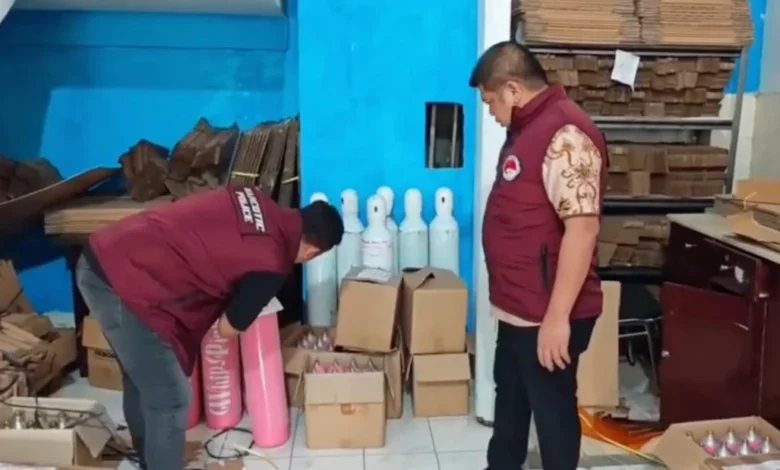
Jakarta, Indonesia – The Indonesian National Police’s Criminal Investigation Department (Bareskrim Polri) has confirmed through extensive laboratory examinations that the substance marketed as "Whip-Pink" from a factory in North Jakarta is pure nitrous oxide (N2O), devoid of any flavoring, despite suggestions of various variants. The revelation comes amidst an ongoing crackdown on the illicit production and distribution of this gas, commonly known as "laughing gas," which has severe health implications when misused.
On Friday, July 24, 2026, Kasubdit III Direktorat Tindak Pidana Narkoba Bareskrim Polri, Kombes Zulkarnain Harahap, announced the conclusive findings from both the Polri Forensic Laboratory and the National Agency of Drug and Food Control (BPOM) Forensic Laboratory. "Several cylinders that we confiscated have been subjected to laboratory examination by both the BPOM Forensic Lab and the Polri Forensic Lab. The results show unequivocally that the content is pure N2O gas," Harahap stated in an official release.
Harahap further elaborated that the alleged "flavor variants" of Whip-Pink were a deliberate camouflage tactic. "The contents of the cylinders we submitted for laboratory testing were all purely N2O gas; there was no flavor whatsoever. We found no flavors in what we brought to the Labfor," he clarified, underscoring the deceptive nature of the product’s marketing. This deceptive branding likely aimed to make the product appear innocuous, perhaps even as a legitimate food-grade propellant, thereby circumventing stricter regulations and appealing to a wider, unsuspecting consumer base for illicit purposes.
The misuse of N2O, while often perceived as a ‘soft drug,’ carries significant health risks. Kombes Zulkarnain Harahap warned that such abuse could lead to criminal charges under health-related statutes. He issued a strong public appeal against the recreational inhalation of N2O, emphasizing its detrimental effects. "Although it may seem harmless, the consequences of using N2O gas are quite damaging because its use is not accompanied by oxygen. When inhaled, it displaces oxygen within the body," he explained. He cited a disturbing case uncovered during their investigation: "There was one user we examined whose medical records showed a significant loss of potassium content, one of the direct consequences of this abuse."
The Alarming Rise of Nitrous Oxide Abuse in Indonesia
Nitrous oxide, an inorganic compound with the chemical formula N2O, has legitimate applications primarily in medicine as a dissociative anesthetic and analgesic, and commercially as a propellant for whipped cream dispensers. Its intoxicating effects, which include euphoria, giddiness, and a sense of detachment, have led to its widespread recreational abuse globally, a trend that has unfortunately gained traction in Indonesia. The substance is typically inhaled directly from balloons filled from larger canisters, often sold in social settings like parties, clubs, or even online.
The allure of N2O as a recreational drug stems from its rapid onset of effects, short duration, and perceived low risk compared to traditional illicit substances. However, this perception is dangerously misleading. The immediate danger arises from hypoxia, the deprivation of oxygen to the brain and other vital organs, which can cause dizziness, disorientation, loss of consciousness, and in severe cases, brain damage or even death. Prolonged abuse can lead to more insidious and long-lasting health problems.
Deep Dive into Health Implications
Beyond the acute risk of hypoxia and potassium depletion highlighted by Kombes Zulkarnain Harahap, chronic N2O abuse can precipitate a range of serious medical conditions. One of the most significant long-term effects is the inactivation of vitamin B12 (cobalamin), an essential nutrient for nerve function and DNA synthesis. This inactivation can lead to megaloblastic anemia and severe neurological damage, including peripheral neuropathy, myelopathy (damage to the spinal cord), and even subacute combined degeneration of the spinal cord. Symptoms can range from numbness and tingling in the extremities to severe gait disturbances, muscle weakness, and cognitive impairment, often irreversible if not treated promptly.
Psychological dependence can also develop, leading users to seek out the drug compulsively despite negative consequences. The deceptive marketing of products like "Whip-Pink" exacerbates this problem by making a potentially harmful substance appear benign and easily accessible, particularly to younger demographics who may be unaware of the severe risks involved. Public health experts have consistently warned about the dangers, urging for stricter controls and comprehensive awareness campaigns.
Chronology of the Police Crackdown
The police operation against the illicit Whip-Pink production ring began earlier this year, driven by increasing reports of N2O abuse and its visible presence in recreational settings.
- April 13, 2026: Bareskrim Polri launched a decisive raid on the N2O Whip-Pink production facility in Jakarta. The operation was initiated after a period of intense surveillance and intelligence gathering, including an "undercover buy" tactic employed by the Subdit III Dittipidnarkoba Bareskrim Polri team. This method allowed authorities to trace the distribution network and pinpoint the production sites. The raid resulted in the seizure of hundreds of Whip-Pink cylinders ready for distribution.
- Initial Raid Locations and Arrests: The raid targeted two key locations: a shophouse (ruko) in Gang Mantri, Kemayoran, and a warehouse on Jalan Rajawali Selatan Raya, Gunung Sahari Utara, Pademangan, North Jakarta. During the initial phase of the operation, police apprehended several individuals directly involved in the illicit trade:
- SU (56): Identified as the stock keeper and primary shipper of the illegal products.
- ST, Sul, Sup, and AS: Four male employees found actively engaged in the production process of Whip-Pink.
- E: A woman arrested in a rented house in Pulogadung, East Jakarta, who served as the administrator and accountant for the illegal sales operation.
- Seized Evidence: The scale of the illicit operation was evident from the substantial amount of evidence confiscated. This included multiple N2O gas filling machines, used to transfer gas from large industrial-sized tanks (27 kg, 30 kg, and 32 kg) into smaller, consumer-ready Whip-Pink branded cylinders of various sizes (580 grams, 640 grams, 950 grams, 1,320 grams, and 2,050 grams). The sheer volume and professional setup indicated a well-organized criminal enterprise.
- Between April and July 2026: Following the initial arrests and seizures, the investigation intensified. Lab tests were commissioned, and financial trails were scrutinized, leading to the identification of the masterminds behind the operation.
- July 22, 2026: Bareskrim Polri officially named Andy Hioe and Jasen Hioe, identified as the factory bosses of the Whip-Pink operation in Central Jakarta, as suspects. Both individuals were summoned for their second round of questioning as suspects on this date.
- July 24, 2026: The conclusive laboratory results confirming pure N2O content were announced, solidifying the evidence against the suspects and the illegal nature of the product.
The Suspects and Legal Ramifications
The naming of Andy Hioe and Jasen Hioe as suspects marks a significant escalation in the case. According to Direktur Tindak Pidana Narkoba Bareskrim Polri, Brigjen Eko Hadi Santoso, the duo is suspected of producing and distributing medical or pharmaceutical supplies that do not meet established standards. "Currently, the examination of Andy Hioe and Jasen Hioe, who are responding to their second summons as suspects, is underway," Santoso confirmed to reporters on Wednesday, July 22.
The charges against them could fall under various regulations, including laws pertaining to health, consumer protection, and potentially even specific statutes if N2O is designated as a controlled substance for recreational use. While N2O is not typically classified as a narcotic under Indonesia’s stringent anti-narcotics laws, its misuse for intoxication can be prosecuted under broader public health and pharmaceutical regulations, which carry substantial penalties, including hefty fines and lengthy prison sentences. The fact that the product was allegedly camouflaged and sold without proper authorization, especially given its health risks, strengthens the case for severe penalties.
The Indonesian government, through agencies like BPOM and the Ministry of Health, has a mandate to regulate the production and distribution of all pharmaceutical products and medical devices. Any deviation from these standards, particularly for substances with potential for abuse, is treated with utmost seriousness. The Bareskrim’s involvement, usually reserved for serious criminal offenses, underscores the gravity with which this case is being handled, highlighting the potential for widespread public harm.
Broader Implications and the Path Forward
The "Whip-Pink" case sheds light on a growing public health challenge in Indonesia: the illicit trade and recreational abuse of substances like N2O that are readily available for legitimate industrial or medical purposes. The relative ease of access, combined with a lack of public awareness regarding the severe health risks, creates a dangerous environment, particularly for adolescents and young adults.
This incident underscores the need for a multi-pronged approach to combat this emerging threat. Firstly, enhanced regulatory oversight is crucial. Authorities may need to re-evaluate the classification and control mechanisms for N2O to prevent its diversion from legitimate uses to the black market. This could involve stricter licensing for distributors, better tracking of large cylinders, and increased penalties for illicit sales.
Secondly, public awareness campaigns are vital. Educational initiatives must inform the public, especially youth, about the profound and often irreversible health consequences of inhaling N2O. These campaigns should dispel the myth that "laughing gas" is harmless fun and highlight the risks of hypoxia, B12 deficiency, and neurological damage.
Thirdly, continued vigilant enforcement by law enforcement agencies like Bareskrim Polri is indispensable. Disrupting supply chains, dismantling production facilities, and prosecuting those who profit from endangering public health sends a strong deterrent message. The success of the "undercover buy" operation demonstrates the effectiveness of proactive policing in tackling such clandestine operations.
Finally, medical professionals and emergency services need to be better equipped to recognize and treat N2O-related health issues, as early diagnosis and intervention can mitigate some of the long-term neurological damage. The case of the user suffering significant potassium loss serves as a stark reminder of the varied and severe physiological impacts of N2O abuse.
The Bareskrim Polri’s successful operation against the "Whip-Pink" syndicate is a critical step in addressing the rising tide of N2O abuse in Indonesia. It reinforces the commitment of law enforcement to protect public health and safety from illicit substances, even those masquerading as seemingly innocuous products. The ongoing legal proceedings against Andy Hioe and Jasen Hioe will likely set a precedent for future cases involving similar illicit activities, sending a clear message that exploiting public vulnerability for profit through dangerous substances will not be tolerated. The fight against such emerging drug trends requires continuous vigilance, robust regulatory frameworks, and an informed public.