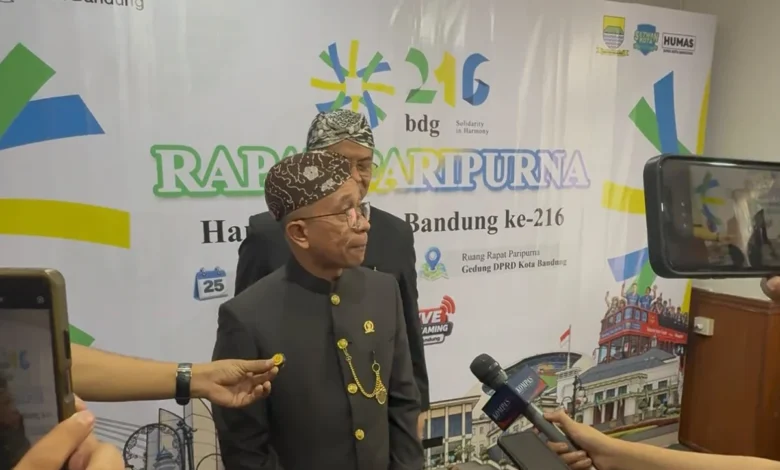
BANDUNG — As the city of Bandung celebrates its 216th anniversary (HJKB), the local government faces mounting pressure to overhaul its bureaucratic response mechanisms. Asep Mulyadi, the newly appointed Speaker of the Bandung City Council (DPRD), has issued a stern call to action, demanding that the municipal administration transition from a reactive posture to a proactive, citizen-centric governance model. The HJKB, which serves as a landmark date in the city’s history, has become the focal point for a broader discourse on administrative efficiency, public accountability, and the digital transformation of municipal services.
The Shift in Governance Expectations
In his official address during the anniversary commemorations, Asep Mulyadi emphasized that the HJKB should not merely be treated as a ceremonial milestone marked by parades and festivities. Instead, he argued that the date serves as a critical checkpoint for the city’s leadership to evaluate the efficacy of its public service delivery. The core of his critique lies in the current "viral-first" culture, where public infrastructure or service issues often remain ignored by local authorities until they gain significant traction on social media platforms.
"The government must be capable of anticipating problems before they escalate," Mulyadi stated. "We cannot continue to operate in a system where a resident’s grievance is only addressed after it goes viral. The responsibility of the city apparatus—from the Mayor and the City Secretary down to the sub-district and neighborhood officials—is to provide a systematic, measurable, and permanent solution to every citizen’s report."
Historical Context of Bandung’s Development
Bandung, often referred to as the "Paris of the East," has undergone significant demographic and infrastructural shifts since its inception. Founded in 1810, the city has evolved from a small plantation hub into a dense metropolitan center with a population exceeding 2.5 million people. As the capital of West Java province, Bandung serves as a hub for education, creative industries, and tourism.
However, rapid urbanization has brought persistent challenges. Traffic congestion, waste management issues, and the maintenance of heritage infrastructure have remained perennial concerns. Over the last decade, the city has attempted to modernize its administration through "Smart City" initiatives. Despite these technological investments, the disconnect between digitized reporting platforms and ground-level execution remains a point of contention for many residents.
Chronology of Public Service Challenges
The call for greater responsiveness comes on the back of several incidents that have shaped the current political climate in Bandung:
- Early 2024: Concerns were raised regarding the efficiency of the "Lapor!" (national public complaint system) integration within the Bandung administration, with data suggesting that resolution times varied significantly between departments.
- Mid-2024: A series of infrastructure complaints—specifically regarding road damage and drainage failures—led to public demonstrations in the city center.
- September 2026 (Current Month): As the city reaches its 216th anniversary, the City Council has received an influx of feedback from constituents regarding the slow response time of district offices (kecamatan) in handling local issues such as street lighting and public sanitation.
Data-Driven Governance: The Gap Between Policy and Reality
Data from the municipal planning agency indicates that while the city has increased its budget allocation for public services by approximately 12% annually, the satisfaction index for municipal services remains stagnant. Analysts suggest this is not necessarily a lack of funding, but rather a lack of coordination between the "front-end" of the administration—which receives complaints—and the "back-end," which handles the physical repairs and policy adjustments.
The Council’s analysis shows that departments often work in silos. For instance, a complaint regarding a damaged road might require input from the Public Works Agency, the Transportation Agency, and local district authorities. Under the current framework, these agencies often pass the responsibility back and forth, leading to delays that frustrate the public. Mulyadi’s demand for a "measured and complete" response is aimed at forcing these agencies to adopt a cross-departmental task force approach, ensuring accountability is tracked from the moment a report is filed until the physical work is signed off.
Official Responses and the Road Ahead
Following Mulyadi’s statement, spokespeople for the Bandung City Government have indicated that they are reviewing the current Standard Operating Procedures (SOPs) for public grievances. The administration has hinted at plans to implement a more robust real-time tracking dashboard that would allow the City Council and the public to monitor the status of unresolved complaints.
"We acknowledge the Speaker’s concerns," a representative from the Mayor’s office stated anonymously. "The goal for the remainder of this term is to ensure that our digital tools are not just archives for complaints, but active management systems that trigger automatic escalations if a problem is not resolved within a specified timeframe."
Broader Implications for Urban Management
The implications of Mulyadi’s stance extend beyond immediate administrative adjustments. If the City Council successfully mandates a more responsive system, it could serve as a model for other metropolitan areas in Indonesia currently struggling with similar urban growth pains.
The political ramifications are also significant. With upcoming local election cycles on the horizon, the ability of the current administration to demonstrate tangible progress in public service responsiveness will likely be a decisive factor for voters. The Council’s aggressive push for accountability suggests that the legislative branch intends to play a more active oversight role, moving away from being a rubber-stamp body to becoming a rigorous monitor of executive performance.
Analysis: The Necessity of a Proactive Culture
The transition from a reactive to a proactive government requires more than just better software; it requires a cultural shift within the civil service. Historically, the bureaucratic hierarchy in many Indonesian cities has prioritized vertical reporting—pleasing superiors—over horizontal service to the public.
A proactive approach, as championed by Mulyadi, necessitates empowering frontline workers. If a neighborhood leader (Lurah) has the authority and the resources to address a local issue immediately without waiting for a directive from the City Hall, the entire system becomes more agile. This "decentralization of problem-solving" is the next logical step for a city of Bandung’s size.
Furthermore, as the city moves toward its third century of existence, the pressure to maintain its status as a competitive, livable city is immense. Public trust is the currency of local government; when citizens feel ignored, engagement drops, and the social contract is weakened. By demanding that the government "be present before the problem becomes large," Mulyadi is essentially calling for a return to the fundamentals of governance: the state as a servant to the public interest.
Looking Toward the Future
As the anniversary celebrations conclude, the focus will now shift to whether the City Government can translate these promises into measurable outcomes. The coming months will be a litmus test for the administration. The public, now more connected and vocal than ever, will be watching closely to see if the rhetoric of "responsive government" results in fewer potholes, better waste management, and a more accessible bureaucracy.
In the final assessment, the 216th anniversary of Bandung stands as a pivotal moment. The city is at a crossroads: it can continue to grapple with the inefficiencies of the past, or it can leverage its history of resilience to build a modern, responsive, and truly smart city. For now, the mandate from the City Council is clear: the era of waiting for a complaint to go viral is over. The expectation, moving forward, is for a government that leads with anticipation, acts with speed, and communicates with transparency. Only through such fundamental changes can Bandung ensure that its future is as vibrant and storied as its past.