Kapolri Jenderal Polisi Suyudi Ario Seto menggeser 16 perwira berpangkat AKBP dan Kompol menjadi Pamen Polda pada mutasi 9 November 2026

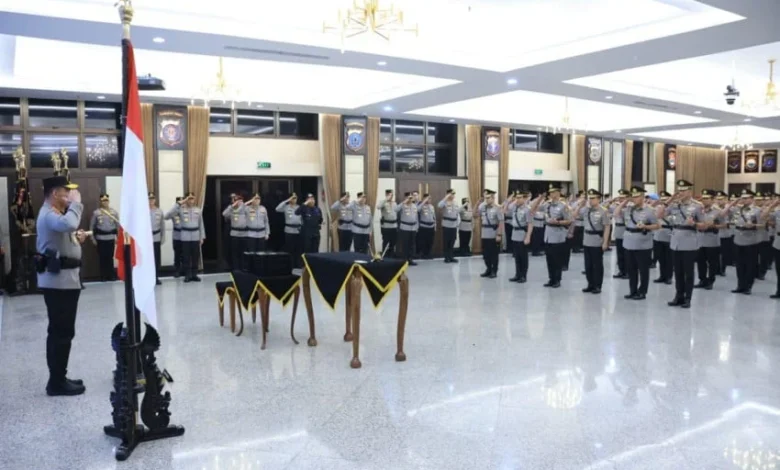
In a significant administrative reshuffle aimed at bolstering regional police operational capacity, the Chief of the Indonesian National Police (Kapolri), General Suyudi Ario Seto, has officially reassigned 16 middle-ranking officers—comprising the ranks of Adjunct Senior Commissioner of Police (AKBP) and Commissioner of Police (Kompol)—to various Regional Police (Polda) commands across the archipelago. The reassignments, formalized through the issuance of Telegram Letter Number ST/2515/XI/KEP./2026 on November 9, 2026, represent a strategic realignment of personnel assets to address specific security challenges in regions such as East Nusa Tenggara (NTT), West Papua, and Maluku.
This latest round of personnel rotations is part of a broader organizational movement involving a total of 25 high-ranking (Pati) and middle-ranking (Pamen) officers. The policy reflects a recurring commitment by the National Police leadership to maintain organizational agility and ensure that leadership positions are filled by personnel whose skill sets align with the geographical and sociological requirements of each jurisdiction.
Strategic Context and Chronology of the November 2026 Reshuffle
The issuance of the November 9, 2026, telegram is not an isolated event but rather a continuation of a series of systematic administrative adjustments carried out by the National Police throughout the year. The timing of this move coincides with the lead-up to the conclusion of the fiscal year, a period traditionally used by the police force to evaluate regional performance and prepare for the upcoming operational cycle.
The chronology of these events underscores a methodical approach to personnel management. On November 9, 2026, the official directive was signed, marking the immediate commencement of the transition period for the affected officers. This move follows an extensive vetting process overseen by the National Police’s Human Resources division, which assesses the performance metrics and career development trajectories of each officer.
The 16 officers affected by this specific shift are tasked with transitioning into the status of Pamen (Middle-Ranking Officer) within their respective provincial commands. This typically serves as a bridge for officers transitioning between specialized national-level investigative units—such as the Criminal Investigation Agency (Bareskrim) and the Densus 88 Counter-Terrorism unit—to operational roles in regional offices.
Breakdown of Key Personnel Assignments
The reassignments involve officers with specialized backgrounds in criminal investigation and intelligence. Among the prominent names identified in the latest directive are:
- AKBP Benito Harleandra: Previously serving as the Head of Unit (Kanit) 4, Sub-directorate IV of the Directorate of General Crimes (Dittipidum) at Bareskrim Polri, he has been reassigned as a Pamen at the East Nusa Tenggara (NTT) Regional Police. His experience in high-level criminal investigations is expected to support the regional force’s capacity to handle complex, multi-jurisdictional cases.
- AKBP Manuel Tadu Rebo: Transitioning from his role as Head of Unit 1, Sub-directorate of Counter-Intelligence, Directorate of Intelligence at Densus 88 AT Polri, he is now stationed as a Pamen at the NTT Regional Police. His background in counter-intelligence is a critical asset for the regional force in managing domestic security risks.
- AKBP Ambuka Yudha Hardi Putra: Moving from his position as Head of Unit 4, Sub-directorate III of the Dittipidum Bareskrim Polri, he has been placed as a Pamen at the NTT Regional Police. His expertise in criminal procedure and investigation will likely be leveraged to streamline the regional police’s judicial evidence handling.
These shifts are emblematic of the "cross-pollination" of expertise, where national-level officers are deployed to regional areas to share institutional knowledge, standard operating procedures, and advanced investigative techniques.
The Rationale Behind Periodic Rotations
The Head of the Public Relations Division of the National Police, Inspector General Johnny Eddizon Isir, emphasized that these movements are grounded in the principles of meritocracy and organizational refreshment. Speaking to the media in Jakarta on November 12, 2026, Isir noted that the National Police does not view these rotations as punitive measures, but rather as necessary tools for career progression and internal stability.
"The placement of personnel is conducted by carefully considering meritocracy, professional competence, inherent capability, and personal integrity," stated Isir. "We want to ensure that every official entrusted with a new mandate is fully capable of executing their duties and responsibilities with the highest level of professionalism, thereby contributing to the overall enhancement of our institutional performance."
From an organizational standpoint, these shifts are designed to achieve several objectives:
- Preventing Stagnation: Frequent rotation prevents the formation of entrenched interests within specific units, ensuring that police operations remain impartial and objective.
- Knowledge Transfer: By moving officers from specialized national units to regional ones, the National Police ensures that the latest forensic, intelligence, and administrative technologies are disseminated across the country.
- Professional Development: Exposure to different regional environments—ranging from the high-density urban areas to the remote, geographically challenging provinces like West Papua and Maluku—builds a well-rounded police officer capable of managing diverse social dynamics.
Analysis of Implications for Regional Security
The decision to place experienced investigators and intelligence officers in regions such as NTT, Papua, and Maluku has strategic implications for regional stability. These areas are characterized by unique socio-political challenges, ranging from border security and illegal cross-border activities in NTT to complex security maintenance in the eastern provinces.
The presence of officers with backgrounds in Bareskrim and Densus 88 signifies a pivot toward a more intelligence-led and investigation-focused policing strategy in these provinces. By upgrading the caliber of Pamen-level leadership in regional commands, the National Police aims to improve the "clearance rate" of criminal investigations and ensure that regional police commands are better equipped to handle both common crimes and threats to national security.
Furthermore, the integration of these officers into regional structures is expected to enhance solid coordination between the local police and national headquarters. As these officers arrive at their new posts, they are tasked with "strengthening solidarity"—a phrase often used by the National Police to denote the importance of vertical and horizontal cooperation within the force.
The Broader Scope: A Record of Reform
This specific rotation is part of a larger, ongoing effort under the leadership of General Suyudi Ario Seto to modernize the force. Earlier in the same month, reports indicated that as many as 44 Brigadier Generals (Brigjen Pol) were also moved to new positions. When viewed collectively, these moves represent a significant restructuring of the National Police’s leadership hierarchy.
The scale of these changes suggests a proactive approach to addressing internal performance metrics. Analysts observing the Indonesian police force have noted that the current leadership is placing a premium on "clean governance." By rotating high-performing officers, the leadership ensures that the force remains responsive to public expectations regarding transparency and the rule of law.
Looking Ahead: The Transition Period
For the 16 officers involved in the latest November 9 order, the coming weeks will be dedicated to the handover of duties (sertijab). This formal process is essential for maintaining continuity in ongoing investigations and administrative tasks. The National Police’s standard procedure dictates that incoming officers must undergo a comprehensive briefing process to familiarize themselves with the local operational landscape, community leaders, and the specific challenges of their new jurisdiction.
As the National Police concludes the final quarter of 2026, the focus remains on ensuring that these personnel changes do not result in operational vacuums. The emphasis from the leadership is clear: the transition must be seamless. The expectation is that the new appointees will hit the ground running, utilizing their national-level experience to optimize the performance of their regional units.
Conclusion
The administrative reshuffle directed by Kapolri Jenderal Polisi Suyudi Ario Seto is a testament to the dynamic nature of the Indonesian National Police. By prioritizing merit and professional experience, the force is positioning itself to navigate the complex security landscape of late 2026 and beyond. Whether the goal is the mitigation of criminal activity in NTT or the stabilization of security in Papua and Maluku, the movement of these 16 officers is a critical component of a broader institutional strategy.
As these officers assume their new roles, the public and observers alike will be watching to see how these leadership changes influence the efficacy and public trust in regional police operations. For now, the National Police remains committed to its stated objective: a more professional, integrated, and capable police force serving the people of Indonesia. The success of this strategy will be measured by the continued reduction in regional crime rates and the improved response times of police units across the archipelago in the coming months.