Pemerintah Indonesia Percepat Pembangunan Infrastruktur Air Bersih di Kawasan Timur untuk Atasi Dampak Kemarau Panjang 2026

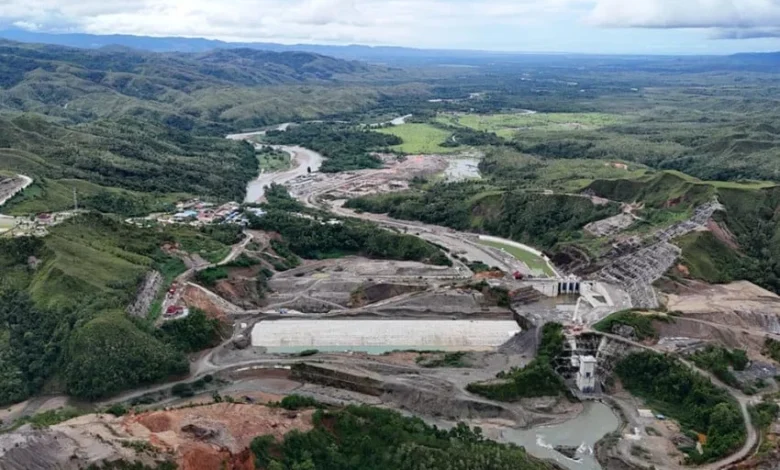
The Indonesian government has intensified its strategic efforts to secure water sovereignty across the eastern regions, including Papua, Maluku, and the Nusa Tenggara islands. This initiative, spearheaded by the Ministry of Public Works, addresses the critical need for resilient water infrastructure as the nation continues to navigate the climate-induced challenges of the 2026 dry season. The program encompasses a wide array of technical solutions, ranging from the development of water treatment systems (SPAM) and deep-well drilling to the implementation of advanced brackish water processing technology and large-scale dam construction.
The urgency of this intervention is underscored by the current hydrological conditions. Data from the Meteorology, Climatology, and Geophysics Agency (BMKG) covering the period of October 13–19, 2026, indicates that while isolated rainfall has begun to occur in parts of Papua, the broader dry spell remains a significant concern for regional water security. The prolonged dry conditions have severely impacted residential water availability, forcing authorities to pivot from long-term planning to immediate emergency responses.
The Geography of Crisis: Drought Impacts in Papua
The drought’s impact is most visible in communities that lack robust water storage and distribution systems. In the Mimika region of Central Papua, the situation became acute by early October 2026. BAZNAS (the National Board of Zakat) has been actively distributing clean water to residents in the SP 5 area, where households have historically relied on rainwater harvesting. With the failure of these traditional sources, the necessity for permanent infrastructure—such as the System for Drinking Water Supply (SPAM)—has become a priority for local governance.
Similarly, in the Weri Village of East Fakfak, the depletion of local springs and wells has triggered a collaborative response from state entities. The Patriot Expedition Team, under the Ministry of Transmigration, alongside local law enforcement, has been tasked with both providing emergency water supplies and rehabilitating the access paths to hidden, surviving water sources. This logistical challenge highlights the physical difficulties of providing utility services in the varied, rugged terrain of the eastern archipelago, which ranges from high-altitude mountainous regions to isolated coastal areas and small islands.
Strategic Infrastructure Projects and National Objectives
Central to the government’s approach is the integration of water security with the broader national agenda of food and energy self-sufficiency. In Papua Selatan, the government has designated the development of the National Food, Energy, and Water Self-Sufficiency Zone (KSPEAN) in Wanam, Merauke, as a strategic priority. This project serves as a cornerstone for the administration’s vision of turning the eastern frontier into a regional breadbasket.
As of July 2026, the Ministry of Public Works has successfully completed 44 kilometers of primary irrigation canals out of a total target of 135.4 kilometers for the Merauke Food Production Center. While these canals are vital for agriculture, the Ministry is simultaneously addressing the domestic water requirements of the growing population in these new development zones.
The Governor of Papua Selatan, Apolo Safanpo, has provided a stark assessment of the current crisis. On October 5, 2026, he noted that many local swamps and rivers, which are typically reliable sources, have dried up due to the lack of rainfall and the specific hydrological characteristics of the region. "This is a significant homework for both provincial and district governments," Safanpo stated. In response, local administrations have fast-tracked the construction of deep-well boreholes across various districts, though the Governor emphasized that long-term sustainability will require a shift away from groundwater dependency toward treated surface water.
Collaborative Efforts and Private Sector Integration
The effort to improve water access is not solely a government undertaking; it involves strategic partnerships with major industrial stakeholders. In Central Papua, the Mimika Regency government is currently expanding its SPAM network across 13 locations spanning the Kwamki Narama, Kuala Kencana, Wania, and Mimika Baru districts.
This expansion is significantly bolstered by private sector support, most notably from PT Freeport Indonesia, which donated 1,724 high-quality pipes. These materials are essential for establishing both primary distribution networks and household-level connections, effectively bridging the gap between municipal water sources and the end-users. Such collaborations are being framed by the Ministry of Public Works as the blueprint for future infrastructure projects, where public-private synergy is leveraged to accelerate development timelines.
Technical Adaptation to Diverse Terrains
The Ministry of Public Works has recognized that a "one-size-fits-all" approach to water infrastructure is ineffective in eastern Indonesia. Consequently, the government is diversifying its technological portfolio:
- Mountainous Areas: Implementation of gravity-fed piping systems that utilize the natural elevation of highland springs, reducing the need for costly electrical pumping.
- Coastal and Island Regions: Deployment of brackish water reverse osmosis (RO) systems to treat saline water, ensuring that communities in small islands are not entirely dependent on expensive water delivery by boat.
- Swamp and Peatland Areas: Development of surface water treatment plants that can filter high-acidity water common in peatland ecosystems, ensuring the water meets health standards for consumption.
Broader Implications for National Development
The current push for water sovereignty is intrinsically linked to the stability of the Indonesian economy. Water scarcity is not merely a public health concern; it is a primary barrier to economic development. When communities lack reliable access to clean water, productivity declines, and the cost of living—often already high in eastern Indonesia due to logistical barriers—spikes further.
Analysts suggest that by 2027, the success of these water projects will likely be a litmus test for the government’s ability to achieve "decentralized development." By prioritizing the eastern regions, the administration is attempting to correct the historical imbalance in infrastructure investment that has long favored the western parts of the country.
Moreover, the transition toward water treatment plants and away from unregulated groundwater extraction is a critical step toward environmental sustainability. Excessive reliance on deep wells in coastal areas has frequently led to land subsidence and saltwater intrusion, further compromising the quality of existing water tables. By investing in surface water infrastructure, the government is aiming to mitigate these ecological risks before they reach a point of irreversible degradation.
Looking Ahead: The 2027 Outlook
As the government looks toward the remainder of 2026 and the beginning of 2027, the focus is expected to shift toward the completion of the five major dams currently under development, which were recently inaugurated in the presence of the President. These dams are designed to function as multi-purpose reservoirs, providing raw water for irrigation, domestic use, and hydroelectric power generation.
The role of the Ministry of Public Works will continue to be central in coordinating these multi-stakeholder efforts. The challenge, however, remains the maintenance of this infrastructure in remote areas. Ensuring that local community-based organizations have the technical capacity to manage and repair the new water networks will be as vital as the construction of the pipes and dams themselves.
In conclusion, the aggressive expansion of water infrastructure in Eastern Indonesia represents a shift from reactive emergency management to a proactive strategy of regional resilience. With the integration of technological solutions, private sector support, and strategic national planning, the government aims to ensure that the recurrent droughts of the 2026 season are the last to cause such significant disruption to the lives and livelihoods of citizens in the eastern frontier. The road ahead remains demanding, but the framework for a more water-secure Papua, Maluku, and Nusa Tenggara is clearly being established through these coordinated national efforts.